
North America's Newest 'Dark Sky' Park Is An Arizona Beauty With Trails, Cliffs, Birding, And Camping
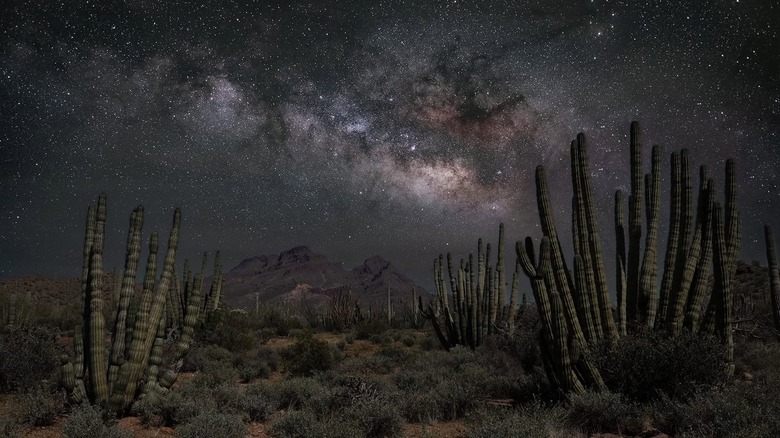
In premodern times, the night sky was so full of stars that looking up was a form of entertainment, with people sharing stories about constellations. Today, many people see only a handful of stars at night. Because of light pollution (which increases by over 9% each year, according to the National Park Service), starless skies have become normalized. While the problem is especially pronounced in urban areas, many rural regions are affected as well. To experience the night sky as it once appeared, travelers often visit Dark Sky Parks, designated by DarkSky International as places with exceptionally dark, protected skies. In May 2026, a new park was added to the ever-expanding list: Organ Pipe Cactus National Monument, located in the Sonoran Desert about two hours away from both Tucson and Phoenix in Arizona.
Humans have enjoyed the dark skies over Organ Pipe Cactus National Monument for over 16,000 years. Although the monument was established in 1937 under President Franklin D. Roosevelt, the area has long been home to the Hohokam people. Today, tourists and locals alike are drawn to this ancient desert, known for its biodiversity, dramatic scenery, and remarkably dark night skies. The new designation as a Dark Sky Park follows a decade of preparation that included monitoring the sky, upgrading lighting infrastructure, and hosting astronomy events. The monument plans to host a celebration in winter 2027 to mark the designation.
Look for birds while hiking around North America's newest dark sky park
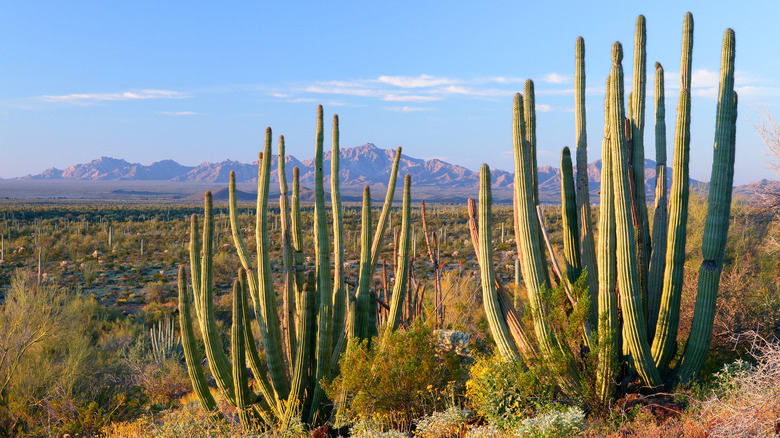
Known as the "Green Desert" because of its abundance of organ pipe cacti, the monument offers numerous hiking trails that showcase its distinctive plant life. One of the most popular routes is the moderate 2.6-mile Estes Canyon Loop, where hikers can enjoy views of the rugged cliffs and the cacti that define the landscape. At around the halfway mark, if hikers take a nearby diverging trail, they can reach the Bull Pasture Viewpoint, which offers sweeping views of Mount Ajo and the nearby town of Ajo, a charming community with scenic views and artsy vibes.
For a different experience, hike the Victoria Mine Trail. As the name suggests, this easy 4.5-mile out-and-back trail leads to an abandoned silver mine. Along the way, hikers can see not only organ pipe cacti but also protected saguaro cacti and other desert vegetation.
Birders should keep a close watch while exploring the monument. Species commonly seen here include wrens, owls, hummingbirds, quail, desert cardinals, and roadrunners. Travelers should also note that because of high temperatures, rocky cliffside terrain, spiny cacti, and animals like cougars, javelinas, and rattlesnakes inhabiting the area, this national monument is one of the world's most dangerous parks. Anyone planning a hike should carry plenty of water, prepare for changing conditions, and stay alert on the trail.
Camping is the best way to appreciate the monument's rugged cliffs and pristine stars
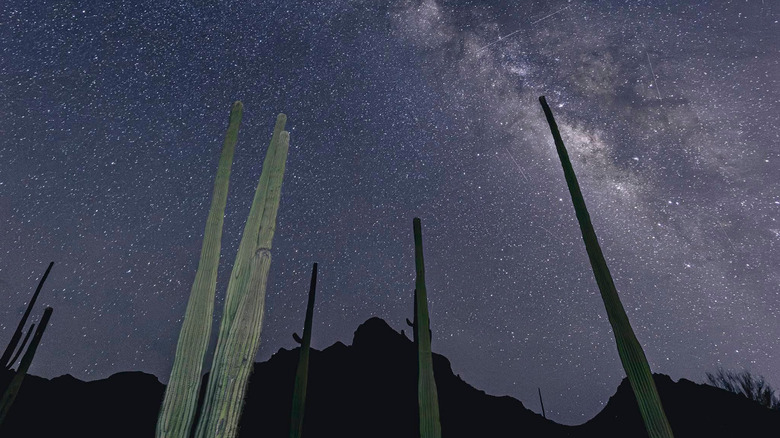
Camping is one of the best ways to appreciate the monument's dark skies. Organ Pipe Cactus National Monument offers three primary camping options. Entrance fees are separate from campground fees, and ground fires are prohibited throughout the park. Before booking, remember that the park has decided to ban cash in favor of card payments, a move that has sparked controversy among visitors.
The first option is Twin Peaks Campground, the park's developed campground. At $20 per night, it accommodates both tents and RVs and includes restrooms with running water, potable water, and solar-heated showers. Visitors may stay for up to 21 consecutive days. Alamo Canyon, on the other hand, offers a different experience. The rugged, primitive camping site costs less at $16 per day and includes a pit toilet, picnic table, and charcoal grill, but no potable water. Although it's cheaper, you can't stay as long here: camping is allowed for only seven consecutive days. What Alamo Canyon offers campers, though, is stunning views of the monument's rugged cliffsides and towering saguaro cacti.
Finally, the monument offers backcountry camping in nine designated wilderness zones. At $5 per permit, it is the least expensive and most adventurous option. Like at Alamo Canyon, backcountry campers may stay for up to seven consecutive days, though the same campsite may be occupied for only two nights at a time. For travelers seeking solitude beneath some of the darkest skies in the Sonoran Desert, it's hard to beat.