
Rangers Patrol Even More Of Yellowstone National Park Than You Think
The dramatic landscapes of the national parks in the U.S. are sights to behold, and the millions of visitors that flock to them each year are telling signs of just how rich the country's natural heritage is. According to National Park Service data, Yellowstone National Park — the third most popular National Park in the U.S. — welcomed nearly 4.8 million visitors in 2025. And why wouldn't it? With geysers, waterfalls, forests, lakes, and hot springs unfurling within its 2.2 million acres, Yellowstone is a place that demands to be seen at least once — even if, according to the NPS, those millions of visitors only get to explore less than 1% of the park's total area.
The task of safeguarding the vast, rarely-ventured-into remainder falls on the Yellowstone backcountry patrol rangers. Beyond the Yellowstone most visitors know lies sweeping stretches of backcountry that are divided into seven ranger districts, guarded year-round by 392 full-time rangers, a number that climbs to around 750 in the summer, per the NPS.
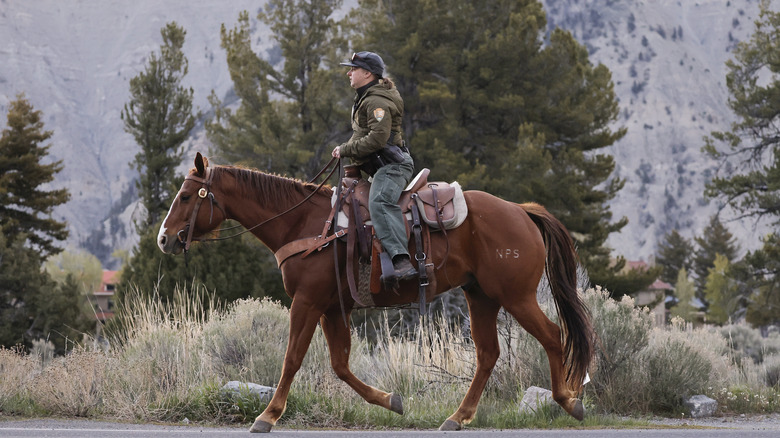
With expansive ground to cover across their multi-day shifts, rangers patrol their districts by whatever means the terrain calls for — on foot or horseback, by kayak or boat, or on skis and snowshoes when winter rolls around. Backcountry Ranger Dooley, for one, covers his stretch of the 1,000 miles of Yellowstone trails on horseback with his horse Roo — a partnership that has "really perfected our good cop, bad cop routine," he tells the NPS.
What Yellowstone rangers encounter on patrol
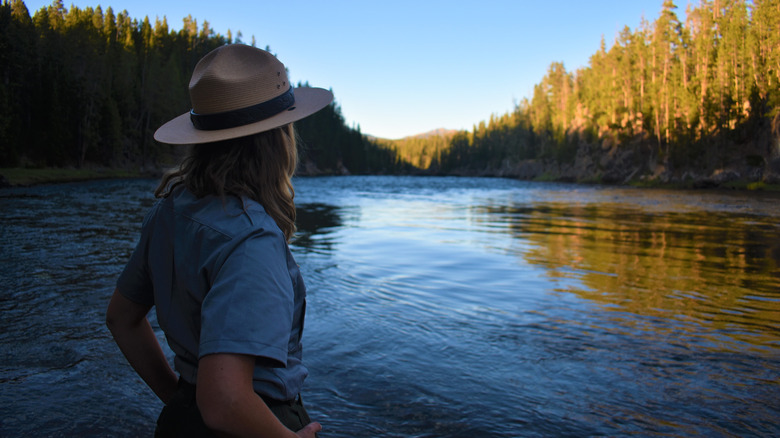
Patrolling their appointed areas is just the tip of the iceberg of what rangers actually do. Kimberly Lewis, a backcountry ranger at Yellowstone's Lake Ranger Station, gives a sense of the expertise the job demands beyond hiking. "We do trainings on chainsaw use, hand saw and axe use for clearing trail, horsemanship and packing, hanging food poles using rope systems, kayak and canoe rescue and search and rescue," she tells the Billings Gazette.
That preparation is well merited — hazards literally and figuratively come with the territory. Yellowstone ranger Peter Mangolds underlines how readiness comes into play in the wild when dealing with unforeseen circumstances such as wildfire, heavy snowfall, or unpleasant run-ins with park visitors — and then some even wilder surprises. "There is always the possibility of running into a grizzly bear while out performing trail work," Mangolds tells Yellowstone Explored. Yellowstone is, after all, one of the national parks where you're almost guaranteed to see a bear.
Throw in tasks of cleaning out campsite composting toilets, maintenance work, and clearing trails, and you get a picture of what Yellowstone's rangers deal with beyond the well-worn park corridors. Despite the isolation, Lewis puts things into perspective: "It's pretty astounding to be in the backcountry in Yellowstone National Park and realize that this valley, mountain, or body of water has remained the same for centuries and will endure beyond my lifetime." Plan on visiting any of the U.S.'s 10 most-visited National Parks? Brush up on the things park rangers wish you knew beforehand.