
10 Most-Visited National Parks In The US, Ranked From Best To Worst
Standing on the rim of an epic canyon, hiking through incredible geothermal wilderness, or watching a grizzly cross a meadow at dawn. These are just some of the experiences that attracted nearly 50 million people to America's top 10 most-visited national parks in 2025. But those are just the numbers; which national parks are actually the best?
The short answer is there's no definitive best or worst park. But we decided to rank the top ten most-visited from best to worst (for want of a better phrase) using six objective criteria: animal numbers, trail mileage, park size, age, UNESCO status, and Google review scores.
However, let's just remind ourselves one more time: They are all stunning parks. Visiting any of them is a privilege and an unforgettable experience. From the stunning canyons of Zion to the iconic sites of Yellowstone, here are America's ten most-visited national parks ranked from best to "worst."
1. Yellowstone National Park
The world's first national park is probably still its greatest. Nearly 4.8 million people visited this UNESCO World Heritage site in 2025, and it's little wonder. Sitting atop one of the world's most geothermally active spots, Yellowstone National Park has roughly 10,000 hydrothermal features, including more than 500 geysers. It's a concentration found nowhere else on the planet and reason enough to visit. Old Faithful is the most famous geyser. It erupts at intervals averaging between 45 and 90 minutes, and patient observers are rewarded with bursts reaching as high as 185 feet.
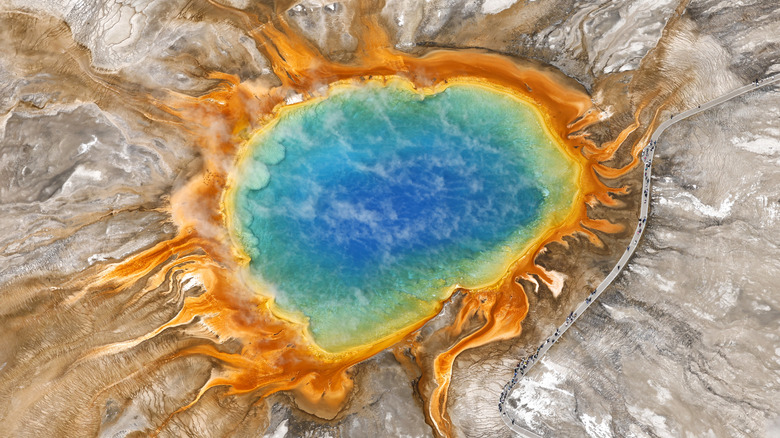
At Mammoth Hot Springs, the water spills down in a series of vast mineral-rich terraces. You can witness this steaming spectacle from above on boardwalks or drive through the travertine formations. Winter is particularly atmospheric. You can ski or snowshoe along the Upper Terraces while the springs steam against the cold air. The Grand Prismatic Spring is another geothermal spectacle. This vivid pool of electric blues, greens, and fiery oranges is best appreciated from above on the iconic Fairy Falls Trail, a 5-mile loop that passes through a lodgepole pine forest and ends at the 200-foot waterfall.
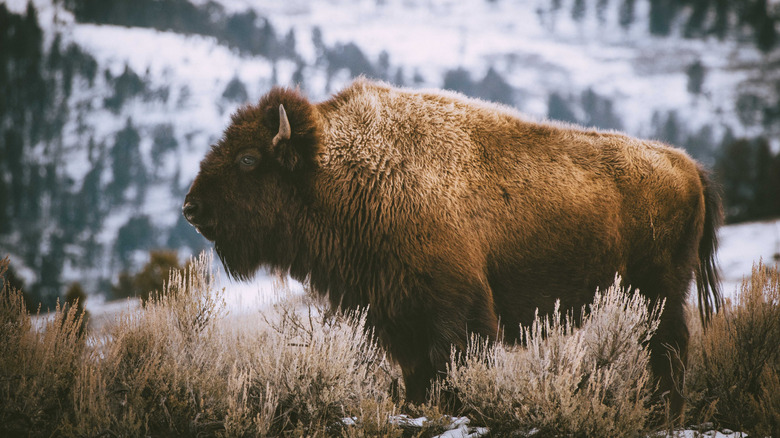
In fact, with over 1,100 miles of hiking trails spread across a wilderness of 2.2 million acres, Yellowstone is a hiker's dream. The sheer scale means most of the park stays remarkably quiet. But it's the wildlife most people come for. Lamar Valley is the animal heartland. This broad, open expanse is a place where bison herds stretch to the horizon while wolves shadow their every move. Grizzlies patrol the edges of the treeline, and elk sound their distinctive bugle during the mating rut. But let's hope you get to spot some of the park's more adorable animals, too.
2. Yosemite National Park
Yellowstone may be the world's first national park, but it probably should have been Yosemite. Eight years prior to Yellowstone's designation, Abraham Lincoln made Yosemite Valley the first area in the world to be preserved for public enjoyment. It would be another 26 years before Congress formally designated it a national park. Today it covers more than 750,000 acres, boasts UNESCO World Heritage status, and, in 2025, welcomed over 4.2 million visitors.
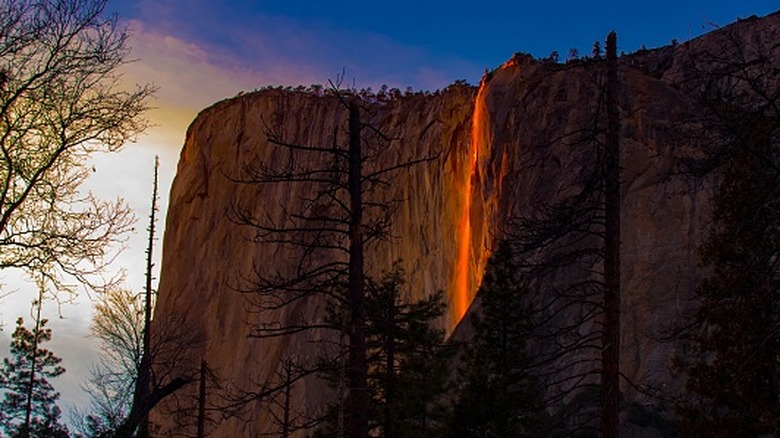
Most of those visitors were there to take in the park's colossal sites. There's El Capitan, a sheer wall of granite rising 3,000 feet from the valley floor. If you have the nerve and want to take in the views from above, it's the most famous big wall climbing destination on Earth. Horsetail Falls flows down its face and deserves equal attention. Every February, it takes on the mantle of the "Yosemite Firefall," when the setting sun illuminates the cascade in a blaze of orange and red. This creates an illusion of flowing lava — and in 2026, visitors can see it without reservations for the first time in years.
At 2,425 feet, Yosemite Falls also contributes to this park of colossi. It's a thundering cascade that dominates the valley skyline and can be heard from miles away. Half Dome is one more iconic monument that genuinely takes your breath away. It's a vast dome of bare granite that looms over Yosemite Valley, with its near-vertical flat face staring out over the landscape. At ground level, Mariposa Grove is home to more behemoths. The 500 giant sequoias there are so massive that they rank among the largest living things on the planet, including Grizzly Giant, which is thought to be an astonishing 2,700 years old.
3. Grand Canyon National Park
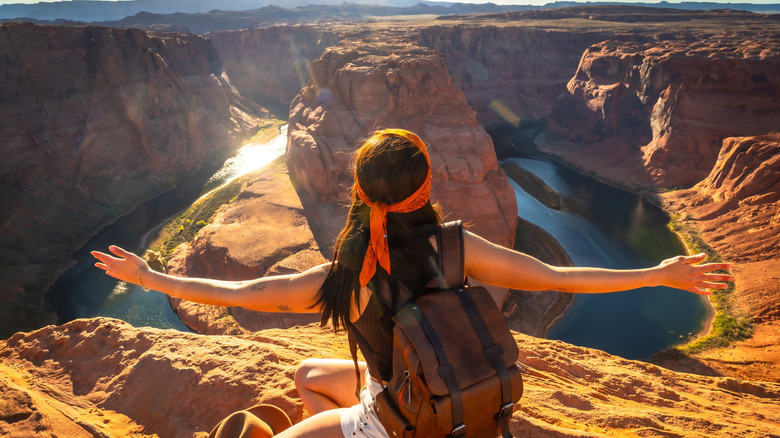
Does the Grand Canyon need any introduction? Probably not. It's one of the world's most recognizable natural wonders, but seeing it in person still defies expectations. It's a canyon of near-incomprehensible scale — 277 miles long, over a mile deep, and 18 miles across at its widest point. The canyon was shaped over more than 6 million years by the Colorado River. And at over 1.2 million acres, the park is second only to Yellowstone on this list in terms of size. The sheer spectacle of the place was enough to attract 4.4 million visitors in 2025.
One of the most spectacular viewpoints is Toroweap Overlook on the North Rim. There, the ground falls away 3,000 feet in a massive drop down to the river. You can look down from any point along the rim to see the canyon walls tell a geological story of rock layers stretching back 2.5 billion years. Not many people venture far from the rim. But if you want to get down for a closer look, the Bright Angel Trail offers the most accessible descent. It winds for 9.5 miles to Phantom Ranch at the bottom, where you'll find cabins, dormitories, and a restaurant.
But most visitors stick to the Rim Trail above. This easy 13-mile paved route follows the canyon edge past various viewpoints. As you walk, take your eyes off the panorama on occasion and look to the skies. In addition to UNESCO status, Grand Canyon National Park holds an official designation as a Globally Important Bird Area. There are over 447 documented species, including the endangered California condor. The hikes and crowds can be testing in the stifling summer, though. So visit in spring or fall for cooler temperatures and a quieter experience.
4. Glacier National Park
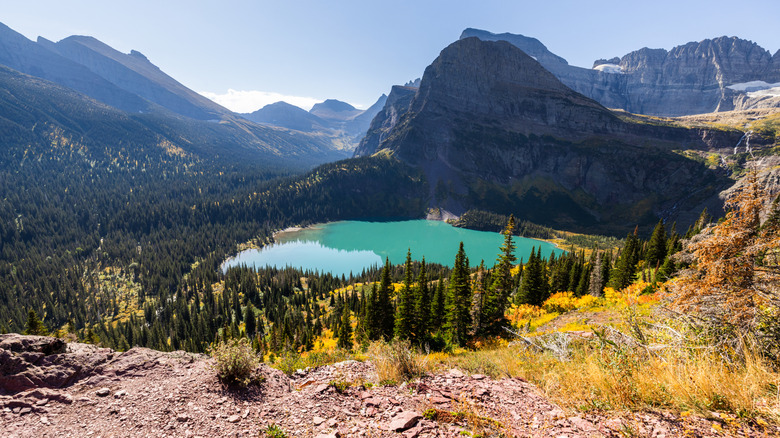
Back in 1850, there were 150 glaciers in Glacier National Park. That year saw the end of the Little Ice Age, which had begun some 550 years prior. Today, just 25 of these ice masses remain — and scientists expect them to disappear completely sometime in the next few decades. They reached their peak in terms of size during that mini-glacial period, but they were originally formed some 7,000 years ago. Back then, they started sculpting the U-shaped valleys that define the park's landscape today.
Despite the diminished numbers, the park still has a beauty so unmatched that it's known as the "Crown of the Continent." There are around 700 miles of hiking trails across 1 million acres in this wilderness available for you to enjoy that beauty. Among them is the Grinnell Glacier hike. It's 11 miles of pine forest and wildflower meadows that take you by tumbling waterfalls to one of the park's most famous glaciers. Another rewarding trail is the Iceberg Lake Trail. This one takes you through 9.7 miles of gorgeous scenery to a lake so cold it still holds floating icebergs well into summer.
However, if you'd prefer to stay in your car, Glacier is home to a drive that will make you pull over every five minutes. Going-to-the-Sun Road is 50 miles of mountain highway that crosses the Continental Divide. Glaciers hang overhead, waterfalls cascade down, and mountain goats cling to the cliffsides. They are one of 71 mammal species in the park, with Glacier also home to one of the largest remaining grizzly bear populations in the country. All of this helped to attract over 3.1 million visitors in 2025. Most visitors come between May and September, so travel outside that period if you prefer smaller crowds.
5. Great Smoky Mountains National Park
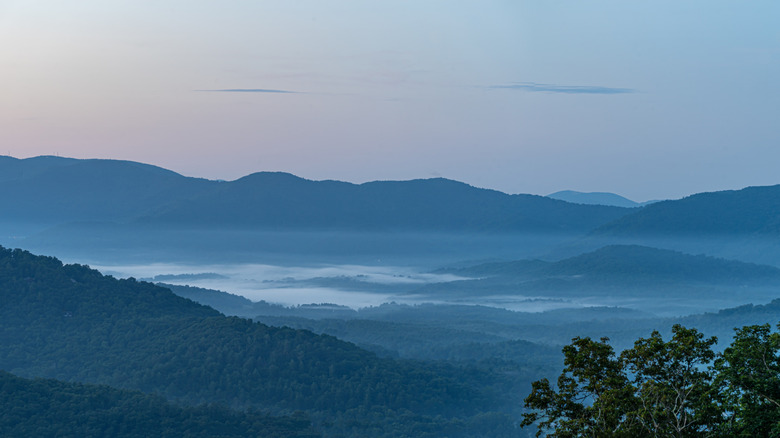
The mist is always there in Great Smoky Mountains National Park — a blue-grey veil that gives this UNESCO-designated area its name. The park is divided between Tennessee and North Carolina and covers more than half a million acres. It's also uniquely free to enter, which may account for its staggering visitor numbers. Exactly 11,527,939 people arrived in 2025, more than twice the number who visited Zion National Park, the nation's second most-visited.
Scenic drives, wildlife watching, and exploring the 800 miles or so of trails are other reasons so many people visit. Cades Cove is one of the park's iconic attractions. It's a loop road passing by pioneer homesteads, cemeteries, and churches that tells the story of the people who lived here long before its national park designation in 1934. At 5,046 feet, Newfound Gap is the lowest drivable mountain pass in the park. It offers panoramic viewpoints like the Newfound Gap Overlook, where you can take in some glorious sunsets while standing astride both states.
The signature hike is the Alum Cave Trail, a roughly 4.5-mile round trip that weaves through old forest beneath overhanging cliffs before reaching the 80-foot concave bluff the trail is named for.Along the way, you might catch sight of the park's abundant wildlife. The Smokies have the densest black bear population in the United States outside Alaska — and since 2001, elk have returned to the North Carolina side of the park. For something even more enchanting, the forest around Elkmont comes alive with the countless tiny lights of synchronous fireflies pulsing in unison. This late spring phenomenon is so popular that a lottery system is in place to control access.
6. Olympic National Park
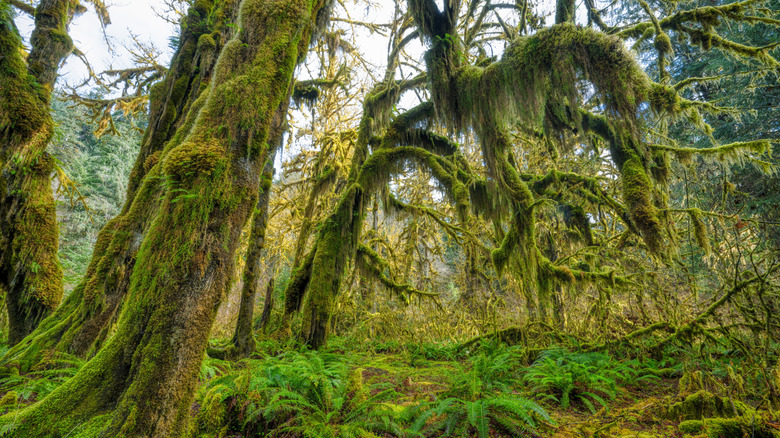
Olympic National Park is almost 1 million acres in size and covers three distinct ecosystems — wild Pacific coastline, glaciated mountain peaks, and ancient temperate rainforests. The Hoh Rain Forest is one of those places that makes you naturally hush your voice. It's an old-growth forest older than America itself, and a living cathedral of soaring moss-draped conifers. Among the park's many other iconic sites is Lake Crescent, a gem for mountain views, clear blue waters, and paddling. In fact, its basin is filled with water of such striking blue-green clarity that it would look more in place in a Caribbean lagoon.
While Olympic now has UNESCO status, it never became a national park until 1938. But it was 1909 when President Theodore Roosevelt set it aside as a national monument. This was to save the now-called Roosevelt elk from overhunting, and they still graze in the Hoh's ancient clearings. Black bears can be seen foraging in the undergrowth, and if you step out onto the coastline, you might see harbor seals basking on the rocks and tufted puffins nesting on cliff faces.
You'll see plenty of that wildlife when hiking. Easy options include the Hurricane Ridge trail, which offers panoramic views from the summit of Hurricane Hill. For something more challenging, the Hoh River Trail stretches for 18.5 miles through the heart of the rainforest to the Blue Glacier moraine at the foot of Mount Olympus. If it's even more serious backpacking you're looking for, the High Divide and Seven Lakes Basin Loop is a 22-mile circuit through alpine lakes and peak-filled horizons. The summer months offer the best conditions when roads are open and the weather is reliable. But remember, most of the park's 3.5 million visitors had that same idea in 2025.
7. Rocky Mountain National Park
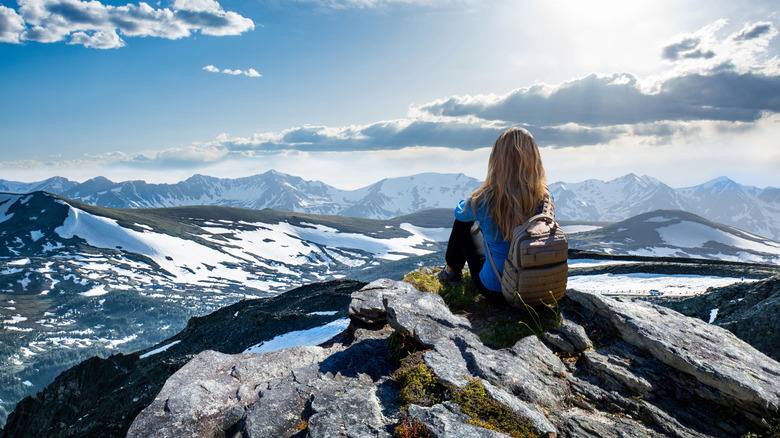
At lower elevations, Rocky Mountain National Park is a mosaic of meadows, marshlands, and dense pine forest. Climb higher, and the trees thin out, replaced by the vast, open alpine tundra of the Rocky Mountains. One of the park's most celebrated drives is the Trail Ridge Road, a 48-mile alpine highway that crosses the Continental Divide and is the highest continuous paved road in the U.S. Back on ground level, the haunting bugles of elk can be heard throughout the valleys in fall, while bighorn sheep cling to the cliffs above.
You might even spot rare wildlife like mountain lions, bears, bobcats, and pine martens from the park's 350-plus miles of hiking trails. These hikes span every level of ambition — from short, accessible walks to Longs Peak, a 14,259-foot summit that demands 15 miles of hiking over 5,000 feet of elevation gain. Then there are the easy Bear and Nymph Lake trails, which combine to make one of the world's most beautiful hikes. The 265,807-acre park is also home to a small amount of wetlands. But what this area lacks in size, it makes up for in biodiversity. It shelters nearly a third of all plant species and almost half of all bird species found in Colorado. And, with official designation as a Globally Important Bird Area, this is the place to be for birdwatching.
It's best to visit Rocky Mountain between July and October when wildflowers fill the meadows and the snow retreats from the trails. In the fall, the aspen lights up gold, and the wildlife is out in force.
8. Grand Teton National Park
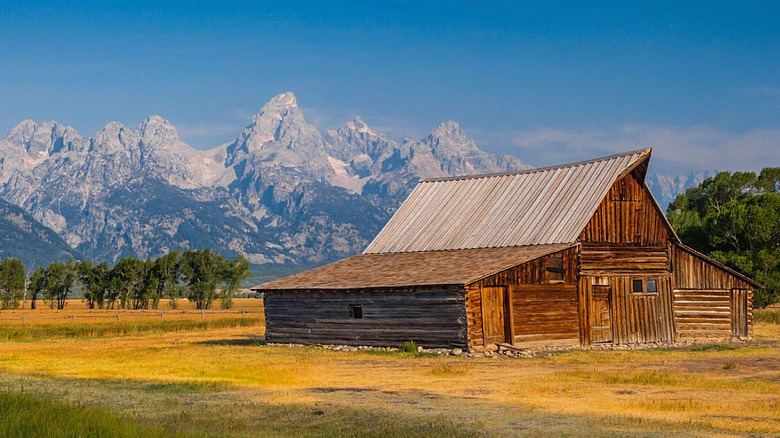
The absence of foothills in Grand Teton National Park is what makes it so visually arresting. It's 310,000 acres of jagged peaks ascending sharply from the valley floor, and Jenny Lake is where you might see some of the most beautiful in Wyoming. Across the water, the moderate Hidden Falls hiking trail has a stunning cascade of white water that crashes down through a corridor of conifers. For seasoned hikers, the Paintbrush/Cascade Canyon Loop is a long, grueling circuit that climbs up to a high alpine divide before descending past picturesque lakes to Inspiration Point, which offers sublime views back across Jenny Lake.
To the southeast, you'll find one of the park's most iconic sights. Mormon's Row is a cluster of homestead barns that were first settled in the late 1800s. Sun-bleached timber glowing in the morning light and a wall of jagged peaks filling the sky beyond combine to make it one of the park's most photographed spots. Wildlife is, of course, another big draw for shutterbugs. But given Grand Teton sits in the same ecosystem as Yellowstone, much of the animal population is similar. However, one thing that is unique is the park's pronghorn migration. This spectacular sight has been ongoing for more than 6,000 years. You can see it in spring or fall, with autumnal colors peaking in September if you want to combine wildlife viewing with that spectacle. Summer is the busiest time and was when most of 2025's 3.8 million visitors arrived.
9. Acadia National Park
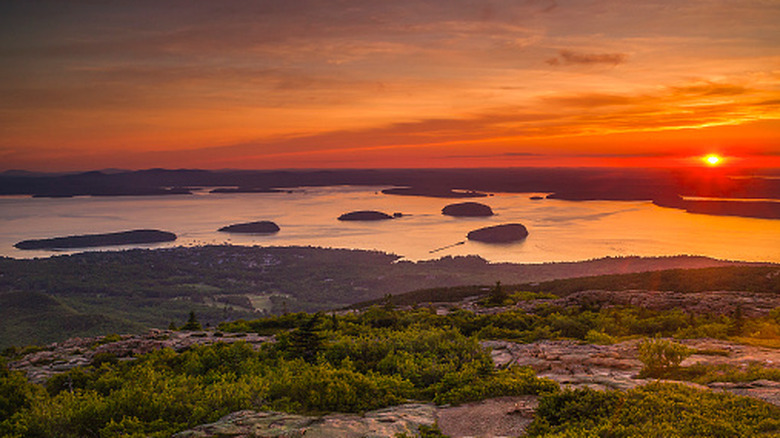
Maine's granite mountains simply run out of land and plunge into the Atlantic at Acadia National Park. It's an elemental coastline of cliffs, coves, and open sea that feels like the end of the world. Keeping watch is the Bass Harbor Head Light Station. It sits upon a rocky granite ledge, stark against a sky that turns a fiery orange and red at sunset. It's one of Acadia's most photographed views, but Cadillac Mountain is an even more popular attraction. In fact, it's so busy that the National Park Service now requires advance vehicle reservations for those driving up during peak season. Alternatively, you can hike up via the North Ridge Trail, and if you leave early enough between October and March, you could be one of the first in the country to see that explosive deep red and orange sunrise.
Acadia is also famous for Carriage Roads, a network of car-free gravel paths that cut through the heart of the park. They wind past mountain lakes, through dense forest, and across elaborate stone bridges. Keep your eyes to the skies to spot the peregrine falcon, now nesting on the park's cliffs once again after its population collapsed to near zero. Acadia might be one of the smallest of the most-visited national parks at 49,075 acres, and it can't boast UNESCO status. But that didn't stop 4 million visitors from arriving in 2025. If you want to explore the postcard-worthy scenery at this unique national park, arrive in mid to late October. This is when the fall foliage is peaking, the summer visitors are gone, and the whole park is easier to navigate.
10. Zion National Park
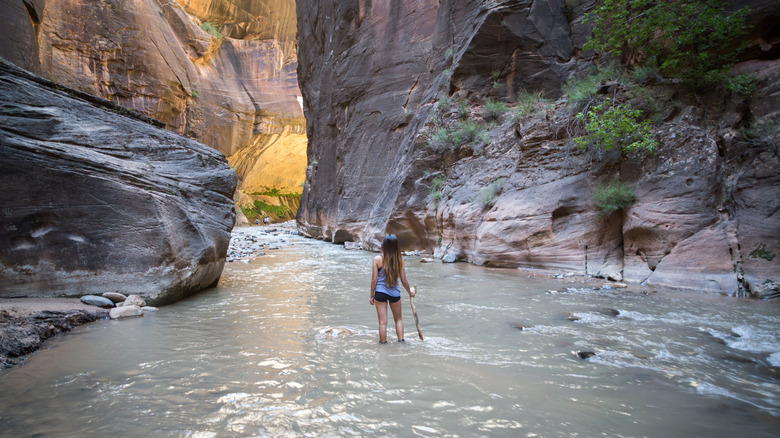
Zion finishes last on our list, but that's in no way a reflection of its quality. At just under 150,000 acres, it might be one of the smaller parks, and wildlife numbers are modest. But with nearly 5 million visitors, it was America's second-most-visited national park in 2025. And they were mostly there to take in its extraordinary canyon landscapes. The Virgin River and 250 million years of geology have carved narrow canyons between soaring red and white sandstone cliffs, spanning around 5,000 feet of elevation change from desert floor to conifer forest. Among the park's iconic sights is the view from Canyon Junction Bridge. There, you can see the Virgin River twisting and winding its way through the valley below. The Watchman, a sandstone monolith that burns a deep red when the sun begins its descent behind the canyon walls, looms over it all.
And while there are only about 90 miles of trails, Zion is a world-renowned hiking destination. The Narrows is a slot canyon route that sees visitors actually hiking through the water. With the canyon walls pressing in from both sides as the Virgin River swirls around your legs, it's probably the park's most extraordinary experience. Be warned, however. The river can rise from knee-high to six feet in minutes. At the first sign of rising or murky water, get out and find high ground.
There are also quiet, underrated trails to explore, but the world-famous Angel's Landing is another exhilarating experience. This 5-mile round trip ends with a half-mile scramble along a knife-edge ridge, and you need to hold on to chains bolted into the cliff. The summit rewards with one of Zion's best views, but a lottery permit is required, and the final ridge is not for anyone uncomfortable with heights.