
Hotel Employees Aren't Replacing Pillows As Often As You'd Think
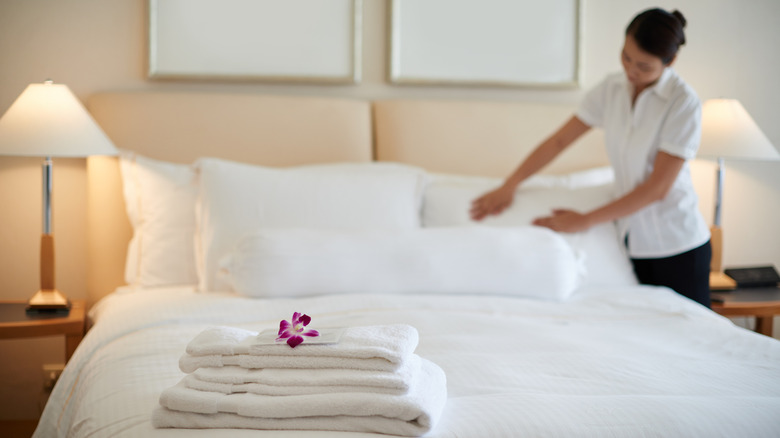
We're trusting hotels with a lot when we turn in for the night. Sleeping in a hotel bed means taking it on good faith that the linens have been laundered, the pillows fluffed, and all threat of bedbugs done away with, and you'd think that a hotel would take all possible measures to make sure that trust was earned. What better way to earn bad reviews than by using inadequately clean or comfortable bedding? And it's hard to imagine a more critical element of a clean and well-kept bed than the pillows.
When you have a lot of people cycling through the same room, bedding gets worn out quickly, and it's industry standard to replace it regularly enough to keep it fresh and clean. This is especially true of pillows, which quickly lose firmness and texture or start to yellow when they're used for too long. So you might imagine that hotel pillows would be constantly replaced. This is not quite the case.
Conventional advice tells you that average at-home pillow should be replaced every year or two. That means hotel pillows, which can see hundreds of guests, should be replaced constantly, right? Well, not quite. Hotel linen provider The Linen Factory suggests replacing them every 6-12 months for budget and midrange hotels to account for high turnover, or whenever pillows start to display key signs of wear like lumpiness and yellowing.
It's worth being vigilant, but pillow replacement timelines aren't likely to affect your stay
What's probably most helpful here is to remember that, despite the seeming infrequency of pillow replacements, noticeable problems with bedding aren't among the most common hotel complaints. Although upkeep still isn't perfect, the industry standard of using pillow protectors and washing pillowcases between guests goes a long way towards preventing the worst pillow cleanliness issues.
The reality of a hotel business model is that it may not be possible to keep rooms as pristine as you'd hope. Take hotel duvets: they're similarly hard to wash, but most travelers never have complaints. So unless you have allergies or respiratory concerns that less-than-fresh pillows might aggravate, it's wisest simply to take the pillows for what they are — well-maintained items that see a lot more use than is typical.
That said, there are ways to help keep cleanliness standards high in hotels. Bedding isn't among the dirtiest hotel room items you shouldn't touch, but you might still want to inspect your pillows before you sleep on them because hotels might not wash them as frequently as you'd like. Reading the reviews of a hotel before you book to see if past guests have noted cleanliness concerns can help as well. And remember that as long as you can sleep comfortably, there's probably no need to panic.