
Why East Coast Beaches Have Softer Sand Compared To The West Coast

If you've visited beaches on both U.S. coasts, you may have noticed that the sand doesn't feel quite the same. In a way, that's only natural; when you have more than 95,000 miles of shoreline (according to the NOAA), you're bound to see a wide variety of beach conditions. But it's also a geological fact that you'll often find softer-feeling sand on the beaches of the East Coast than you will on the West.
Several geological factors help create the soft sand found on the East Coast. The continental shelf is typically wide; the beach should be far away from tectonic plate boundaries; and ideally, sedimentary rock, which erodes more easily, should be present. All of these elements are common on the East Coast. The source of sand — usually either sediment deposited by rivers or worn-down gravel left behind when glaciers retreated from the coasts during the Ice Age — is also ideal for creating fine, powdery sand of the type you'll see at spots like the ever-popular Pensacola Beach in Florida, one of the top-ranked beaches in America.
The West Coast, on the other hand, sits on the "Ring of Fire," the belt of intense volcanic and seismic activity on both sides of the Pacific Ocean shaped by colliding tectonic plates. This tectonic activity shaped a coastline characterized by steep cliffs very close to the sea, narrow beaches, and rocky shores. Much of the sand at some West Coast beaches comes from the erosion of those sea cliffs. Those harder rocks tend to produce coarser grains, while the continental shelf tends to be narrower than it is out East. As a result, beaches along much of the West Coast tend to be rockier, and the sand tends not to be as fine as that found on the East Coast.
There are exceptions to these geological rules
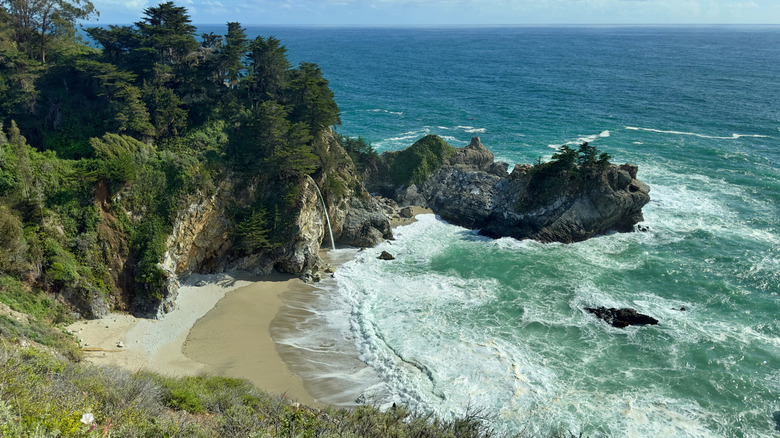
While the East and West Coasts have geological features that give their beach sand certain characteristics, there are definite outliers. The famous family-friendly beaches of Hilton Head Island are known for their hard-packed sand, and beach nourishment has brought softer-than-average sand to some West Coast beaches, such as San Diego's upscale Coronado Beach. But because of their relative geographies, you're most likely to find soft beach sand along the Gulf and southern Atlantic coasts.
But that by no means implies that East Coast beaches are inherently more enjoyable to visit. While travelers may not find the blissfully soft white sand that East Coast beaches are known for on every West Coast beach, the dramatic backdrop of sea cliffs at many such beaches is hard to beat for scenic beauty. West Coast beaches also have advantages for recreational visitors, such as more consistent surfing conditions and an abundance of hiking opportunities near the beach, thanks to the region's rugged coastal terrain. So this geological curiosity isn't a hint at which coast to prioritize for your next beach vacation – it's a quirk of geography that makes some beaches ideal for lounging and postcard views while others might be better for adventures and dramatic scenery. There's scenic beauty and beachy fun to be had either way.