
America's Largest State Park Is An Alaskan Gem With Crystal-Clear Lakes And Underrated Fishing Spots
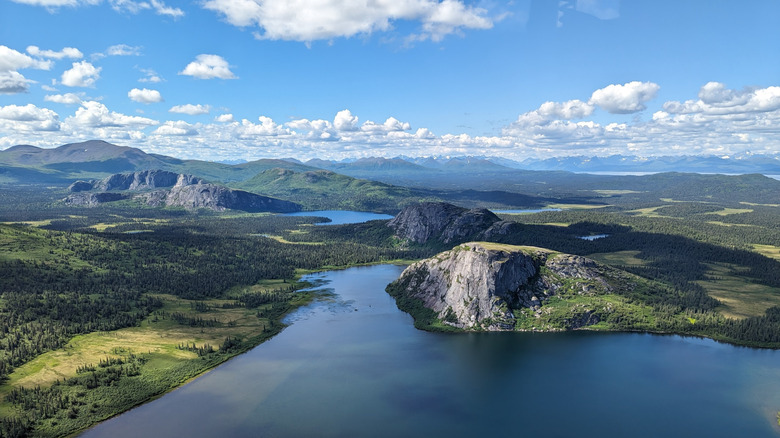
Many state parks promise isolation and remote wilderness, but few deliver on that promise as well as Wood-Tikchik State Park in Alaska. The park covers a massive 1.6 million acres in the southwestern part of Alaska, north of the town of Dillingham, approximately 330 miles from Anchorage. At that size, this one single state park covers an area larger than the entire state of Delaware.
The park consists of two systems of interconnected lakes that give the park its name. The Wood Lake system connects five clear-water lakes in the park's southern half, while the Tikchik Lake system connects six lakes in the park's northern half. Surrounding the lakes and rivers are tall mountains, gravel beaches, and untouched spruce forests. In fact, the park is so remote that there aren't any roads into it — you have to fly or boat in from Dillingham. Plus, Dillingham itself is cut off from the state's road system and is only accessible via daily commercial flights from Anchorage. This isn't a normal level of remote wilderness; it's considered remote even within Alaska — a state that practically embodies the term.
However, the park's secluded location is also its biggest strength. Because of the effort involved in getting there — a flight from Anchorage to Dillingham, then another flight into the park — the Wood-Tikchik State Park offers a breathtaking natural setting that has remained largely untouched by human development. Most visitors to the park come for its crystal-clear, fish-filled lakes. The waters here are so replete with fish, that the Bristol Bay region (which the Wood and Tikchik Lake systems empty into) has become the largest wild sockeye salmon fishery in the world, producing nearly 46% of the world's harvest (via the U.S. Environmental Protection Agency).
World-class fishing in Wood-Tikchik State Park
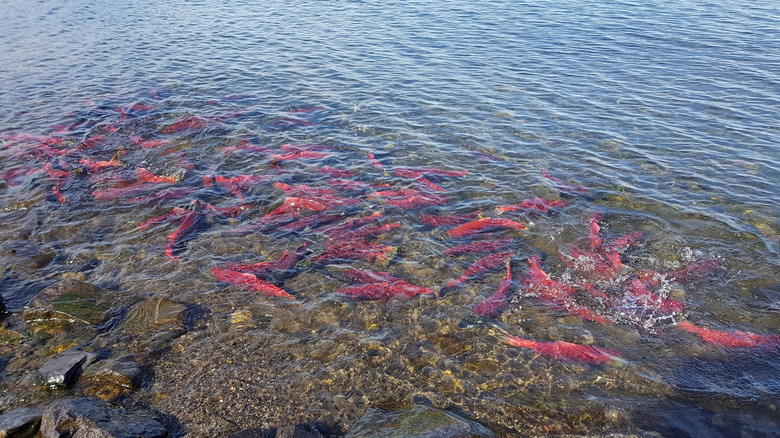
Alaska is America's least-visited state, but that isn't for a lack of beauty. The state boasts some of the most gorgeous hinterlands, undisturbed wildlife, and even America's largest — and most underrated — national park. So, it's no surprise that America's largest state park also lies in Alaska, and offers the same stunning backcountry beauty and free-roaming wildlife that the rest of the state has become known for. The one part of Wood-Tikchik State Park that stands out is the incredible fishing opportunities within the park.
Visitors to the Wood-Tikchik State Park often come for multi-day fishing expeditions in the park's clear, salmon-rich waters. The Wood Lake system is more easily accessible, and thus the most visited. On clear days, visitors can also take a floatplane into the northern Tikchik system to kayak along more isolated waters.
The Wood and Tikchik Lake systems provide a crucial habitat for all five varieties of Pacific Salmon, as well as other species such as grayling, rainbow trout, lake trout, Arctic char, Dolly Varden, and northern pike. According to Travel Alaska, the Agulowak and Agulukpak rivers in the Wood Lake system are some of the best fishing spots in the park, but Hatch Magazine points out that Lake Kulik, the furthest of the Wood lakes, has much better grayling specimens. It doesn't really matter which lake you land at — the wide range and sheer number of fish available means you're looking at a successful fishing trip regardless. Most visitors plan for at least a few days of fishing and paddling along the rivers back to Dillingham, with frequent breaks to find a fishing spot where you won't be fighting with grizzlies for the best salmon.
Planning a trip to Wood-Tikchik State Park
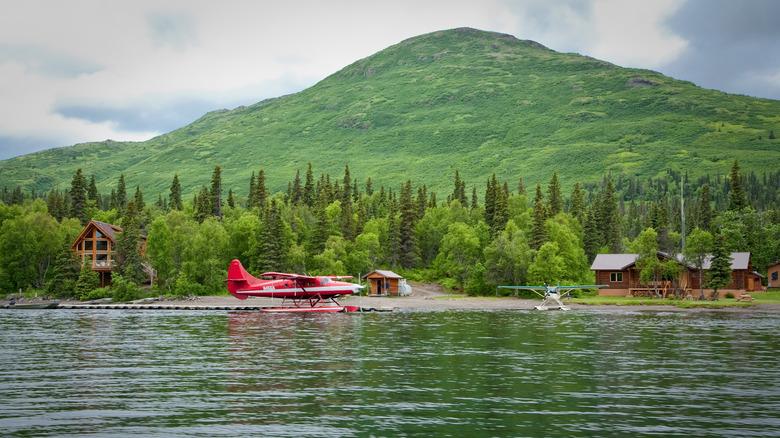
One of the best things about a trip to Wood-Tikchik State Park is that camping is allowed basically anywhere you can pitch your tent. There aren't any designated campsites or facilities, just primitive backcountry camping in miles of untamed land with no one in sight. Well, except the bears, moose, foxes, wolves, and beavers, of course. If you're hoping to camp without worrying about bears stumbling onto your campsite, consider camping on some of the small islands along the way, as Stock Alpine reports that there are fewer bears there.
While most parts of Wood-Tikchik State Park are open to camping as long as you can find a comfortable spot, some sites along the rivers and lakes require camping permits. These permits cost a flat $350 regardless of the number of nights you stay, and only limited numbers are issued each season. You'll also have to factor in the cost of flights to the park, which varies between providers. Add in the flight costs to and from Anchorage, which range from around $200 to $300 one-way depending on how far in advance you book your tickets, and you've got a pretty hefty price tag to visit Wood-Tikchik State Park.
To reduce your costs at least a bit, fly into the park and then paddle back to Dillingham or Aleknagik. The journey from Lake Kulik — the furthest of the Wood lakes — to Dillingham typically takes 10 to 14 days. If you're getting out of the boat at Aleknagik, you'll also have to arrange for a car to drive you 25 miles to Dillingham, which is the only town nearby with commercial flights to Anchorage. Here's a tip: while you're in Anchorage, check out Alaska Wild Berry Products for the world's largest chocolate fountain.