
The European Union's Largest National Park Has Pristine River Views, Rare Wildlife, And Ethereal Rainforest Beauty
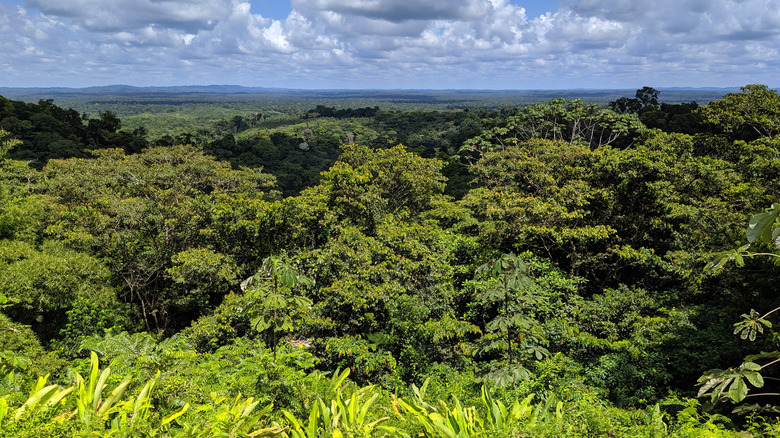
The air in the Guiana Amazonian Park is thick with the aromas of the jungle mingling with tropical flowers. From the forest floor, the sky is shut out by a dense, closed canopy often obscured by layers of ethereal mist. This is one of the last truly untamed ecosystems on the planet. Intriguingly, the park has the rare distinction of being located on the northeastern coast of South America while also forming part of France's overseas department of French Guiana. And so, perhaps a little confusingly, this remote and vast expanse of the Amazon rainforest is not only France's largest national park but also the largest in the European Union.
Covering more than 8 million acres of Amazon rainforest and an incredible 40% of French Guiana, this vast expanse of nature is one of the world's most biodiverse ecosystems, where lush tropical forest stretches to the borders of Brazil and Suriname. It's home to some startlingly rare wildlife too, from giant otters in the waters and jaguars weaving through the trees to vibrant poison dart frogs and hundreds of extraordinarily colorful bird species.
Far from the modernity of roads and large settlements, the park protects huge tracts of primary rainforest, winding rivers, and isolated Indigenous communities. And unlike many of the Amazon's better-known destinations, Guiana Amazonian Park remains remarkably untouched, with access largely limited to small aircraft, canoes, and hiking trails, helping to better preserve its breathtaking natural landscapes.
Flourishing wildlife in one of the Amazon's largest protected forests
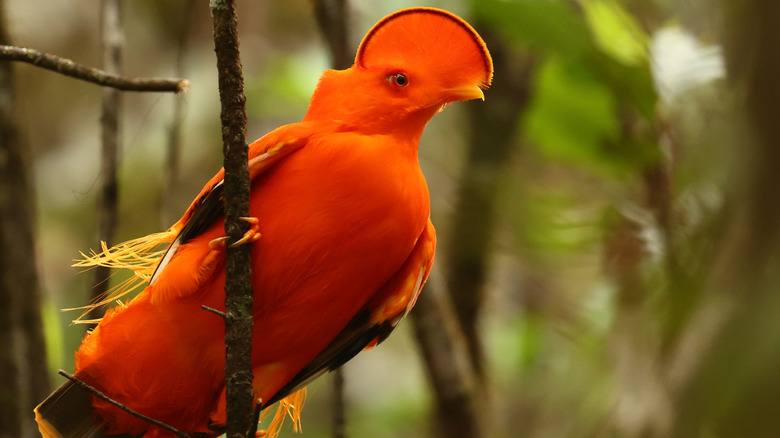
Guiana Amazonian Park is one of the most biologically rich places in the Amazon Basin, providing refuge for a staggering array of wildlife. For animal lovers, there are opportunities to see elusive mammals such as jaguars, giant otters, giant anteaters, tapirs, and black caimans, while its forests provide habitat for iconic birds such as the harpy eagle, the bright aperol-orange-colored Guianan Rupicola rupicola, and more than 800 other recorded bird species.
Wildlife encounters are never guaranteed, of course, but that uncertainty is part of the experience. With a little luck and some awareness, wildlife excursions can reveal colorful macaws overhead and troops of howler and spider monkeys jumping through the canopy. Even without a major sighting, the rainforest teems with life, from brilliantly colored poison dart frogs and countless butterflies to orchids, towering kapok trees, and dense palm fronds — and even a few animals you probably wouldn't want to see in the rainforest.
The park's remarkable biodiversity is closely tied to its Indigenous peoples. Communities including the Wayana, Teko, Wayãpi, and Apalaï maintain cultural and spiritual connections to the forest, relying on generational knowledge passed along orally for sustainable farming practices, hunting, fishing, and land management. Indeed, their understanding of medicinal plants, seasonal wildlife movements, and river ecosystems, continues to play an important role in protecting this incredible place, especially important when many of the planet's iconic natural destinations are slowly being destroyed by climate change.
Rivers and rainforest trails reveal the park's remarkable landscapes
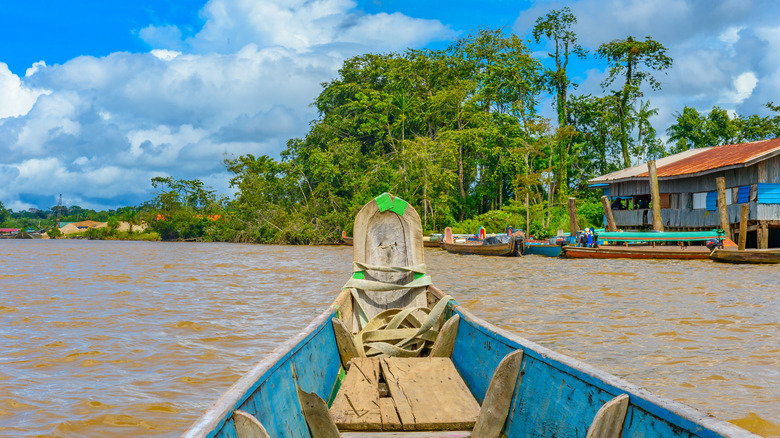
The Guiana Amazonian Park's rivers are its lifelines, particularly as the park has no roads marring its otherworldly beauty. The Maroni to the west and the Oyapock in the east serve as gateways into the rainforest, with canoe journeys passing along seemingly impenetrable walls of trees, impressive granite outcrops, and through stretches of forest where the only sounds are flowing water and birdsong echoing from above.
For hikers, the remote village of Saül serves as the park's principal gateway, with a network of marked trails leading beneath towering kapok trees and into one of the Amazon's most pristine forests. More adventurous visitors can tackle the wild and challenging hike to Mont Galbao, while canoe excursions along Mémora Creek, home to the aforementioned giant otters, lead to the Susu Bella inselberg, where orchids cling to ancient granite outcrops, and Amerindian grinding stones offer archaeological evidence of the region's earliest inhabitants.
While reaching Guiana Amazonian Park requires a tremendous amount of planning, most journeys begin in Cayenne before continuing by small aircraft or river transport to communities such as Maripasoula or Camopi. An alternative journey to the Amazon, particularly for travelers who'd prefer to travel by road, is Brazil's wild BR-319 highway, which takes you into the heart of the Amazon jungle via one of South America's most notorious driving routes.