
14 Best Ways To Make Sure Your Dollar Goes The Furthest On A Road Trip
We may receive a commission on purchases made from links.
The U.S. is brimming with stunning and storied routes for memorable road trips, from classics like Route 66 — a.k.a. "The Mother Road" — to scenic drives on lesser-known byways. This time-honored tradition can also vary in terms of cost. Whether you choose to be economical or super luxurious, a lot of that comes down to a combination of where you choose to stay, how and where you eat, the number of people you're traveling with, and even how you drive.
I've been on road trips that lasted a few days and others that stretched on for months (and thousands of miles). Over time, I've learned quite a few tricks for saving money along the way, because, even though there are plenty of ways to cut costs, little things can add up quickly. Many elements of a road trip are inherent to spending money, such as booking places to stay, planning an itinerary efficiently while still seeing all you want to, and making sure you have the right equipment, food, and other supplies. Some tips below are best for shorter, more regional journeys, while others will come in handy when you're out for a longer stretch.
In addition to my own experiences criss-crossing the country, I've referenced blogs and Reddit discussions, plus tourism resources and official company information, where relevant. Prices tend to fluctuate a lot for things like fuel and food, but we have researched some specific toll amounts and admission fees. Read on for 14 helpful ways to make sure your dollar stretches as far as possible while you're on the move.
Avoid tolls
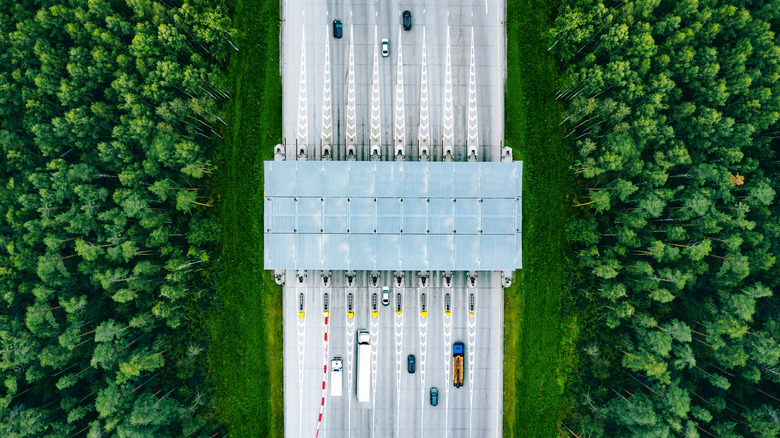
Currently in the U.S., 35 states institute toll roads or other fee-required routes like bridges and tunnels. Different regions use different systems. Illinois residents will be familiar with I-PASS, for example, and other networks include California's FasTrak, TxTag in Kansas, Oklahoma, and Texas, and SunPass and E-ZPass in the east. States use toll income to fund maintenance and repair infrastructure, and in 2026, several states raised their rates.
The Ohio Turnpike stretches clear across the northern part of the state, for example, and a journey from west to east will run more than $23 without an E-ZPass pass (but having one will bring the total to $16). Crossing the Golden Gate Bridge into San Francisco is at least $10 for a standard vehicle without FasTrak (it's still at least $9.75 with it). In Oklahoma, I ended up on the Cimarron Turnpike near Tulsa without having a plan to avoid it, and it ended up costing me a little more than $8. While that doesn't seem like a lot on its own, the fees add up if you end up on a lot of toll roads. That $8 could instead be a really nice snack somewhere. If you have a little extra time to spare, take state or county roads rather than major highways in these instances. A silver lining is you'll find more scenery, too.
Use GasBuddy or Upside for fuel deals
One of the best aspects of a road trip is discovering places that feel totally unfamiliar, but along with that comes the uncertainty of where the next gas station will be and how much fuel will cost. Fuel prices vary greatly by region. Gas tends to be most expensive on the West Coast, especially in California, and amid the urban sprawl of the East Coast. Using a tool like GasBuddy, which features a real-time heat map for the country, can give you a little heads-up about what to expect. On your journey, though, the app also comes in handy for searching a local area to find the best gas prices. It alerts you if the price is optimized if you pay in cash, too. And a GasBuddy membership card means you may be able to save up to 33 cents per gallon off the pump price if you activate specific in-app deals.
Another deal-finding app for fuel is Upside, which isn't limited to gas stations. Its format is designed to give you cash back for spending at specific businesses, including grocery stores and restaurants. Think of it like getting a little rebate. And if you're really into comparing to make sure you're getting the best deal no matter where you are, cross-check both apps.
Join loyalty programs
Another way to save a little bit here and there is to join loyalty programs. The last road trip I embarked on took me from the Upper Midwest to northern Arizona in the middle of winter, and I planned to stay in hotels quite a few times. To streamline finding roadside lodging along the way, I purchased a Wyndham Rewards Insider membership ($95 annually, as of this writing) because many of the company's reasonably priced brands are located right off the interstate all over the country. You earn points per stay, which can be used to redeem free nights, and the lowest price is always advertised when you book direct, plus a built-in 10% discount. It pays off if you plan to stay a lot, otherwise the more basic Wyndham Rewards program is free.
Another national loyalty program I use a lot is KOA Rewards, which is deal for RVers and campers. The annual fee is $39, and it entitles members to 10% off stays and rewards points that accumulate for future incentives. And don't discount regional shopping and gas station chains' individual loyalty programs. Sign up to get the member price on everyday items with Safeway's For U program, for example, or if you'll be in a region where there's a concentration of particular gas stations like Maverik or Casey's, save a few cents on fuel and other purchases with one of their programs. Additionally, nationwide groups like AAA and AARP — you can become an AARP member as long as you're 18 or older — offer membership tiers that come with extra savings.
Don't put the pedal to the metal

There's the cost of fuel and then there's fuel economy. If you can, opt for a small, fuel-efficient vehicle that will take your gas money a lot further. If that's not an option, or you have the whole family along for the ride, you can also practice driving in a way that maximizes your fuel usage, typically by maintaining consistent speeds. Cruise control really helps on the interstate, for instance, since you don't need to stop and go. If you're cruising through, say, rural Wyoming and most drivers are going 10 miles over the speed limit, just know that you don't need to join the fray.
Most gasoline-powered vehicles optimize their fuel economy around 55 mph, according to the U.S. Department of Energy, averaging about 45 miles per gallon. And at 65 mph, both hybrids and gasoline-powered vehicles average about the same efficiency at 38 miles per gallon. If you can resist putting the pedal to the metal, retaining a somewhat slower speed — while remaining safe, of course — you will stretch your dollar further on the road. Pro tip: Keep your fuel economy ship-shape by keeping your tire pressure at its optimum level.
Make sure your car is properly maintained
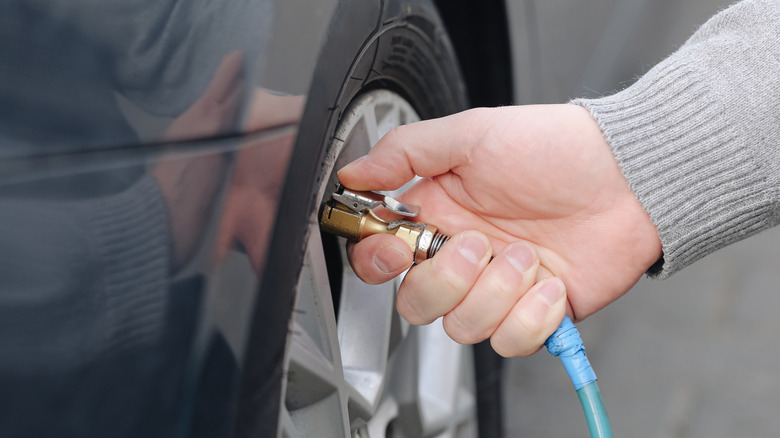
A hassle-free road trip requires a trusty vehicle, and there's nothing worse than having a mechanical issue throw off your itinerary or force you to cancel the whole trip. In addition to keeping your tires aired up, steer clear of reckless mistakes during your next road trip by making sure your vehicle has its maintenance up to date. At the very least, it should have had a recent oil change, filter check, and battery test before departing.
Also, make sure your windshield wipers are working properly, since the weather can sometimes take you by surprise when you're in an unfamiliar area. Especially if you're heading to the mountains and it's been a while since you've had your brakes checked, get them looked at so you don't end up in a dangerous situation on a steep grade. If you plan on traveling long distances, keep quick-lube places in mind for oil changes and air filter checks, such as Jiffy Lube, Valvoline Instant Oil Change, Take 5, Midas, and others. Newer cars need an oil change every 5,000-or-so miles — sometimes more, sometimes less, depending on the vehicle and whether you use synthetic or traditional oil, says Kelley Blue Book.
Shop at grocery stores rather than eating out
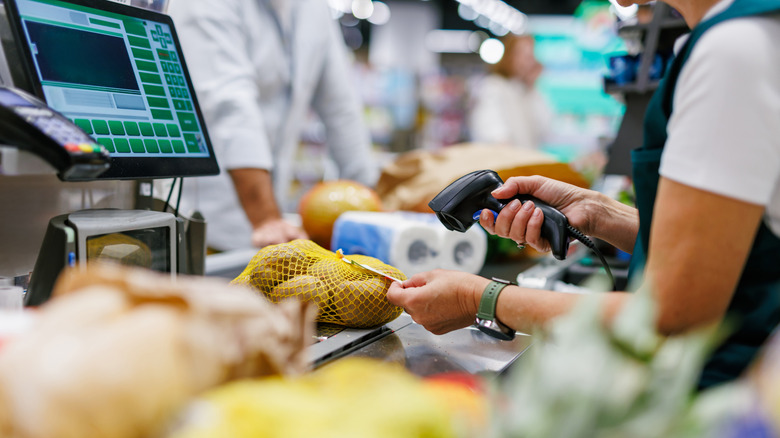
If you rely on restaurants and even fast food chains all the time, those convenient stops can really add up, especially with tips. Get extra economical with stops at the grocery store for things you can assemble quickly on the go or cook when you get to your campsite. If you're staying in a hotel without a kitchenette, you may need to improvise with simpler, easy-to-assemble items like sandwiches, deli salads, and microwaveable dishes. If you have access to a cooktop or a camp stove, consider making your own soups, pastas dishes, omelets, and other fresh meals that utilize affordable ingredients.
I hardly ever travel without the makings for a basic peanut butter and jelly sandwich because bread and peanut butter don't even need to take up space in the cooler. Add to that a small bunch of bananas, a couple cans of soup, and some snacks that go a long way like nuts, pretzels, or trail mix. It's easy to stretch basic meals for a couple of days and save up for experiences at restaurants that feel special and intentional.
Make your own coffee

Coffee feels like it deserves a mention on its own because coffee shop culture is distinctive from restaurants. It's something you often do in addition to eating regular meals, and one of the fastest ways to send money flying is by getting a barista to do all the work. I love to try locally crafted products, and sometimes it's really nice when someone skillfully makes a latte in a way I never could. But even a grande latte at Starbucks these days averages between $5 and over $6, depending on where you are — and that's without any bells and whistles.
I always feel a little better about an indulgent coffee shop stop when the visit doubles as a meal or I can charge my electronics at the same time, cool down in the AC, or get some work done. Save money overall by brewing your own coffee. I tend to use an Aeropress, which requires finely ground coffee, because it's durable and portable. If you want to be really economical about it, get a jar of instant. My go-to is Nescafé's Taster's Choice because you can find it virtually everywhere, and a 7-ounce jar makes approximately 105 cups for less than $15.
Split costs with a buddy

I often travel alone, but as a solo traveler looking for underrated destinations in America, expenses can add up quickly. Typical hotel rooms, for example, are designed to accommodate at least two people — sometimes up to four — and if just one more person is along for the journey, that means you can split some of those bigger costs. With a buddy, an average $1,000 bill for a week of hotel stays — on the reasonable, mid-range side — suddenly feels much more manageable at $500 each. If you have two or more people, gas can also be divvied up, and everyone can pitch in on supermarket purchases.
Traveling in a group also has additional benefits that may not seem immediately cost-effective but can make a difference. A solo driver can only travel for so long without needing to take a break to rest and be sure they are continuing safely. If you have a friend or two along, you can take turns at the wheel and cruise for longer stretches, even avoiding paying for overnight stays if you decide to drive through the night to make time.
Stay at hotels with free breakfast

I've never been a big breakfast eater, even though it's long been lauded as the most important meal of the day. But being on the move requires a lot of energy, so taking advantage of a built-in, all-you-can-eat morning buffet is certainly a perk. Many mid-range chain hotels that offer reasonable rates, such as La Quinta, Hampton Inn, Embassy Suites, and many more, also offer complimentary breakfast. Some are better than others, and the hands-down best hotel breakfasts include features like made-to-order omelets, waffle-makers, home fries, and more.
If you're trying to maximize every dollar, this is not only a built-in bonus to get your day started on the right foot but an opportunity to snag a few snacks for the road, such as bananas, oranges, yogurt, muffins, and other basics. Since I usually have a cooler in the car, I often grab a couple of hard-boiled eggs and pieces of fruit for the road.
Buy an America the Beautiful pass
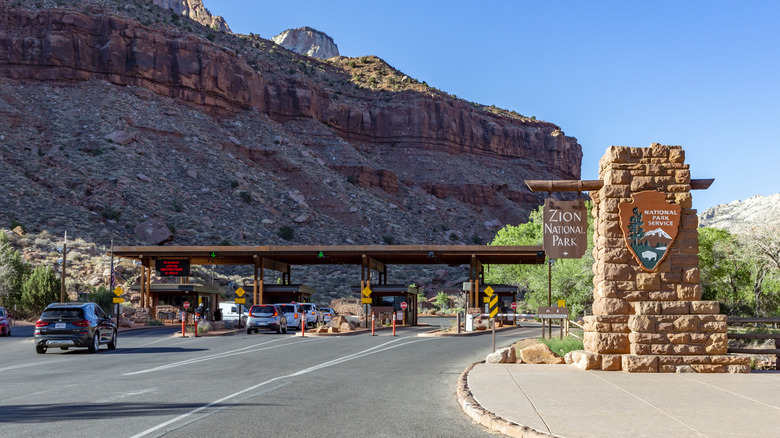
National parks have been road trip destinations ever since cars came onto the scene, especially after World War II when Americans were buying lots of cars and looking for places to go in them. Access to our national parks — even those established pre-automobile — have been designed to accommodate the way we get around today and continue to shape our cross-country travels. That said, the standard admission fee to many parks ranges from $15 to $30 for a single vehicle. Some national monuments, historic sites, and other federally managed landmarks are free or cost less than that, but entry fees to a lot of national parks will add up fast.
If you plan to visit a national park more than three times throughout the year or visit several different ones, it's worthwhile to buy an America the Beautiful pass, which can be purchased at the entrance gateway of most parks, online, or from certain retailers like REI. The general U.S. resident pass is $80, and there is a senior lifetime pass for visitors 62 and older, which is also $80. Non-resident passes are $250. As of 2026, there is also a digital-only pass option.
Peruse deals from travel guidance resources

With another nod to loyalty programs, travel guidance and metasearch platforms like Tripadvisor, Get Your Guide, Roadtrippers, and Viator are great ways to search for discounts, special offers, and promotions for experiences in places you're traveling through. Tripadvisor actually has a free rewards program, through which you accumulate Trip Cash via purchases that can be applied later. The others are fantastic resources for booking tours, workshops, food experiences, and more. Viator even allows you to filter your search by "Deals & Discounts."
It's also worth noting that the best resources and honest information often come from our peers and those who have already visited where we're going. That's where Reddit is a secret weapon for learning about new destinations. Depending on your style and what you're looking for, you'll find plenty of insights and advice on myriad travel subreddits like r/roadtrip, r/wanderlust, and more.
Set up camp
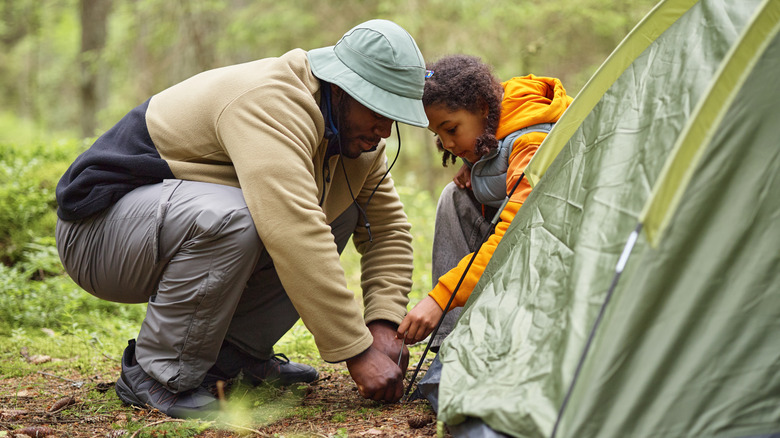
One of the most classic road trip accommodation methods: an old-fashioned tent. Fortunately, camping generally remains one of the cheapest ways to travel. However, it does require a lot of up-front planning and preparation in other ways since you need to have certain equipment and supplies to feel comfortable. Opt for well-appointed sites at chains like KOA or other high-end private campgrounds and you'll often find electric hookups and even patios at tent sites — but the prices will reflect the amenities. You'll generally find cheaper, more basic sites in county, state, and national parks or forests.
I usually anticipate spending $20 to $30 per night at a basic campsite, but rates definitely vary. If you're equipped with a high-clearance vehicle and are willing to take a chance, find free sites on public lands. I generally like to camp at more cheaper, more rustic sites for a few nights and then level up to a more developed campground where I can shower, do laundry, charge electronics, and use the Wi-Fi to really make the most of the higher cost.
Don't stay in the most popular areas
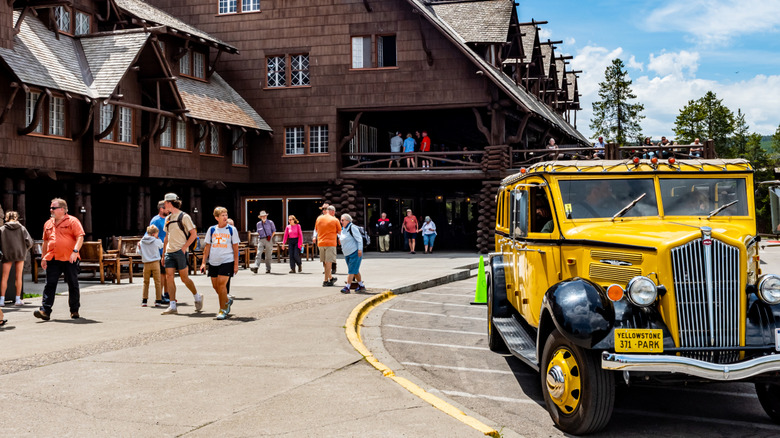
Certain areas of the country are perennial tourist hotspots, such as busy national parks, city centers, ski resort towns, or coastal vacation destinations. If you don't need to be in the very heart of it all, opt to stay away from the epicenter or at least minimize how many days you spend there. Hotel and camping rates will be cheaper in peripheral areas. For example, Yellowstone National Park's iconic Old Faithful Inn is right at the heart of the park, with its titular geyser located just a short walk away, but if you want to stay in the thick of it all, be ready to shell out at least a couple hundred dollars per night — possibly more. Camp instead for between $20 and $94 per night, depending on the location.
Generally, reasonable hotel prices can be found in towns outside of the national parks, but that also comes down to the time of year. Visiting the most popular places during the peak seasons will ensure that prices are at their height. Consider traveling during the shoulder or off-season, if weather permits.
Enjoy free activities
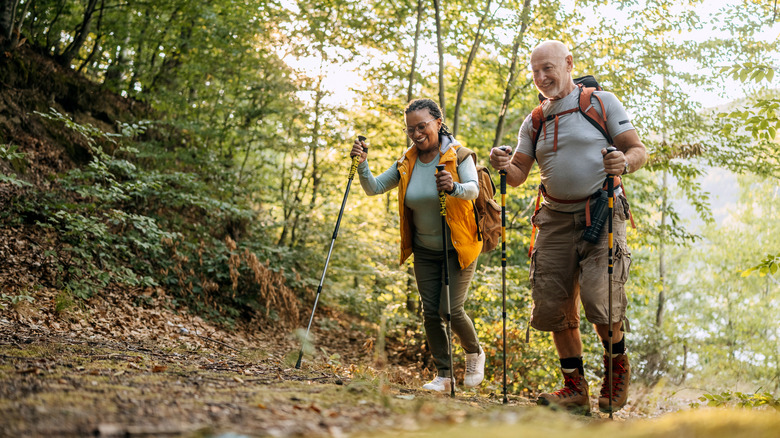
One of my favorite activities when I'm traveling is to hike because routes are often reachable on public or municipal lands with free access. And with the America the Beautiful pass, I can drop into a national park for an hour or a couple of days without being concerned about the entry fee.
Free activities may seem like a common sense way to stretch your dollar, but sometimes it's harder to find them than you'd think. Many outdoor experiences are a given, though. Think biking, fishing, and paddling — granted that you have the equipment and supplies that you need. Don't discount the cultural side of things, either, like perusing exhibits at visitor centers. In addition, many museums are free, as well as local parks and gardens, community concert series, and more. Use tools like Tripadvisor and Eventbrite, plus local tourism and municipal websites, to search specifically for free experiences.