
The World's Largest Coastal Lagoon Is An Underrated Haven For Birdwatching, Beaches, And Boating
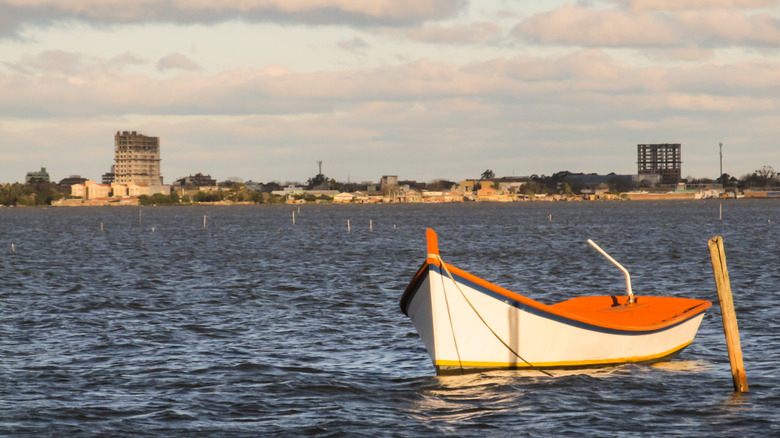
In the southern nook of Brazil is one of South America's biggest natural wonders: Lagoa dos Patos (also called Laguna dos Patos). While Brazil is a tourist haven famed for its city life and rainforest, Lagoa dos Patos is one spot that gets overlooked. The lagoon may not have the fame of Rio de Janeiro's beaches, nor the broad mystique of the Amazon, but it has a standout quality: Lagoa dos Patos holds the Guinness World Record for the world's largest coastal lagoon. Its area amounts to about 4,000 square miles, and it spans 174 miles from top to bottom (greater than the length of New Jersey). On its fringes, visitors will find scenic recreational spots and a plethora of birds.
Despite its record-holding size, Lagoa dos Patos remains largely off the international tourist trail. The lagoon doesn't appear anywhere close to the top of Tripadvisor's ranking of top nature and park travel destinations in Brazil. Even many travel blogs and guides focused on Brazil's hidden gems don't give much attention to Lagoa dos Patos. While the lagoon gets overshadowed by more famous ecotourism destinations like Pantanal or Lençóis Maranhenses National Park, it's a draw for travelers intrigued by under-the-radar natural sites. It's got several beachy towns lining its shores, home to well-reviewed boating options. Meanwhile, travelers who want to spot unique coastal wildlife will find a national park frequented by hundreds of bird species.
Boating on the shores of Lagoa dos Patos
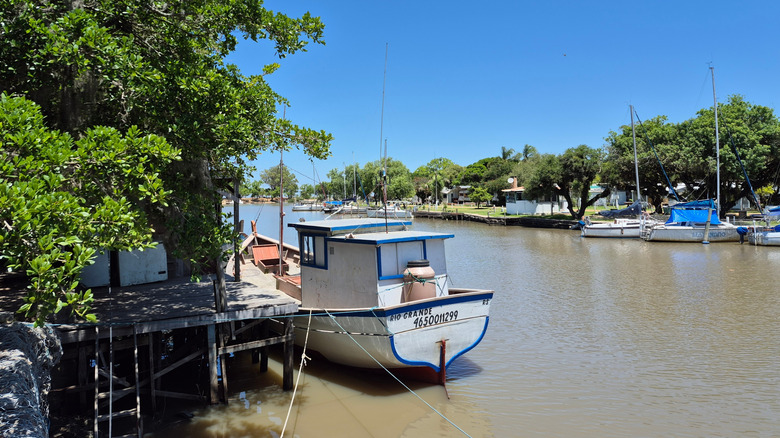
Sailing out over the Lagoa dos Patos, one has the feeling of looking across an open sea, owing to its vast size. Travelers will likely begin their journey in Porto Alegre, whose Salgado Filho International Airport is a main gateway to the lagoon's waterfront and some of Brazil's most underrated small towns. In the historic nautical hub of São Lourenço do Sul, a 2.5-hour drive south, sailors will find boating activity along the Arroio São Lourenço. Here, the Iate Clube São Lourenço do Sul (Yacht Club of São Lourenço do Sul) offers rentals and berths. Visitors without boats can board themed schooner tours with Escunas Vento Negro e Bucaneiro, which offers well-reviewed outings across the lagoon. Reviewers noted that the schooners make a stop for swimming, too, giving passengers a chance to cool off in the lagoon waters.
Farther north along the Lagoa dos Patos shores, the town of Tapes sits on an inlet of the lagoon called Saco de Tapes. For boaters, Tapes's appeal lies in its Clube Náutico Tapense, a marina and sailing club that also accepts guests with a day-use fee. Even if you don't have a boat, you can walk around the marina for some nice views by the lagoon — reviewers frequently admire the beauty of the area, with its ocean-like horizon framed by the wooded banks.
Where to go for beaches and birds around Lagoa dos Patos
Both São Lourenço do Sul and Tapes have well-loved beaches for the traveler who'd rather relax on solid ground. In the former, Praia das Ondinas is a strong choice, with 4.7 stars from Google Maps reviewers and popular with families, per the official São Lourenço do Sul website (so there's a likely reason you might hear clapping on this Brazilian beach). People enjoy the beach for its calm atmosphere and scenery: a mix of sandy spreads and rocks jutting into the lagoon, shaded by numerous palms and plane trees. In Tapes, Praia do Pinvest is a favorite, holding 4.6 stars from Google Maps reviews. It has plenty of sand to lie out on, covering nearly 4 miles of the lagoon shore, according to Gazeta Centro-Sul. Some noted that there are barbecue grills available on the beach, too.
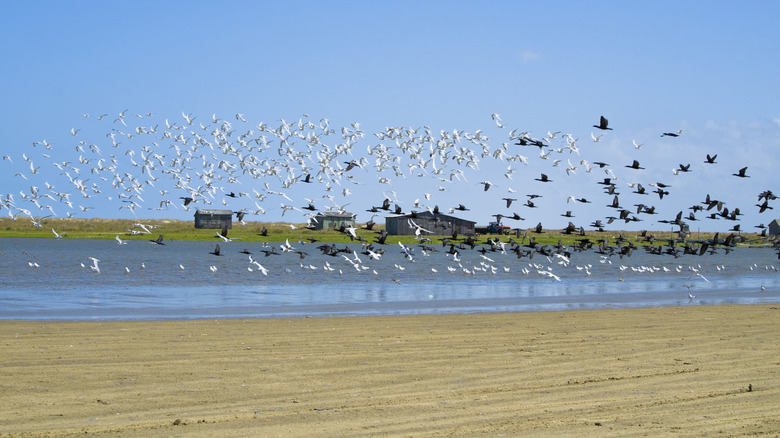
On the peninsula between Lagoa dos Patos and the Atlantic Ocean, birdwatchers will find the free-entry Parque Nacional da Lagoa do Peixe (Lagoa do Peixe National Park). A part of the lagoon's ecoregion, it's about a three-hour drive from Porto Alegre. The national park is one of South America's most important bird habitats, with over 300 migratory and resident bird species, according to a 2023 study published in Boletim do Museu Paraense Emílio Goeldi. Some of those species are rare or under threat, including Andean flamingos, dot-winged crakes, and yellow-nosed albatrosses. Each year, towns around the national park host the Festival Brasileiro das Aves Migratórias (Brazilian Migratory Bird Festival), with the 2026 edition set to take place in Tavares, according to the park's Facebook. The bird-rich wetlands of the park underscore why Lagoa dos Patos rewards travelers who look beyond Brazil's more famous landscapes.