
Not Yosemite, Not Everglades: This Popular National Park Is The Most Polluted
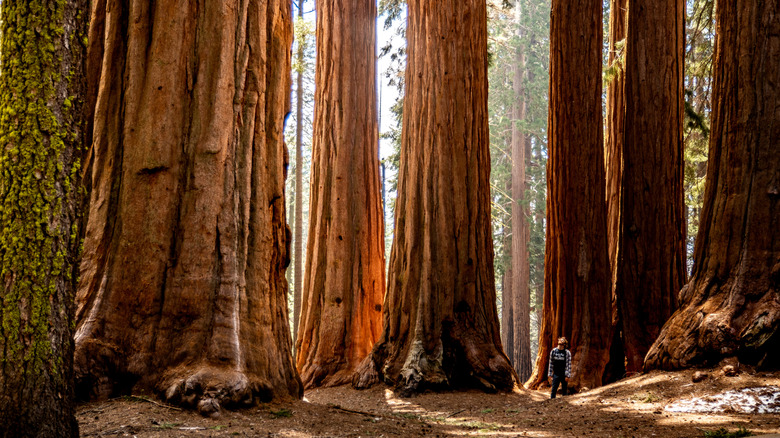
It's an American tradition that summer weekends and vacations see families pack their trunks full and set out to their nearest park, all set to swap cubicles and spreadsheets for mountain vistas and lakeside shenanigans. But for the residents of sunny California, some national parks don't provide the natural oasis expected. Instead, they greet you with the same dense smog you thought you were leaving behind. According to the newest Polluted Parks report by the National Parks Conservation Association (NPCA), Sequoia National Park and Kings Canyon National Park are considered the most polluted national parks in the country, surpassing even Yosemite and Everglades.
Even though Sequoia and Kings Canyon are separate parks on paper, they share borders and are jointly administered, with entry at one park including access to the other. As a result, both are equally affected by climate change and urban and agricultural pollution, with contamination levels peaking between May and October. While visitors often head to the parks to gawk at the world's largest trees and witness clear, panoramic views across sweeping valleys, reality unfortunately includes poor visibility and a habitat under threat.
According to Mark Rose, the NPCA's Sierra Nevada program manager, the largest threats to the parks are industrial, agricultural, and vehicular pollution from the Central Valley below (via KVPR). And Sequoia and Kings Canyon aren't the only ones affected. The NPCA also revealed that — counting Sequoia and Kings Canyon as one unit — four of the five most polluted national parks are in California. "Places like Los Angeles, Bakersfield and Fresno regularly rank as the most polluted cities in the country. It's not a surprise that the same pollution impacting cities here in California is then making its way up to our national parks," Rose reasoned, adding that local regulators have flouted federal air compliance standards for years.
The reality of pollution at Sequoia and Kings Canyon National Parks
The giants that characterize Sequoia National Park are also extremely vulnerable to climate change and pollution. Airborne particulates and higher ozone concentrations inhibit photosynthesis, essentially smothering the trees. The worst affected are the park's young sequoias and its Jeffrey and ponderosa pines (via NBC News). Instead of lush, green needles, the new growths turn yellow and sickly, unable to breathe in the dense, ozone-heavy air. Persistent periods of drought and wildfires have also damaged the trees from the inside, leaving them dry and susceptible to infestations of sequoia bark beetles.
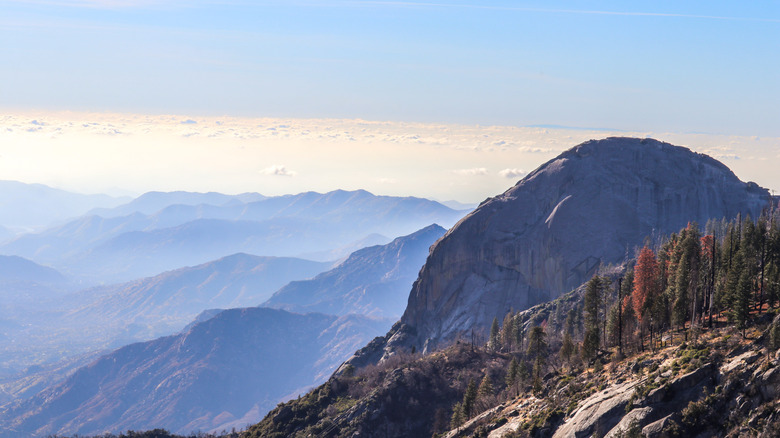
However, for park visitors, the impact of the invading pollution isn't immediately seen in the yellowing of new leaves or dried-out tree husks, but in the ever-present haze that casts a gloomy film over the park's usually inspiring views. Sequoia National Park and its "less-loved twin," Kings Canyon National Park, offer stunning views in both directions — up to the towering giant sequoias and down into plunging valleys from atop a mountain. In parks like Sequoia and Kings Canyon, visibility from the mountain peaks should stretch over 100 miles — according to KSBW 8, tourists at Beetle Rock should be able to see as far as 105 miles away. However, the smog that makes its way up from the valley often obscures these views, limiting visibility and leaving visitors less than satisfied.
However, there's hope. Pollution levels in Sequoia and Kings Canyon National Parks have steadily decreased since the 2000s, and the National Park Service (NPS) and conservation groups are dedicated to reducing it even further. You can help too by strictly following the parks' "no shortcuts" rule to protect their vulnerable habitat. To safeguard your own health, check the NPS air quality dial before heading to the parks.