
The Foolish Mistake Too Many Tourists Make Around Bison While Driving In Yellowstone National Park
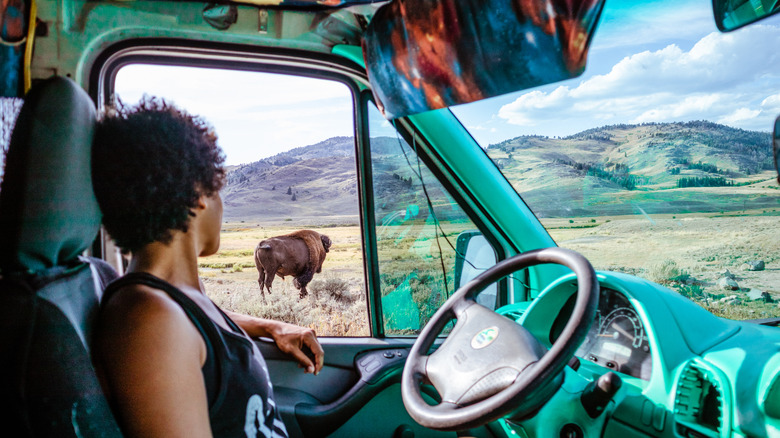
One of the greatest thrills of visiting Yellowstone National Park is watching wildlife in their natural habitats. American bison (aka buffalo) are especially exciting to see, just because they're so unbelievably huge. In fact, they're North America's biggest land-dwelling animals — like hump-backed, chocolate-colored prairie elephants. They can grow up to 6 feet tall and weigh from 900 to around 2,000 pounds. But these giants are not necessarily gentle. While they might seem docile grazing out in the meadows, they can be quite aggressive if provoked. And there's one thing that drivers do that tends to really rile them: honking their horns.
When cruising through Yellowstone, you may come upon a line of cars that have stopped to watch a bison herd, but you want to keep going. You might be inclined to tap your horn to let the drivers know you're passing. Or maybe you're tempted to honk directly at animals that are lingering in the road, because besides being in your way, you're also concerned about their safety. Don't do this — never honk at them or when they're in your vicinity. This is one of those unwritten rules you should know about before visiting Yellowstone National Park.
Bison may perceive the honk as a direct challenge and charge the vehicle, or worse. "I personally watched one bison, after being loudly honked at, rip the front grill off of a hatchback with its horns," said a Redditor on the r/yellowstone thread. Bison have been known to be passive-aggressive, too, according to the National Park Service. Rather than charging, they might react to a startling honk by hunkering down, taking even more time to move off the road.
What to do if you encounter bison in Yellowstone National Park
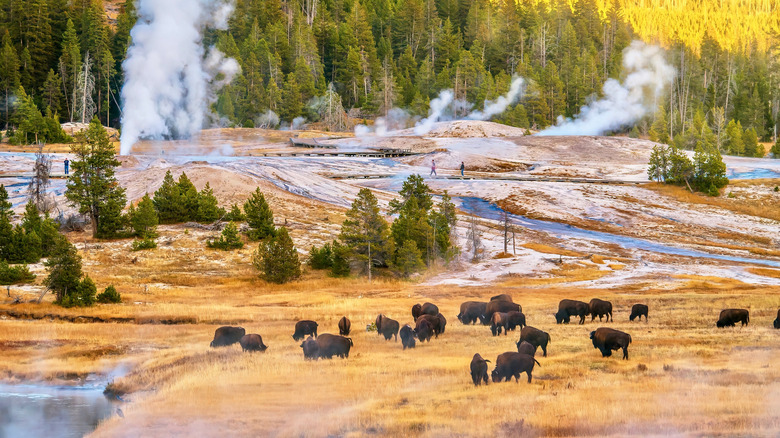
The clock may be ticking, and you may be en route to a hot date with Old Faithful on the other side of the park. But if bison are slowing you down, you're just going to have to wait. "If you see bison on the road, be patient and stay in your vehicle. Wait for them to move, and do not honk your horn," says the National Park Service. Getting stuck behind a bison herd and a bunch of curious onlookers may not be your idea of fun. But it's also an opportunity to downshift and realize that out in the wilderness, you may be the driver, but you're not really in control.
You should also know what to do if you encounter bison in the wild, away from the protective space of your vehicle. One of the most important rules is to give them lots of space, at least 25 yards if possible. Keep moving past the animal or herd, and if one begins approaching you, back away slowly. Don't run, as fast movements can unsettle them. If the animal is looking straight at you and their tail is upright, it means they are agitated and may be getting ready to charge. In this case, you should seek cover behind trees or vehicles.
Besides getting on the nerves of wild animals, there are plenty of other mistakes that tourists make in Yellowstone National Park. These include things like driving recklessly on park roads or throwing coins or other objects into thermal pools. Don't be that person!