
Sandwiched Between Santa Barbara And Big Sur Is California's Hilly Nature Preserve Flowing With Mountain Trails
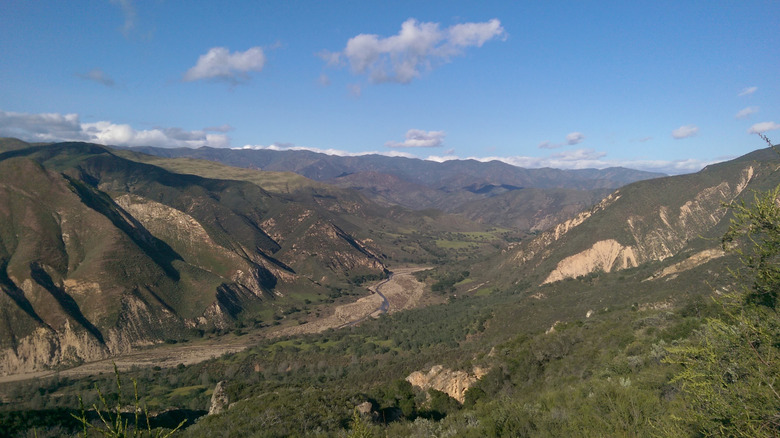
If your idea of the ideal California getaway is one with no cell service and no crowds, surrounded by challenging mountainous terrain, the San Rafael Wilderness is the perfect destination for you. This 197,380-acre protected area is within the larger Los Padres National Forest between the San Rafael Mountains and the Sierra Madre Mountains. It's a remote destination, deep within the mountains, about a 3.5-hour drive from Santa Barbara and the southern end of Big Sur. You won't find many other visitors, but you will get more than 125 miles of trails, scenic views, and a full immersion in nature.
The San Rafael Wilderness is a true wilderness. In the U.S., this legal designation was established with the 1964 Wilderness Act, and is defined as "...an area where the earth and its community of life are untrammeled by man, where man himself is a visitor who does not remain." When you visit San Rafael, you can see why it fits that description. You won't find any paved roads or campsites with amenities like bathrooms and potable water. Nature takes center stage with rugged trails through a mix of mountain meadows, canyons, and oak woodlands. Spring is particularly pretty as the wildflowers bloom.
The trails in the San Rafael Wilderness can be made into a variety of long loops, depending on how much of a challenge you want, and it's a popular backpacking destination. There are two main sections you can access, both of which are centered on the waterways in San Rafael: Sisquoc River and Manzana Creek. That means that many of these treks also involve water crossings.
Hiking and wildlife in San Rafael Wilderness
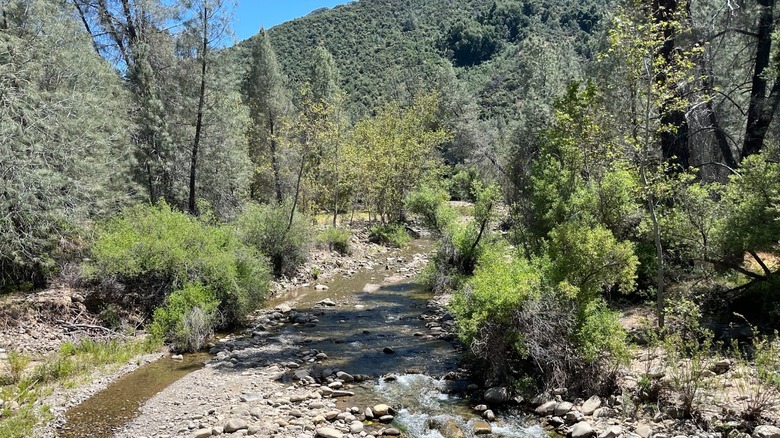
The Sisquoc River in the San Rafael Wilderness is one of the few California rivers that is completely free-flowing with no manmade dams or impediments. Its headwaters come from Big Pine Mountain, before the river begins winding its way west through thick chaparral for around 57.4 miles to the confluence of the Cuyama River. A total of 31 miles of the river run through San Rafael, and that section, along with 2 more miles to the west, has been federally designated as "National Wild and Scenic River System." That means it "represents vestiges of primitive America," and it will stay protected, according to the National Park Service. For the best views of the river, the Upper and Lower Sisquoc Trails largely follow its entire length.
The Manzana Trail is another major trek here. The Upper Manzana trail runs for 13.8 miles from Nira Campground through the canyon and up along the Hurricane Deck, a formidable sandstone ridge, before reaching the Sisquoc River. The Lower Manzana trail is 8.4 miles, and it takes you past an old hunting cabin and the abandoned Manzana Schoolhouse, last used in 1901. These are some of the few marks of civilization within the wilderness.
You're sharing the rugged landscape with a variety of wildlife, including black bears and mountain lions. You might even spot a California condor soaring overhead. San Rafael Wilderness is home to the Sisquoc Condor Sanctuary, first established in 1937 near the Sisquoc River. It played an important role in helping to save the birds from extinction, and the region still serves as a vital habitat. If you can't get enough of searching the skies for these giant birds, head to Pinnacles National Park near Soledad in Central California next, about 4.5 hours north of the San Rafael Wilderness.
Camping and planning a trip to the San Rafael Wilderness
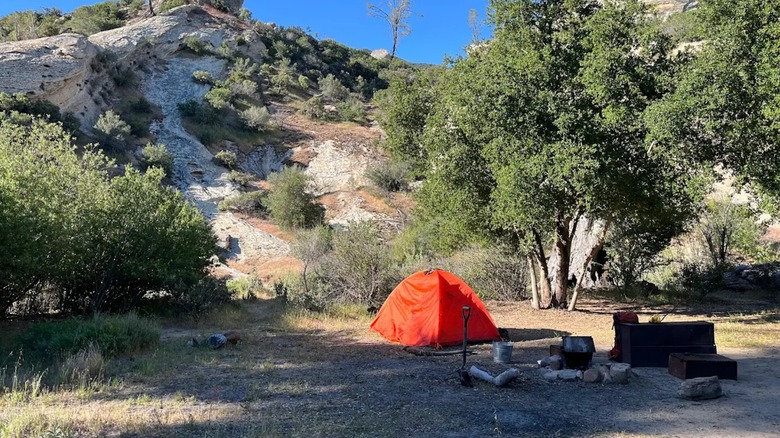
There are more than three dozen small backcountry campsites within the San Rafael Wilderness. Some of them have relatively easy-to-source water and even the occasional cell signal, like at Big Pine Camp. Others bring you into the past, like Abel Canyon Camp, where you can see the remnants of a settler's home, and Manzana Schoolhouse Camp near the old school. If you want to camp somewhere with a few more creature comforts, like picnic tables and a pit toilet, the Nira Campground is near one of the Manzana Creek trailheads.
Since it is a wilderness area, make sure you're prepared before you arrive. For day or overnight trips, you'll need to bring in your own water or be prepared to filter it. Bring first-aid supplies and consider a GPS satellite device for emergencies, especially if you're backpacking or alone. You're likely to encounter nuisances like poison oak and ticks, so dress accordingly with long sleeves and pants. Make sure to pack out everything you bring in, and leave things as you find them.
There aren't many developed areas close to the San Rafael Wilderness, which is a part of its appeal for adventure seekers. One of the closest towns is Los Olivos, a walkable wine country town in the Santa Ynez Valley. It's about a 1-hour drive from the Lower Manzana Trailhead. While you're in this part of California, another area worth exploring is the Cuyama Valley, a tranquil valley known for its rolling hills, wine, and pretty sunsets. It's about 1.5 hours north of the San Rafael Wilderness by car.