
Why Oklahoma's 'No Tolerance' Speed Limit Signs Catch Travelers Off Guard
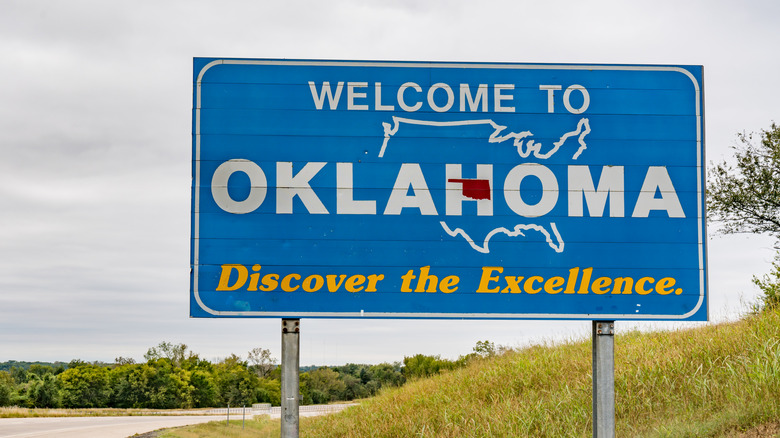
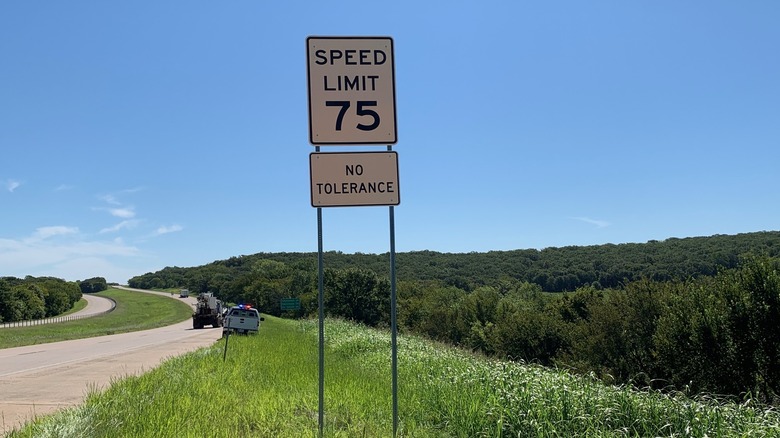
There you are, flying down I-40 toward Oklahoma City, when the sign stops you in your tracks: "No Tolerance." Just beneath the posted speed limit, these two words come as a shock. Why so harsh? And what does this even mean? Does Oklahoma use some kind of ruthless traffic enforcement that other states don't? Will a few miles over the limit lead to a high-speed chase by highway troopers? How bad could this get?
On the one hand, the "No Tolerance" signs are fair warning. Oklahoma has two laws that pertain to speed limits. The "Basic Speeding Law" is more flexible and advises driving at a speed that feels safe and natural; so if the weather is nasty or there is heavy traffic, you should try to drive at speeds lower than the posted limit. In contrast, the "Absolute Speed Limit Law" means that driving even one mile over the posted limit is considered illegal and could result in a fine. On Oklahoma roads where the law is strictly enforced, "No Tolerance" signs drive this point home.
Maybe this severity makes sense. Oklahoma has a good chunk of level terrain, and many assume that flatter states lend themselves to speeding, and thus more speeding tickets. According to a Lendingtree report, Oklahoma ranks 37th in the U.S. when it comes to the "best" drivers — not the worst state overall, but far from the best. Cross-country travelers should keep this in mind; Route 66 runs straight through Oklahoma, and America's most iconic highway is a must-do road trip.
What 'No Tolerance' means to road trippers in Oklahoma
On the other hand, skeptics could see the Absolute Speed Limit Law as a kind of mind game. Technically, breaking any speed limit is always illegal, no matter where you are, so the law is theoretically redundant. Police don't usually trifle with humble infractions; they assume that speedometers may be off, and radar guns leave some room for error. And let's be honest — pretty much every driver instinctively skews faster. We're usually "keeping up with traffic," and we assume that going slower would irritate other drivers or even cause problems.
Yet Oklahoma is hardly alone: three-quarters of U.S. states have Absolute Speed Limit Laws. The Sooner State only stands out because of its aggressive signage; the Oklahoma Highway Patrol wants to make sure you know how intolerant they are. It's a firm reminder that driving too fast is always a bad idea, and it's one of the reckless mistakes to steer clear of during your road trip. That said, "No Tolerance" only appears on a fraction of speed limit signs, so you may not necessarily know that the Absolute Speed Limit Law governs a certain stretch of highway.
So what happens if you're pulled over in Oklahoma? Just follow the usual protocol and expect a reasonable ticket. Driving one to 10 mph over the posted limit will likely result in a $10 fine, a mere slap on the wrist, and apologetic out-of-towners might get off with a warning. Reckless driving and a boorish attitude probably won't fare so well. And speeding isn't the only mistake drivers can make; here are 9 new traffic laws travelers should be aware of in 2026.