
9 New US Traffic Laws Travelers Should Be Aware Of In 2026
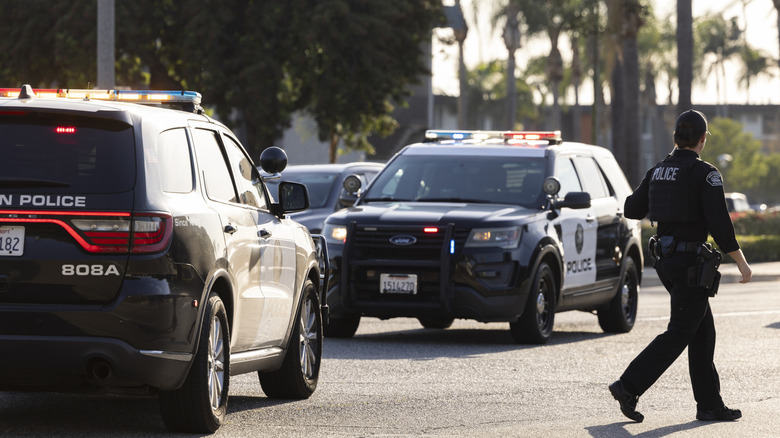
Few things scream American travel more than hitting the road on an epic tour of the United States. From the deserts of the Southwest, through to the Smoky Mountains in the East, and everything in between, it's an unequalled country for road tripping. But travelers often assume that traffic laws are broadly the same wherever they go. In reality, driving rules can vary significantly between states, and most of them are updating and changing rules, or even adding completely new ones on a yearly basis. 2026 is no different, with a number of changes coming into play across the country.
Many of the changes focus on distracted driving, automated enforcement, speeding, and roadside safety. In short, they're often vital but nuanced shifts that might fly as an unenforced bad habit in some states. While local drivers may have spent months hearing about these updates, visitors arriving from another state or overseas could easily find themselves breaking the rules without realizing it.
Whether you're planning a cross-country road trip, driving between national parks, or simply renting a car during a vacation, these are some of the new traffic laws worth knowing before you hit the road in 2026. Wherever you go, don't forget to throw on a playlist packed with the best road trip songs.
Pennsylvania begins enforcing Paul Miller's Law
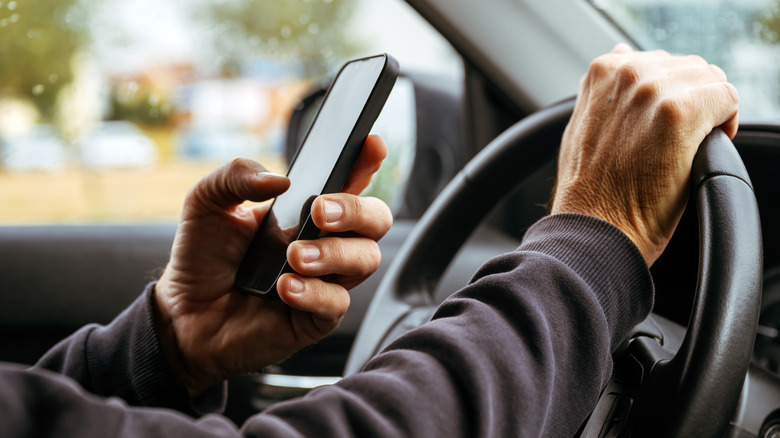
In the past, Pennsylvania prohibited texting while driving but allowed motorists to hold their phones for other purposes, like directions or for calls. That all changed with Paul Miller's Law. This legislation was introduced in June 2025 in remembrance of Paul Miller, who was killed in 2010 in a collision with a tractor-trailer that crossed the median while the driver was distracted by their cell phone. Lawmakers hope it will reduce the growing number of crashes linked to cellphone use behind the wheel.
For the first year, drivers were let off with warnings. However, beginning in June 2026, drivers can be cited simply for holding a cellphone while operating a vehicle, even if they're stopped or just sitting in traffic. The new law creates a much stricter hands-free standard and significantly expands what police can ticket drivers for. This kind of ban is in use across in other parts of the world, like in Europe, and 33 states now have similar legislation.
For travelers, this could be an easy mistake to make. Even responsible drivers can instinctively pick up their phone while waiting at an intersection or check directions at a stoplight. It's important for drivers to grasp that this is no longer acceptable and can result in a $50 fine plus any court costs and fees. Using Bluetooth devices is still allowed, as well as any voice-activated systems. If the worst happens, and a death is caused by distracting driving, the driver can be convicted of homicide by vehicle, which adds up to five years in prison. Pennsylvania is already home to one of the most expensive roads in America to drive on, so don't make it any more costly.
South Carolina's hands-free driving act enters full enforcement
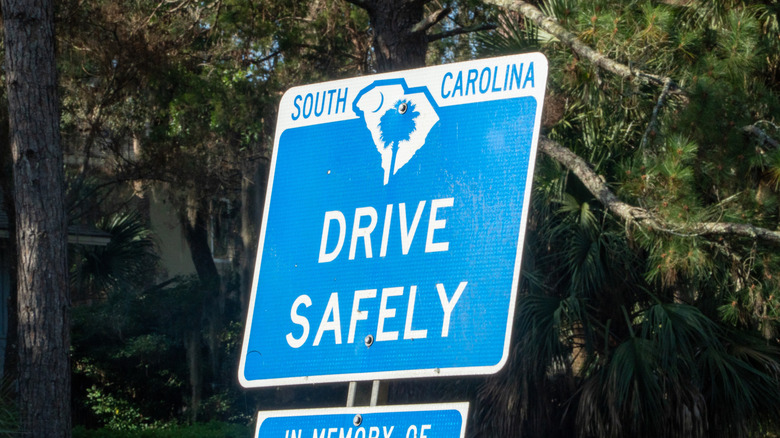
Travelers driving through South Carolina are also facing stricter cellphone rules in 2026 as the state's Hands-Free Driving Act moves into its full enforcement phase. The law was introduced back in September 2025 in response to concerns about distracted-driving crashes. While it wasn't tied to a single event, the issue has been growing enough in South Carolina to prompt change from the state government.
The legislation, which went through a six-month warning period in which no official citations were given, makes it illegal for drivers to hold or support a cellphone while operating a vehicle. Drivers can still make calls or use navigation apps through approved hands-free systems, but physically handling a device in any way is prohibited. The verbiage itself is specific, stating drivers cannot "hold or support a mobile device with any part of their body," which means anyone trying to get creative by holding a phone between their legs (or something similar) is at risk of being in serious trouble. Repeat offenders face increasing penalties: The first offense results in a $100 fine plus any court fees, while a second and any further offenses will be set at $200 and two points added to the person's driving record.
The change brings South Carolina more in line with neighboring states that already have similar hands-free requirements. South Carolina is a popular state for visitors, with Myrtle Beach and Charleston both being huge draws for tourists (as well as these five South Carolina cities that are brilliant for foodies). In addition, the busy I-40 passes directly through the state. Anyone traveling up and down the East Coast would be well served to familiarize themselves with the law to stay safe and citation-free.
Louisiana starts enforcing its new hands-free law
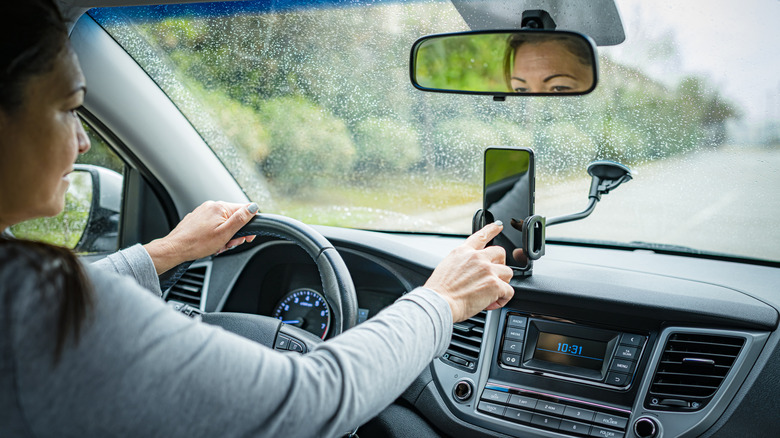
Louisiana is one of the most recent states to tighten restrictions on cellphone use behind the wheel. It's a similar pattern to Pennsylvania and South Carolina, with tough-to-read statistics showing distracted driving will continue to be a growing concern if nothing is done about it. According to the Louisiana Highway Safety Commission, 178 people were killed in 2023 as a result of distracted driving (via WFAB) — a frankly terrifying number.
The updated law, named the "Touch Law," was introduced in August 2025, but penalties officially kicked in on January 1, 2026 — after a grace period in which perpetrators only received a warning. It prohibits drivers from physically handling a phone while operating a vehicle. The law previously restricted certain cellphone activities, like texting, scrolling, or browsing, but the new iteration uses more clear-cut verbiage around hands-free requirements, making it illegal to hold a phone in any capacity. This makes it far easier for police to penalize those who break the rules and removes any doubt about what is acceptable. Phones can still be used for navigation and calls but only when using hands-free devices or voice commands.
Let's face it, you shouldn't be using your phone in any way when driving anyway. But if you're prone to giving in to temptation from time to time, you'll need to add Louisiana to the list of states where it's getting serious for those not taking enough care. Use your next trip to New Orleans, Baton Rouge, or this road trip trail through Louisiana's sweet small towns, as motivation to leave your device where it is.
Maryland introduces a new tiered speed camera system
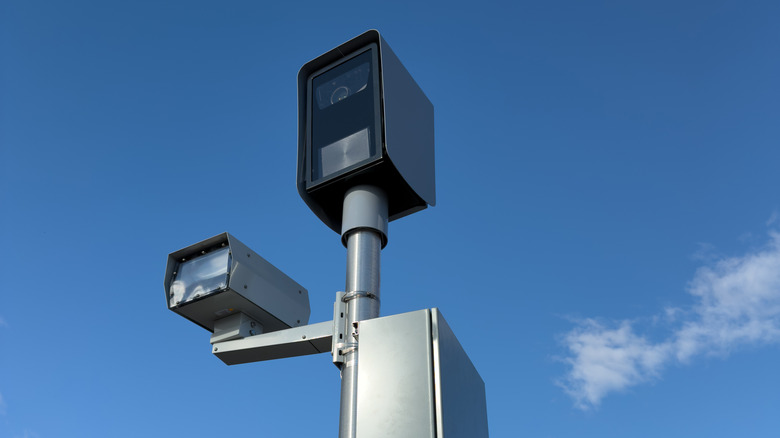
Moving on from the phone-related laws, travelers accustomed to speed-camera tickets carrying a standard fine may notice something different in Maryland. The state has replaced its flat penalty structure with a new tiered system designed to impose larger fines on drivers traveling significantly above the speed limit as of October 2025.
Under the revised framework, the amount a driver pays will depend on how far above the limit they were traveling when recorded by a camera — and they're not messing around with them. According to the Balitmore City Government, speeding 12 to 15 mph over the speed limit is a $40 fine; 16 to 19 mph is a $70 fine; 20 to 29 mph is a $120 fine; 30 to 39 mph is a $230 fine; and more than 40 mph over the limit is a $425 fine. Previously, many violations generated the same financial penalty regardless of whether a motorist was barely over the limit or driving substantially faster. Interestingly, speeding infringements caught on camera won't trigger point penalties on licenses, though.
These changes are less likely to affect travelers who are just passing through Maryland, as the bulk of any speed cameras are usually on specific roads around schools and residential areas. But if you're diving a little deeper into the state, and likely to be driving in the city, you'll need to take extra care. Obviously, accidents happen, and a momentary lapse in concentration could see any driver miss a sudden speed limit shift — and it's all the more reason to stay on top of your game while exploring.
California expands 'Slow Down, Move Over' requirements
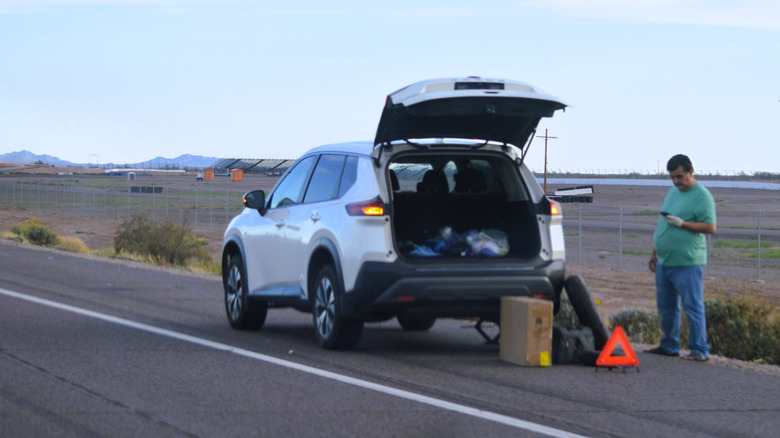
The parameters of California's "Slow Down, Move Over" law broadened in January 2026, creating new responsibilities for anyone driving in the state. Travelers tackling famous routes like the Pacific Coast Highway or the gridlocked chaos of Los Angeles' freeways might encounter situations where the updated rules apply. If you're unfamiliar with it, this law revolves around the necessary actions to be taken when passing stationary vehicles.
In the past, the law required drivers to move over a lane, or slow down when that wasn't possible, when any emergency vehicle with flashing lights was stationary at the side of the road. The new law expands on that, requiring drivers to slow down or move over not only for emergency vehicles but for virtually any vehicle with flashing amber lights. That includes cars that are broken down, tow trucks, or maintenance workers. While many drivers may have done this anyway, it pushes the safety of everyone into law.
The Emergency Responder Safety Institute reported that over 80 emergency responders across the U.S. died at the side of the road in 2024 and 2025 combined, so laws like this are introduced to help bring those numbers down. The main takeaways are to react as early as possible when flashing lights are spotted. If you're on a two-lane road where moving over isn't possible — you'd just be required to slow down while passing. A situation like that could occur on California's iconic roadtrip through Sierra Nevada backcountry. Obviously, in rough traffic conditions, you can only be expected to do as much as can be done safely. In other words, don't swerve dangerously or slam on the brakes. It's also important to note that punishments vary depending on the county where the infringement took place.
California authorizes new automated traffic enforcement
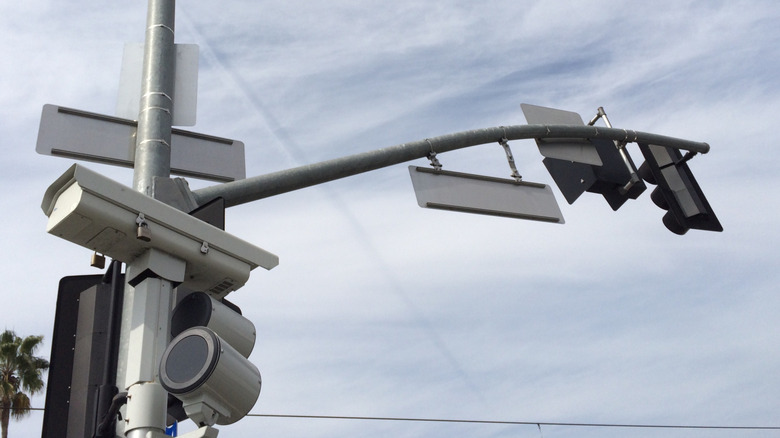
The second of four new California driving laws revolves around automated traffic enforcement. This one is interesting, as it fundamentally shifts how red light infractions are punished — technically making it less severe — while also increasing the likelihood that drivers will be caught. It also hasn't made any literal changes as to how the state itself does anything. Instead, it gives local governments in California additional authority to implement automated traffic-enforcement programs on their own accord.
The legislation lets jurisdictions opt in and deploy automated systems designed to identify red-light violations and other dangerous behaviors at intersections. You may hear this and think California already has those, which is true in many places. But in the past, these were treated as criminal violations with severe punishments, including eye-watering fines and points on licenses — all of which lead to higher insurance costs. Because of the criminal violation status, they also required a much higher burden of proof, including clear photos of the person driving the car and other details. The new law strips all that away, making red light rule breaking a civil violation, punishing the owner of the car and dishing out immediate fines that are capped at $100.
The changes might sound kind of good for drivers. Lower costs and no guarantee of long-term license issues sounds positive. In reality, it just makes the process of fining drivers easier. We can probably expect to see an uptick in the number of fines being issued. Obviously, we shouldn't need to remind people to stop at red lights, but that $100 fine in the mail will definitely jog their memory regardless.
California cracks down on license plate coverings and alterations
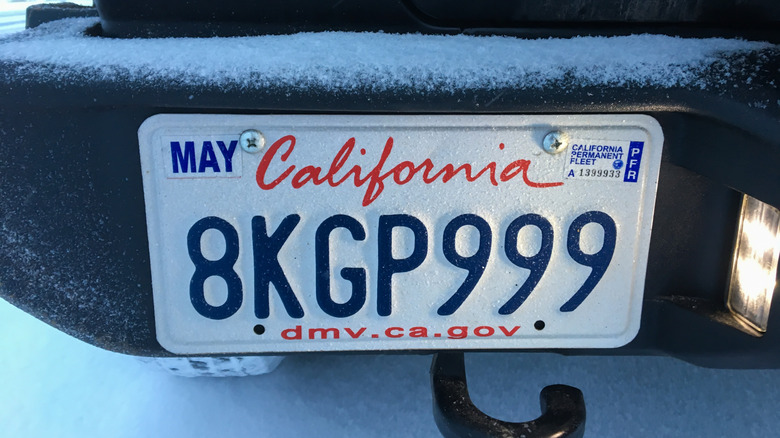
If you're not sure what a license plate covering or alteration is, California's Department of Motor Vehicles (DMV) says that it is anything that "obscures or is intended to obscure or interfere with the visual or electronic reading of a license plate." And yes, you can get penalized for it. If you're using an alteration for aesthetics (or perhaps to intentionally to fool the traffic sensors), it's about to get more expensive for you if you don't fix it.
In practice, these alterations are usually tints or shades that have been added to a plate, kind of like those privacy screens you can put over phones that prevent people next to you from looking at what you're doing. In theory, these alterations could make it hard for local governments to enforce other laws or punish toll evasion. The new rules expand the previous legislation heavily, making it an offense to use or even manufacture them in California. Anyone found in violation of the law could be subject to an up to $1,000 fine. The larger, $1,000 fines are directed towards manufacturers, while those using them will still get a $250 fine.
While most states have some form of this law in place, there are different levels to the severity or strictness of individual laws. If you're driving across state lines on a big road trip, it's worth checking that your own vehicle doesn't have anything that could be punishable in California. Massachusetts, for example, doesn't have a blanket law in regards to tinted license plates, and while it may not obscure it fully, a slight tint could still be punishable in California.
Connecticut's left-lane law gets some teeth
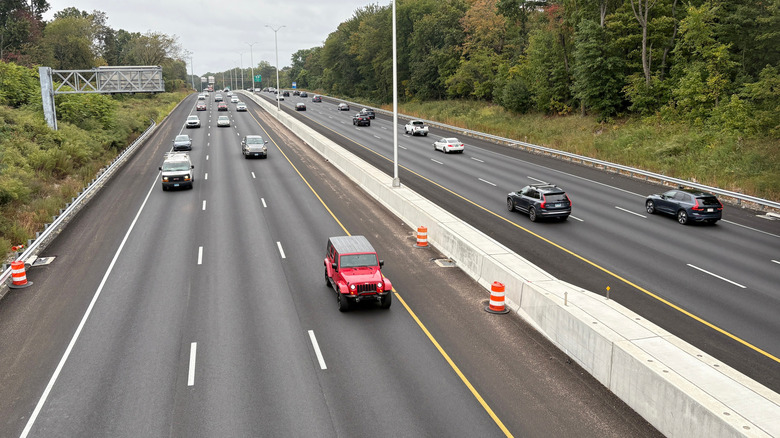
Is there anything worse than a driver who sits in the left lane? Connecticut obviously doesn't think so, with the state increasing the enforcement of its "Pass Left, Drive Right" laws. It's not a super new law, by any standard, but it is upping the ante a fair bit in terms of how it's policed. And you'll want to know what's going on, especially if you're driving New England's best road trip route.
The stronger law comes into effect in October 2026, affording police officers the ability to fine drivers on the spot for lingering in the left lane with no reason. The State of Connecticut's government website says the law "prohibits driving in the left lane unless actively passing a vehicle, preparing for a left-lane exit, or avoiding an obstruction." It'll likely be up to the discretion of the police officer to decide how long a car reasonably needs to be in the left lane before it's considered punishable. Those found in violation of the law will face an $88 fine.
The reasons for this should be fairly obvious. Overusing the left lane can seriously clog traffic, stemming the natural flow and causing buildup further down the line. It's also dangerous if a car is going cruising at too slow a speed in the left, as other vehicles may struggle to anticipate the sudden change. While it should be a natural habit for most drivers, those coming from states where it's less likely to be enforced might be faced with a rude awakening on their travels through Connecticut.
California introduces new rules for self-driving vehicles
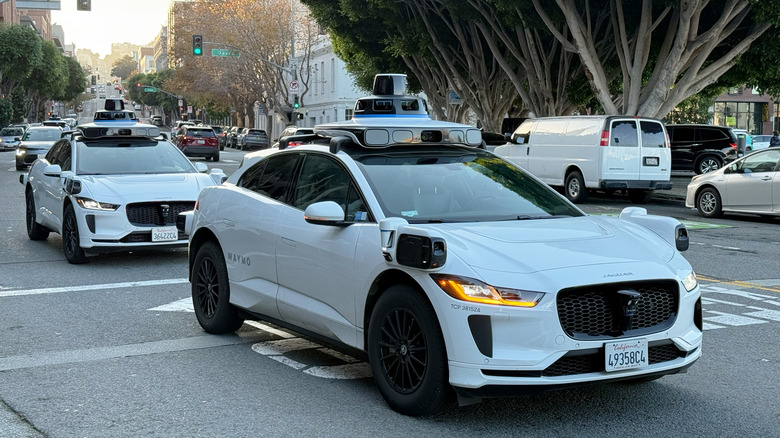
This one is taking us firmly into the future, with autonomous vehicles becoming enough of a daily reality that new laws are being introduced to make it safer. California has always been at the forefront of self-driving vehicle development, and new regulations that took effect earlier in 2026 are designed to address some of the challenges that emerge when self-driving cars encounter emergencies. While most travelers won't be using autonomous vehicles themselves quite yet, they may increasingly share the road with them with companies like Waymo growing larger by the year.
The lack of a physical driver creates new challenges for law enforcement. With many reports suggesting self-driving cars are committing moving violations, police are now able to enforce immediate fines to the car's manufacturers. This came from multiple awkward situations where police were left baffled by the process with no driver to cite. But the big change that should be helpful for most drivers is the new law that requires the vehicle manufacturers to respond to emergency services, whether that's the police, fire service, or ambulance service, within 30 seconds of a call. In theory, this will speed up any potential issues, especially if there is another vehicle with a human driver involved.
The legislation is a big deal. It's a signifier that things are changing on the roads. There may come a time when the new laws listed above will be almost obsolete for human drivers, as their autonomous vehicles should have them all programmed in perfectly. But until that day, keep on top of the ever-shifting traffic law landscape.