
Between Raleigh And Charlotte Is North Carolina's Lovely 'Handmade Pottery Capital' Brimming With Arts And Crafts
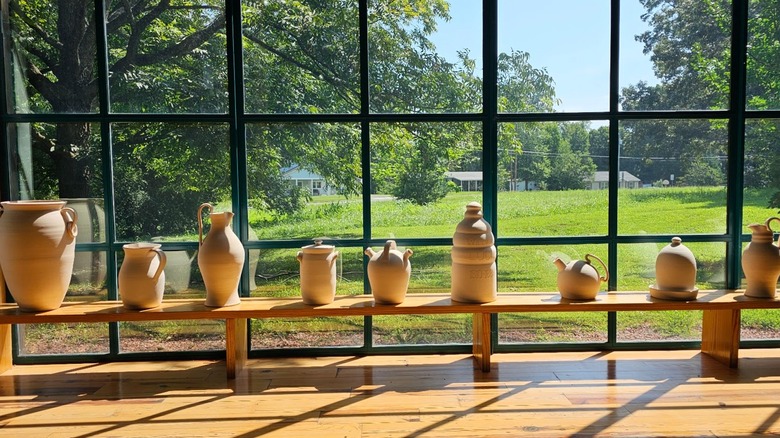
North America has a long and storied history of pottery, dating back thousands of years to when Indigenous peoples created clay vessels for food and storage. With the arrival of European colonizers, the tradition of pottery transformed in new hands and styles. And there's one small town in North Carolina where you can follow this meandering thread (or clay coil) from the past to the present: Seagrove, known as the "Handmade Pottery Capital" of North Carolina (and the United States).
Located halfway between Raleigh and Charlotte, Seagrove is a town of just 250 residents, and yet it's home to over 100 potters and 50 family-owned potteries. Besides brimming with arts and crafts, Seagrove also has a lovely community. Potters collaborate by sharing knowledge and resources, which they then offer to visitors, who can take pottery classes or see artisans at work. Education is at the heart of Seagrove, which seeks to promote and preserve hundreds of years of a history that almost disappeared.
Seagrove is a pottery mecca thanks to rich deposits of mud and clay created by volcanic activity of the Uwharrie Mountains. Haliwa-Saponi and Kayauwee tribes made ceramics until the arrival of English and German potters in the late 1700s. But with the rise of the Industrial Revolution in the early 1900s, mass-produced utilitarian wares started pushing out handcrafted work. Luckily, artists and collectors Jacques and Juliana Busbee stumbled upon Seagrove's ceramics in 1917 and started selling them in New York before starting their own pottery in town in 1922, preserving and reviving the desire for handcrafted creations. A visit to Seagrove lets you immerse yourself in hundreds of years of history, as you can view historic artifacts, throw clay on the wheel yourself, or attend one of the town's pottery- or craft-themed events.
The potteries of Seagrove
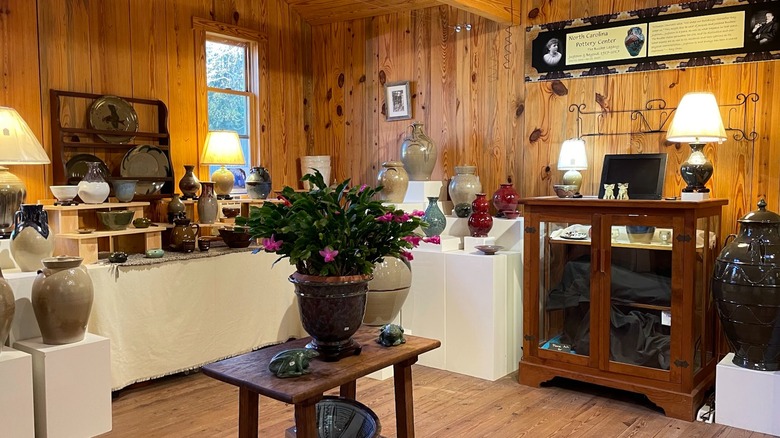
Begin your Seagrove journey at the North Carolina Pottery Center, open daily except for Sunday and Monday. This museum, gallery, and educational center focuses on the history of ceramics in North Carolina. Plus, you can see the work of local artisans, get a map of Seagrove's studios, and even take pottery classes. The center is a legacy of Dorothy "Dot" Auman and her husband, Walter, who opened Seagrove Pottery in the 1950s, a museum in 1969, and helped plan the center. Dot preserved the history and traditions of pottery in Seagrove and elsewhere by focusing on the context of the craft: Who made it and where? Although the Auman's museum closed, their collection is now at the Mint, one of the four museums that Charlotte locals love.
Potteries are all over Seagrove and its outskirts, dotting nearby areas like the hilariously named Whynot. It can be overwhelming to decide where to visit, but there are a few iconic destinations you can't miss. The first is Jugtown Pottery, established in 1917 by the Busbees in an 18th-century building. Jugtown Pottery put Seagrove on the map as the country's pottery center. Part of its influence is how it showcased the craftsmanship of pottery-making by inviting visitors to see the process.
History lovers can also check out the Original Owens Pottery, established in 1895 by one of Seagrove's famous potter families. Five generations of Owens have perfected their secret red glaze in this workshop that's the oldest continuously operating pottery in North Carolina. For something contemporary, Seagrove Stoneware Pottery puts a modern spin on functional pieces and has a charming inn decorated by the pottery's owners. If you're interested in Indigenous work, keep an eye out for pieces by Senora Lynch, a well-known Haliwa-Saponi potter who uses traditional hand-coiling methods to create ceramics designed with natural scenes.
What to know about visiting Seagrove
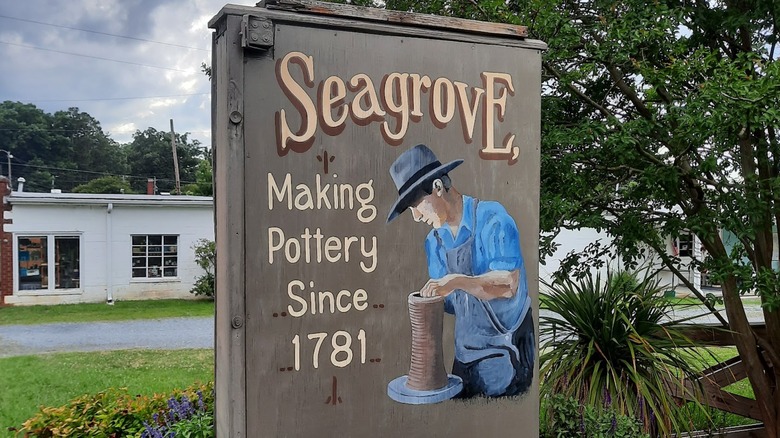
A great way to experience Seagrove is to attend one of its events. The Seagrove Pottery Festival takes place a few days before Thanksgiving, while the Celebration of Spring and American Craft Week show why Seagrove is known as "America's No. 1 Town for Craft Lovers." These events invite visitors into the pottery process, as participating studios open their doors for people to shop and see demonstrations on the wheel and in the kiln. The Carolina Bronze Sculpture Garden also highlights the town's creativity with its sculptures dispersed around a peaceful garden and pond.
If watching folks fire up a kiln gets you parched, head to The General Wine & Brew, which is the embodiment of Seagrove. It's owned by a potter, who's also the mayor, bartender, and owner of Seagrove Stoneware Pottery and inn. Located in a 1910 general store, it's a wonderful place to have a glass of wine or craft beer and meet locals. Seagrove Cafe is in the center of town and is a favorite stop for coffee, a light snack, and warm service.
Seagrove is a year-round destination thanks to its seasonal festivals and variety of potteries, but note that the best time to find open studios and to see people at work is Wednesday through Saturday. Many of the potteries are scattered throughout town along N.C. Highway 705 (also known as the Pottery Highway), so a car is essential. Seagrove is a little over an hour and a half from Charlotte and Charlotte Douglas International Airport (CLT). Raleigh has excellent free activities for a weekend trip, and while a visit to Seagrove isn't free per se, its proximity to the city (about an hour and a half) makes it a great weekend or day trip from North Carolina's capital.