
Liverpool's Scenic Park Is A Charming And Free Destination With An Artificial Lake For Fishing And Boating
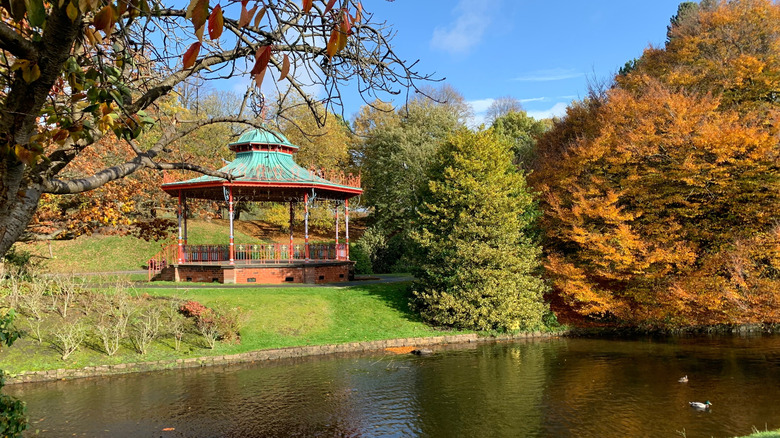
A little southeast of Liverpool's vibrant city center, leafy Sefton Park is a 235-acre public park where winding paths, mature trees, and an artificial lake create a restorative escape, recreation hub, and much-loved green for Liverpool locals and visitors alike. Opened in 1872, the park is now a Grade I-listed historic park, recognized for introducing French landscape design to England through its designer, Édouard André.
Sefton Park has no admission fee, and it's open 24 hours a day. The lake is the highlight, stretching through the park with a lush, level shoreline that makes for an easy walk. Fishing is permitted with an angling permit, but boating on the lake is arguably a better way to enjoy it for most — particularly in the spring when the weather is mild and the gardens are blooming with daffodils.
Beyond the water, the park is filled with details that reward languid strolls, from a Victorian bandstand — said to have inspired the Beatles' "Sgt. Pepper's Lonely Hearts Club Band" — and ornamental fountains to waterfalls, artificial caves, and the wonderful Palm House — the park's stunning Victorian centerpiece.
Walk around Sefton Park's lake and admire its Victorian landscape
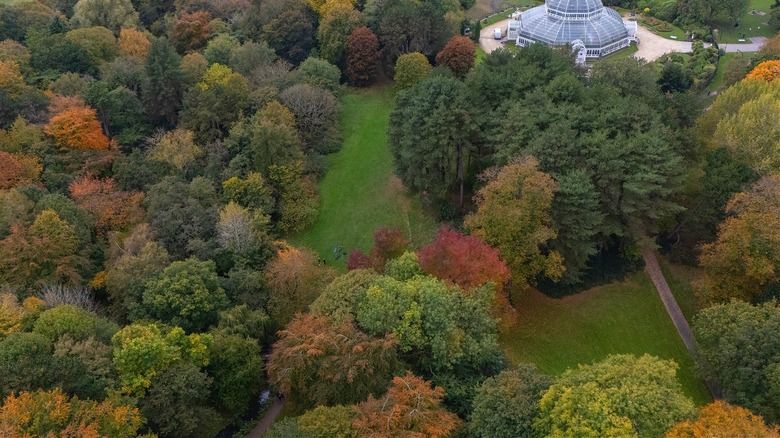
The best way to explore the park is by walking. Start at the lake and follow the paths around the water, where the landscape repeatedly opens onto manicured lawns, an arboretum (with many trees turning a stunning amber in the autumn), and various ornamental features. You'll note the design weaves from landscaped gardens to a more elemental aesthetic with winding routes, dense pockets of trees, and wilder meadows left to overgrow in order to encourage wildlife. It's been a success, as, thanks to the growing number of wildlife habitats, many parts of the park are now designated County Wildlife Sites.
Parts of the route take on a theatrical aesthetic. Look for the Victorian rockwork cave, cascades, stepping stones, and Fairy Glen, where an iron bridge crosses a narrow gorge. The park also contains an Eros fountain and a Peter Pan statue — a replica of the statue in London's vibrant Kensington Gardens. And if local legend is to be believed, there's a pair of ghosts too, secret lovers kept apart by their differing social classes, who make an appearance every Valentine's night at exactly 11:15 pm.
The boating lake is a popular fishing spot, though permits are required and must be secured via the local council authorities in advance of your visit. There are rowing boats and plastic pedalo boats available too, but you'll need to visit in the warmer months (typically mid-spring through to October) to hire one. We favor the beginning of fall, when many of Europe's cities are at their most scenic.
Visit Sefton Park's Victorian Palm House
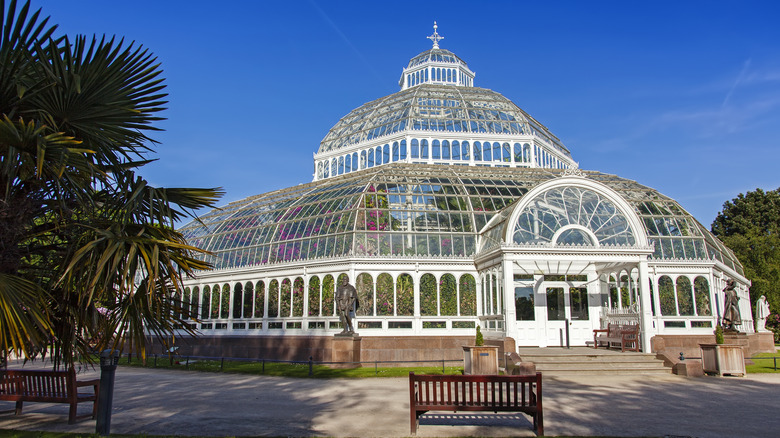
The glass conservatory of Sefton Park's much-loved Palm House originally opened in 1896 after Liverpool philanthropist Henry Yates Thompson donated £10,000 for its construction. Inside, its impressive botanical collection includes plants from around the world, reflecting the Victorian fascination with exotic species, with everything from edible hibiscus and dwarf pomegranate to poisonous angel's trumpet and endangered queen sago. The building's history has been somewhat turbulent: Bomb damage during the Liverpool Blitz and decades of deterioration eventually led to its closure. However, a local campaign helped save it from dereliction, followed by a major restoration and its reopening in 2001.
Despite all this, The Palm House remains free to enter and operates as both a botanical attraction and a cultural venue. Opening hours vary, and there are occasional closures for private events, so check the schedule before making plans. Outside, the grounds continue the botanical theme with statues of notable scientists, explorers, and botanists, and there's a giant chess set that provides an engaging reason to linger.
Sefton Park is easy to reach from central Liverpool, a beautiful port city with fewer crowds than London, with St Michaels station a short 20-minute walk from the park. And if you're traveling from London, there are multiple trains from Euston Station, with direct options usually arriving in around 2 hours and 30 minutes, via a scenic route through the western English countryside.