
The Caspian Sea Is Actually A Lake. Here's Why Its Name Never Changed
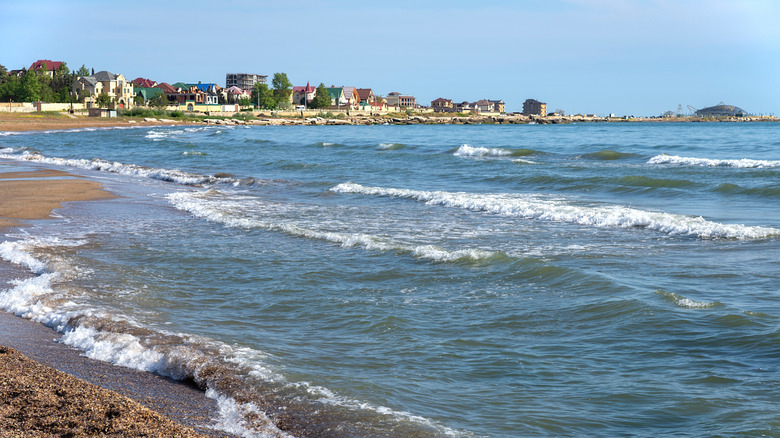
Although the difference between a sea, an ocean, and a lake may seem obvious, there are pedantic nuances that can alter a body of water's geographical classification. Case in point: the Caspian Sea. According to EBSCO, the Caspian Sea is the largest inland body of water in the world and is technically a saltwater lake. Its sprawling surface area of over 143,000 square miles is bordered by Russia, Kazakhstan, Turkmenistan, Iran, and Azerbaijan, where you can find one of the world's most breathtaking skylines along the sea's shores at Baku.
The ancient Romans called this body of water Caspium Mare, classifying it as a sea because of its salinity and overall size. Today, its designation as a sea is largely due to political reasons. If the body of water is considered a sea, it would be protected by the United Nations Law of the Sea, which would regulate the Caspian's natural resources and remove restrictions for nations outside of the adjacent countries. However, in 2018, the five bordering countries signed a treaty to divide the seabed and access to the lake's abundant oil and gas resources among themselves. Politics aside, the Caspian Sea's geography is also more similar to a lake than it may seem.
The Caspian Sea's lake-like nature
Legally, the Caspian Sea is a unique body of water without a clear classification, but geographically speaking, it is a lake. Similar to how North America's Great Lakes have ocean-like waves, the Caspian Sea's size can make it feel like a never-ending maritime landscape. According to NASA, it was once part of a larger prehistoric sea, but it has been landlocked for over 5 million years. Each year, the lake's water level varies greatly due to its self-contained nature, sourcing water from precipitation and freshwater rivers such as the Volga, Ural, and Kura without any outflow. Its salinity hovers at around 12 parts per thousand according to HowStuffWorks, roughly a third of the level found in the average ocean.
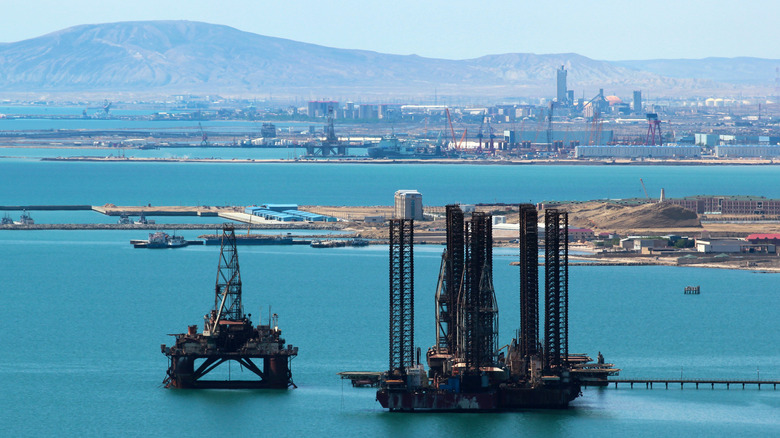
The Caspian Sea is rich in natural resources. Its petroleum and natural gas reserves are highly sought after, making its classification as a sea or a lake vital in determining which countries can extract from it. However, this also makes it prone to oil spills and pollution from drilling companies, as well as nearby industrial cities. Similarly, the Caspian Sea has long been home to beluga, Russian, and starry sturgeon, making caviar a luxury good sourced from its waters. At one time, about 98% of black caviar production came from the lake, per Caspian Monarque, but overfishing has made the species critically endangered. Thankfully, environmental regulations and restrictions have worked to mitigate the environmental impact from businesses and fishing. In fact, the U.S. has had a ban on beluga caviar from the Caspian Sea since 2005, sourcing their caviar from Onaway, the "Sturgeon Capital of Michigan," where hatcheries help revive this threatened species.