
New York's Former Landfill In Buffalo Is Now An Urban Preserve With Wetlands, Nature Walks, And Boardwalks
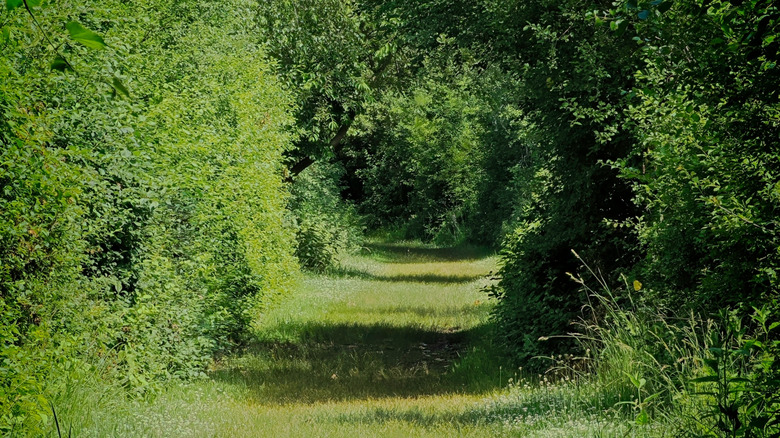
While you explore Tifft Nature Preserve, you may wonder how it could possibly be built on a former landfill. The preserve is located on the edge of Buffalo Harbor in western New York, and the verdant surroundings belie its unflattering history. In the warmer months, as you explore these 264 wooded acres on foot, you'll hear birdsong in the canopy and spot squirrels in the grass.
Oh, you will see signs of a Rust Belt past. The haunting remains of the Cargill Grain Elevator stand on the edge of the park, and highway traffic flashes past on Route 5. Cargo ships have long passed through here, and freight trains still rumble over a nearby convergence of railroad tracks. For decades, the property became a "dumpsite" for slag, fly ash, and other industrial waste. This was a place of smokestacks and heavy machinery, dangerous for wildlife and repellent to visitors.
The transformation has taken half a century, but Tifft is more than just a pleasant place to visit; the preserve is a case study in rebounding nature and revived ecosystems. Paths crisscross the lands, and they turn into raised boardwalks over the marshes. However, due to the preserve's origins, the preserve does sometimes require partial closures. At the time of writing, a few trails have temporarily closed, due to pollution in the ground and water, but Tifft is still an unequivocal success. Less well known than spicy chicken wings and nearby Niagara Falls, Tifft is one of the secret spots in Buffalo, New York, that most tourists often miss. It's also a popular setting for school groups and field trips.
The unique environment of Tifft Nature Preserve
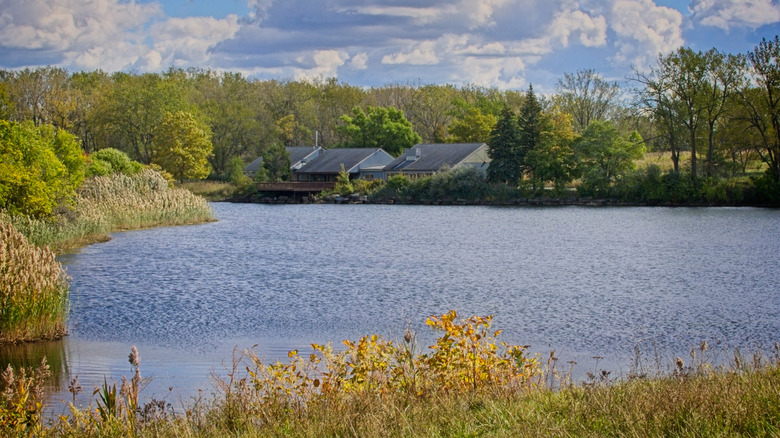
Wetlands are an acquired taste, but given what this area used to look like, the 75 acres of cattail marshes are a shocking sight. The erstwhile "landfill" wasn't designed for trash bags full of household items; this was a depository for toxic materials from nearby factories. Tifft began its restoration as a "superfund" site, and barrels of hazardous sludge had to be removed from Lake Kirsty and taken elsewhere. The process was slow and deliberate; the cleanup started in the 1970s, and the irrigation project was completed in the late 1990s, enabling fish and waterfowl to thrive.
Lake Kirsty is a constructed body of water that now serves as a scenic (and vital) habitat. The preserve also contains Lisa Pond and Beth Pond, and 5 miles of trails thread their way around these bodies of water. Many of the trails are wooden boardwalks, which keep your feet dry and also prevent you from treading on the delicate ecosystem. The longest stretch of wooden walkway lies in the middle-north, where it leads to an observation deck surrounded by water. Some trails look like tunnels through the trees, and deer are a common sight. One route is also wheelchair accessible.
Finally, there's the Herb and Jane Darling Environmental Education Center in the middle of the preserve, an enclosed structure that explains the origins and significance of the preserve. Here you can arrange a self-guided tour for $3 (at the time of writing). In winter, you can also come here to rent snowshoes.
Getting to Tifft Nature Preserve and where to stay

Tifft occupies a part of Buffalo called the Outer Harbor, and the entrance lies only about 4 miles from the city's downtown. This is a very well-connected corridor: Driving is the most common way to get here, but you can also hop the 42 bus line and arrive in less than 20 minutes. For active travelers, the multi-use Shoreline Trail skirts the edge of Lake Erie, so you can walk or bike here as well.
The preserve is free to visit and open year-round; just note that the visitor center isn't open on Mondays and Tuesdays, and the facility closes daily at 4 p.m. Wildlife is most visible in the warmer months, but the place is a beautiful escape in winter as well, especially after a legendary Buffalo snowstorm. (Wood and plastic snowshoes are available when snow reaches a depth of 6 inches.)
Buffalo has long been used as a stopover on the way to Niagara Falls and Toronto, and its location — way at the western edge of the Empire State — can feel far afield for road trippers. However, more and more travelers seem to be embracing Buffalo, and Tifft is just one example of improvement in the area: New York's once-thriving powerhouse is reshaping with revitalized neighborhoods, waterways, and local flavor. Urban Buffalo is packed with hotels, with many costing between $100 and $200 per night. Cheaper options are also available near the well-trafficked Buffalo International Airport. If you want to enjoy more outdoor fun nearby, you can head to the laid-back Lake Erie town of Lackawanna, just 6 miles away.