
Atlanta's Once-Worst Tourist Trap Mall Transformed Into A Culturally Rich 'City Beneath The Streets'
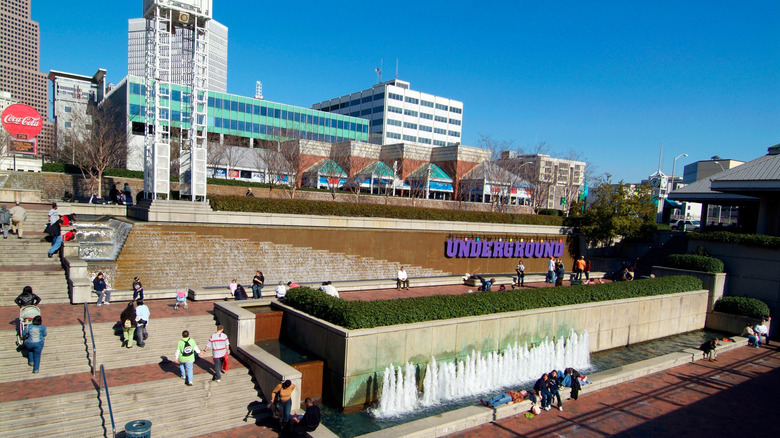
Atlanta is a city that attracts millions of visitors each year. However, there is one attraction that has a decades-long reputation as an underwhelming tourist trap: Underground Atlanta. Known as the "city beneath the streets," Underground Atlanta has gone through cycles of promising development and stark decline, only to be reborn with a new sense of purpose. In the 1920s, city officials laid the foundation for what would later become Underground Atlanta, when the city raised the streets in a two-block area in downtown Atlanta to solve the problem of gridlock. However, this project also submerged the businesses operating on these streets. As a solution, business owners moved their storefronts to the second floor of their respective buildings.
In the 1960s, city leaders rediscovered the submerged area and transformed it into a place with shops and restaurants. In 1980, the area was listed in the National Register of Historic Places for its historical significance. After a brief closure, Underground Atlanta reopened in 1989 as a mall, but in the 1990s, the area fell into a decline, while also dealing with crime issues. "Don't mean to be disagreeable, but Underground IS more dangerous than many areas of Atlanta," wrote a poster on the Fodors message board in 2005, adding that it was a "magnet for young people who like to drink and, in some cases, carry guns to prove their mettle." The deterioration of Underground Atlanta continued into the 2010s, and the mall closed again in 2017. However, after local club The Masquerade moved into the then-abandoned mall, Lalani Ventures saw its potential and brought the property to reshape it as a viable destination of arts and culture in downtown Atlanta.
A culturally vibrant Underground Atlanta
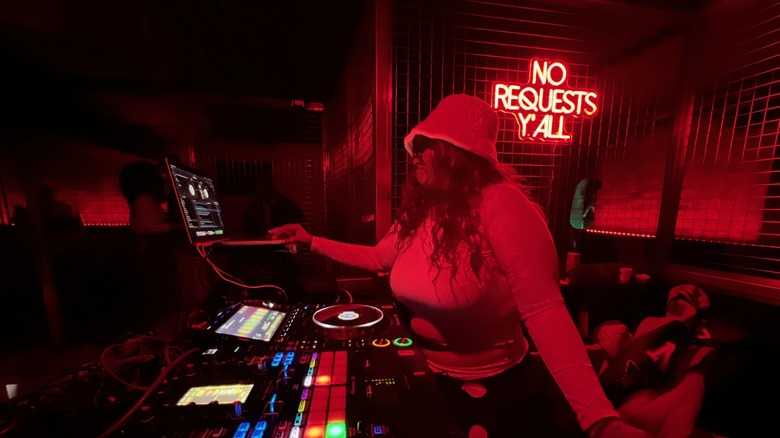
With newer hubs such as Midtown's Atlantic Station and the shopping and nightlife area of Buckhead, Underground Atlanta may feel dated to modern travelers visiting the city. However, the area has managed to adapt to the changing times, refreshing itself to become a central area for independent restaurants and nightlife. On Lower Alabama Street, there are nightclubs such as MJQ Concourse, which features a "Locals Only" night, and Lunchbox, a hub for EDM. Dolo's Pizza brings an interesting take on pizza, combining New York style slices with Caribbean flavor such as The Matey, which features jerk chicken, blue cheese crumbles, marinara, and mozzarella cheese. The most unique area of Lower Alabama Street, however, is Artist Row, which has become a hub for artist workshops and exhibits showcasing the work of some of the city's most creative residents.
Kenny's Alley contains The Masquerade, a live music venue with four indoor venues named Heaven, Hell, Purgatory, and Altar, while Upper Alabama is home to the Underground Diner, a sleek, modern restaurant with a 4.8 rating on Google. Reviewers praise the restaurant for its food and service. "Wonderful service, beautiful ambiance, and fantastic drinks!" wrote one Google reviewer, with another adding that the chicken and waffles were particularly good. "The waffle was fluffy and filling. The scrambled eggs [were] rich as well. And the chicken was seasoned and crispy to perfection," the reviewer wrote.
While some may still see Underground Atlanta as an underwhelming tourist attraction (it carries a "poor" rating on Tripadvisor), there is evidence that the area's refresh into a cultural hub is working. "The Underground is slowly coming back," a Google reviewer wrote, adding, "I am glad to see it." Underground Atlanta is located 10 miles north of Hartsfield-Jackson Atlanta International Airport, one of the world's busiest.