
Pennsylvania's Once-Thriving Artificial Pittsburgh Lake Is Now Ideal For Idyllic Nature Walks
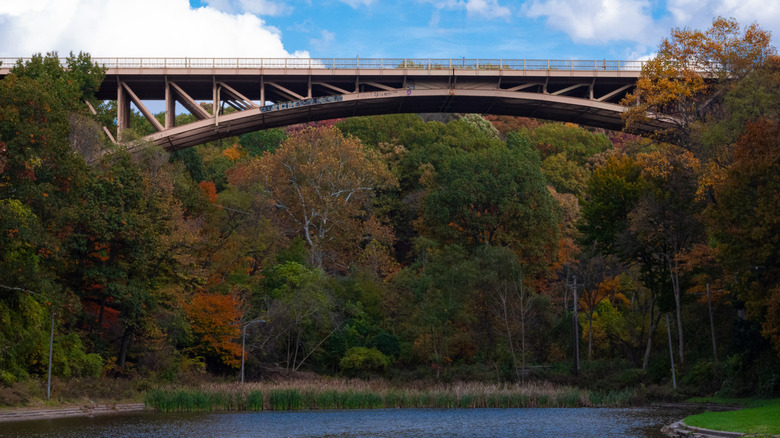
I remember the first time I saw Panther Hollow Lake, and more importantly, the strange spell it cast. I had just moved to Pittsburgh, Pennsylvania, a city I would call home for 16 years. I went for an exploratory walk, first down busy streets in the college district of Oakland, into a forested dell. The street split off into walking paths, and I took them deeper into the urban woodland of Schenley Park, a place I would visit again and again in the coming years.
Then I saw it: a large pond, shaped like a gourd and outlined with concrete. This was Panther Hollow Lake; the water was still and picturesque, and a high steel bridge arced over the landscape and made it all the more mythic. The scene was eerily quiet, except for the occasional car crossing the road above. I walked the perimeter, then examined the massive stone abutments that supported the bridge. The place felt secret and sacred, even though it's less than half a mile from the University of Pittsburgh's campus.
Countless visitors have stumbled into this place during their nature walks in the same way. The man-made lake isn't glamorous; it's often murky and overrun with algal blooms. But it remains a striking landmark and a reminder of its past, when it was once a thriving oasis for outdoor recreation. Oakland already has museums, restaurants, and lively culture, giving it the nickname "Pittsburgh's second downtown" — and Panther Hollow's unusual water feature adds a natural escape to the mix.
The origins and pleasures of Panther Hollow Lake
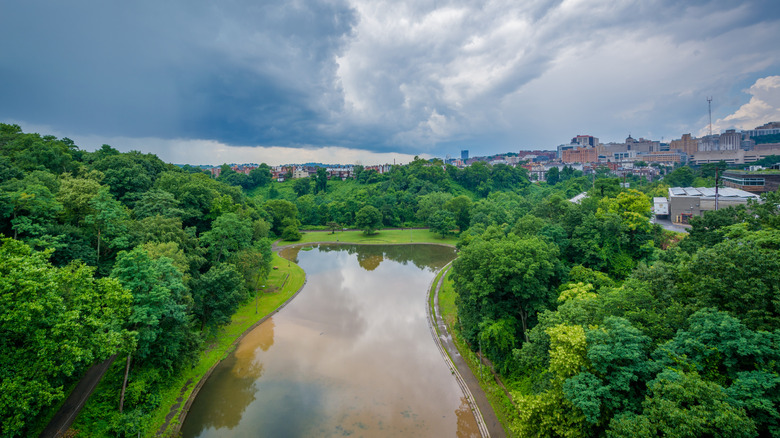
Before it was Panther Hollow Lake, this area was more like a bog, collecting drainage from the slopes all around. Designers built the distinctive frame around these waters in 1909, and the lake became a popular destination for boating, fishing, and winter ice skating. This was one of many efforts to develop the mile-long Panther Hollow ravine; freight trains have long run through Panther Hollow, and parts of the ravine are thick with row houses. One of the most ambitious proposals was to fill Panther Hollow with a roofed research complex in the 1960s. The colossal project would have been an impressive feat of engineering, but it would have also erased the natural spaces (and lower neighborhood) from existence. Thankfully, it never panned out, and the lake and its surroundings remain.
Today, Panther Hollow Lake is best enjoyed as part of a longer journey through Schenley Park. Sediment has accumulated over the years, and the lake is far shallower than it once was; during dry periods, parts of the bottom are exposed to the open air. You can also catch a spectacular view from the Panther Hollow Bridge, which includes Oakland's dynamic skyline.
For more expansive nature walks, a complex trail system loops through Schenley Park, which incorporates paved paths, dirt hiking routes, and a system of staircases. The lake stands on the end of Hollow Run Trail, which parallels a creek and traces the bottom of the ravine. Visitors have recorded more than 2,400 species on the website iNaturist, from the red-spotted admiral butterfly to the slider turtle and red-tailed hawk. You could easily add a promenade here to a list of Pittsburgh, Pennsylvania's best outdoor adventures and activities.
How to get to Panther Hollow
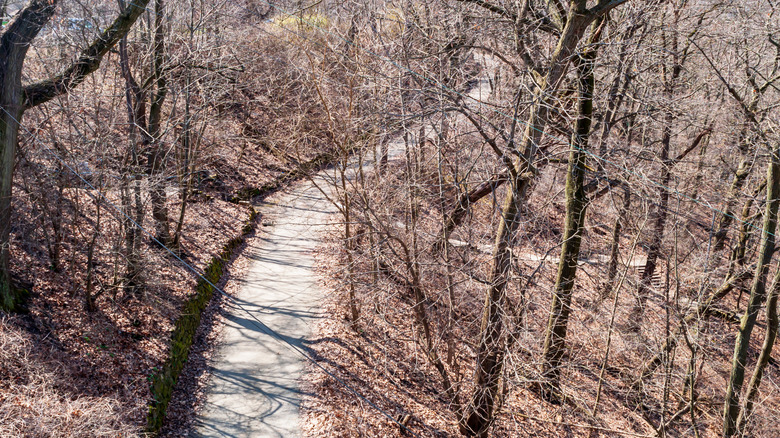
The Panther Hollow neighborhood is much more pleasurable to walk than to drive, which is part of its appeal. The city is famous for its network of staircases, which has infamously earned Pittsburgh the title "America's death stair capital." The Joncaire Street Steps are handy for descending from the Frick Fine Arts Building (in the middle of Oakland) to the bottom of the hollow, on the way to the lake. This is exactly how I first visited in 1997, and the steps are in far better condition now, thanks to a $770,000 restoration.
Indeed, part of the lake's charm is that you can't really drive there at all. You can take South Neville Street into the ravine, then park somewhere along Boundary Street (if you can find a spot), but at some point you'll have to get out and hike. Junction Hollow Trail is easy to find; you'll cross some railroad tracks, and the pond will suddenly emerge from the trees.
From there, you can continue hiking for miles through the sylvan terrain. Take it from me: Roaming Schenley Park could occupy you for a whole day, and that's not even counting a trip to Phipps Conservatory or special events on Flagstaff Hill, two beloved local attractions. If you're like me, each visit is better than the last.