
Pittsburgh, Pennsylvania's 5 Best Outdoor Adventures And Activities

Since its epic transformation from "hell with the lid taken off" to one of America's most livable cities, Pittsburgh has punched above its weight class in terms of culture, innovation, and tourist attractions. The Steel City's abundant indoor activities include the acclaimed Carnegie Museums, the botanical gardens of Phipps Conservatory, and under-the-radar gems like 2025's "best American history museum" at the Heinz History Center. While these are perfect for a rainy day, Pittsburgh's transition from the smog-heavy steel industry has left the city with far more bright, sunny days than it had a century ago. Pittsburgh visitors and residents alike will want to take advantage of the city's more amenable climate with fun, invigorating outdoor activities. Fortunately, Pittsburgh also has plenty of prime opportunities for outdoor recreation to accompany its thriving museums and arts scene.
Pittsburgh sits within a river valley in the Allegheny Plateau of the Appalachian Mountains. This leaves the city with several steep hills (and steeper public stairs) that make for excellent cardio workouts if you want an uphill challenge. Alternatively, Pittsburgh does have flat, level pathways that make perfect routes for a low-effort stroll. Pittsburgh's investment in public recreation spaces has paid off with several networks of excellent urban trails for walking, jogging, and biking. While the city's urban spaces are memorable to tour, Pittsburgh also has a rich collection of municipal parks and green spaces where you can temporarily escape city life with a peaceful nature hike. And the city's iconic three rivers are now superb water trails for kayaking and boating. No matter your activity of choice, you can enjoy a backdrop of Pittsburgh's distinctive historical architecture and beautiful skyline! As a native Pittsburgher (and fan of the outdoors), these are the five best ways to experience the Steel City in the open air.
Take a scenic walking tour of Downtown Pittsburgh and Mount Washington

In my experience as a long-time urban explorer, Pittsburgh's distinctive geographic layout offers a more memorable urban hike than cities with a standard grid layout. Much of this stems from the way Pittsburgh integrates its unique river valley geography with its culturally rich neighborhoods and prominent infrastructure. With so many bridges (many pedestrian-friendly), Pittsburgh offers tons of walking tour options that provide exceptional views of its rivers and stunning cityscape.
Though Pittsburgh's outer suburbs are often quite hilly, downtown Pittsburgh is largely flat, making it a perfect destination for engaging walking tours. Downtown Pittsburgh walking tours often center around the city's historically and aesthetically significant architecture. If you're an architecture fan, you can stroll past downtown Pittsburgh landmarks like the historic Allegheny County Courthouse (designed by famous 19th-century architect H.H. Richardson in his distinctive Richardson Romanesque style), the iconic glass castle of PPG Place, and the landmark Gulf Building and its weather-predicting tower.
If you still have a few hours after exploring downtown Pittsburgh's architecture on foot, you can walk over the Monongahela River via the Smithfield Street Bridge and take the Monongahela Incline (one of Pittsburgh's two public incline railways) up to Pittsburgh's Mount Washington neighborhood. The top of the Monongahela Incline takes you directly to accessible observation decks with breathtaking views of the city, plus the walkable Shiloh Street Shops with terrific restaurants, cafes, bakeries, and ice cream spots. From there, you can enjoy a scenic stroll along Mount Washington's city-view promenade to the nearby Duquesne Incline, offering an iconic view directly down to Pittsburgh's gorgeous Point State Park. After gawking for a bit, you can conclude your Pittsburgh walking tour by riding the Duquesne Incline back down to river level.
Go birdwatching in Pittsburgh's parks
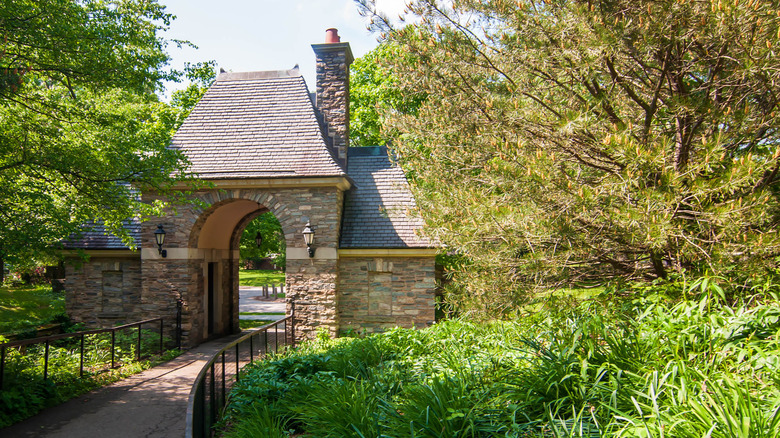
Pittsburgh walking tours often highlight the city's exquisite architecture and remarkable urban engineering. However, Pittsburgh also has several excellent municipal parks, each of which includes several miles of forested hiking trails that serve as scenic outdoor escapes and rich habitats for native plant and animal species — including Western Pennsylvania's many birds. Having hiked through all of Pittsburgh's public parks myself, I, far from a bird expert, can attest to the impressive avian diversity bird-lovers can find on any of these hikes. Whether you're a long-time or beginner birdwatcher, chances are good that you can find a new species to add to your life list in one of Pittsburgh's parks.
As an avid hiker and amateur birdwatcher, my favorite Pittsburgh hiking spot has always been the city's vibrant Frick Park. The largest of the Steel City's municipal parks, Frick Park covers 644 acres of a lovely woodland enclave right in the middle of some of Pittsburgh's major neighborhoods. A forest oasis in the heart of a city will likely be a haven for birds, and Frick Park is notably rich in both migratory and non-migratory bird species.
During a hike on one of Frick Park's many excellent trails, dedicated birdwatchers can find species as diverse as woodpeckers, hawks, owls, swallows, wrens, flycatchers, waxwings, cardinals, jays, and even wild turkeys. Frick Park's restored Nine Mile Run stream has also become a mingling ground for waterfowl like ducks and geese as it empties into the Monongahela River. Other terrific Pittsburgh parks for birdwatching include the verdant Schenley Park (right next to the campuses of the University of Pittsburgh and Carnegie Mellon University) and the historic Highland Park. Further away from downtown, Pittsburgh's new Hays Woods Park may even offer cameos from the city's resident bald eagles.
Night hiking at Allegheny Observatory

Riverview Park is the scenic gem of Pittsburgh's North Side. Though it offers the same exceptional birdwatching as fellow municipal parks like Frick, Schenley, and Highland, Riverview Park has a unique feature that warrants a special shoutout. Among its lush trees and hilltops, Riverview Park hosts the historic Allegheny Observatory. Founded in 1859, the Allegheny Observatory is one of the oldest astronomical research centers in the United States, and was a major scientific innovation at the time of its founding. A historic landmark administered by the University of Pittsburgh, the Allegheny Observatory still hosts public astronomy events in the evening that bring the night skies above Pittsburgh down to Earth.
Though the observatory is still a functioning research center (with current research including the ongoing search for planets outside our solar system), public outreach remains an essential part of the observatory's mission. The (free) Allegheny Observatory evening tours highlight the historical significance of the observatory itself, while educating visitors on the science behind its innovative equipment. For outdoor lovers, these observatory tours are an excellent way to experience an authentic Pittsburgh star party while enjoying Riverview Park's woodlands in a unique nighttime setting.
Observatory tours are also excellent activities for families with young children, with the perfect blend of age-appropriate information and family-friendly hikes. Depending on the date of the tour and the weather conditions, you might also get to experience a heavenly view of the moon and Milky Way in a premier stargazing night hike around the observatory. Observatory tours usually start at 8 p.m. on Thursday and Friday evenings between April and October. If your Pittsburgh trip cannot accommodate that schedule, you can still stop by Riverview Park's excellent trail network for some peaceful nature hikes.
Kayak the Three Rivers

Pittsburgh is well-known as the "City of Three Rivers," with the Allegheny and Monongahela Rivers converging into the Ohio River right at Pittsburgh's downtown point. Three large and generally calm rivers mean that Pittsburgh has some of the best urban paddling opportunities in the United States. All three of Pittsburgh's rivers (plus the nearby Youghiogheny River) are connected via a network of access points to form the Three Rivers Water Trail, with several well-maintained launch points where paddlers can safely and conveniently enter one of Pittsburgh's rivers on a non-motorized boat. All three rivers offer generally placid currents and ample riverside scenery for kayakers to enjoy, making the Three Rivers Water Trail ideal for calm and scenic days on the water. Kayakers who also happen to be history buffs (like myself) can enjoy the water trail's status as part of the cross-continental Lewis and Clark National Historic Trail, marking the spot where Lewis and Clark began their epic westward journey back in 1803.
From my experience kayaking the three rivers, the Allegheny River is the best option for relaxing days of paddling. While the Monongahela and Ohio Rivers do have some terrific sights, they also still see fairly heavy traffic from large barges transporting coal and other raw materials, which may be somewhat intimidating to kayakers. The Allegheny River's charming Washington's Landing (also known as Herrs Island) is an excellent spot to embark on the river, and the island's Lambert Boathouse offers convenient kayak launching and boat rentals courtesy of the Three Rivers Rowing Association. Located a mile or so upstream of Point State Park, Washington's Landing is perfect for a beginner-friendly kayaking tour of downtown Pittsburgh, the North Shore, and Point State Park itself.
Bike the Three Rivers Heritage Trail
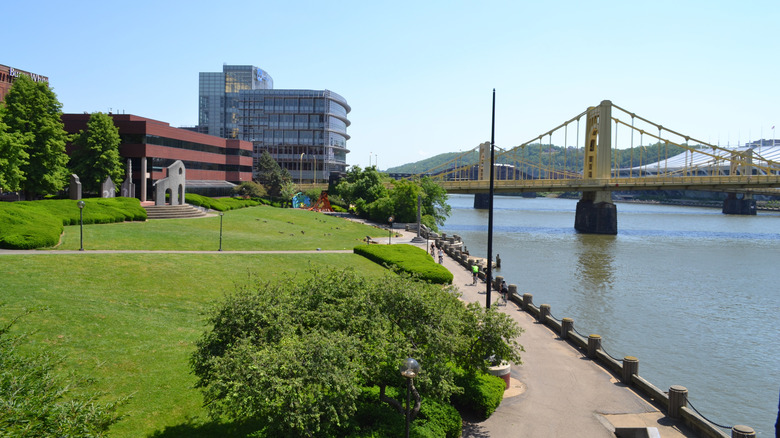
The comprehensive trail infrastructure that supports Pittsburgh's urban hiking opportunities also makes it a premium city for cycling. Cyclists can find great routes along the same urban trails that hikers and joggers frequent, but the best route for memorable urban cycling in Pittsburgh is arguably the Three Rivers Heritage Trail. Less of a single unified trail and more of a network of well-maintained urban paths, the Three Rivers Heritage Trail covers 35 miles of incredible scenic stretches of all three Pittsburgh rivers. The entire trail network is maintained through a joint partnership between Pittsburgh's Department of Public Works and the nonprofit Friends of the Riverfront. Thanks to the dedicated efforts of this public-private venture, much of the Three Rivers Heritage Trail consists of wide, even, paved paths that are perfect for cyclists of all experience levels.
Each segment of the Three Rivers Heritage Trail offers excellent views of one or more of Pittsburgh's rivers. Depending on where you go, you can cycle along prominent Pittsburgh spots like the vibrant South Side (and its acclaimed Hot Metal Bridge). Having explored much of the trail network myself, my personal favorite segment (and a favorite for many Pittsburgh cyclists) is the trail along Pittsburgh's unforgettable North Shore Riverfront Park. The North Shore of Pittsburgh lies on the northern banks of the Monongahela-Ohio convergence point, on the opposite side of the river from downtown Pittsburgh. Cyclists on the North Shore trail can pass Pittsburgh riverfront landmarks like Acrisure Stadium and PNC Park (home of the Steelers and Pirates, respectively), the Kamin Scenic Center, the USS Requin submarine, and beautiful riverside monuments like the statue of Pittsburgh icon Fred Rogers — all while enjoying picture-perfect views of the Pittsburgh skyline and Point State Park.
Methodology

The methodology used in this particular list was largely a blend of objective Pittsburgh city data and personal experiences. As a native Pittsburgher myself and someone who enjoys outdoor activities from time to time, I personally have plenty of experience with Pittsburgh's outdoor recreational options. During my several decades living in Pittsburgh, I have been fortunate enough to explore many of its urban trails and city walking tours, hike through its many excellent municipal parks (and see a few birds along the way), and kayak all three rivers. This personal experience played a major role in the ultimate contents of this list, as I was able to draw on my experiences to recommend which locations are best for which activities and to paint a fuller picture of what each experience is like.
That said, we also explored more objective data and broader public reviews in choosing which Pittsburgh outdoor activities and locations to include here. AllTrails was a useful resource, as it includes comprehensive information on hiking, biking, and even kayaking trails in Pittsburgh. AllTrails curators have helpfully compiled useful lists on top birdwatching trails, city walk trails, and so on. AllTrails also provides reviews from previous visitors, with cumulative ranks represented as each trail's rating out of five stars. Mean ratings like this proved useful in determining which specific trails and locations receive the broadest approval for different outdoor activities, while individual reviews helped us identify specific qualities in each area that tend to stand out for hikers, cyclists, kayakers, etc.