
Seattle's Wildly-Popular Market Lined With Local Eats Might Be The City's Biggest Tourist Trap
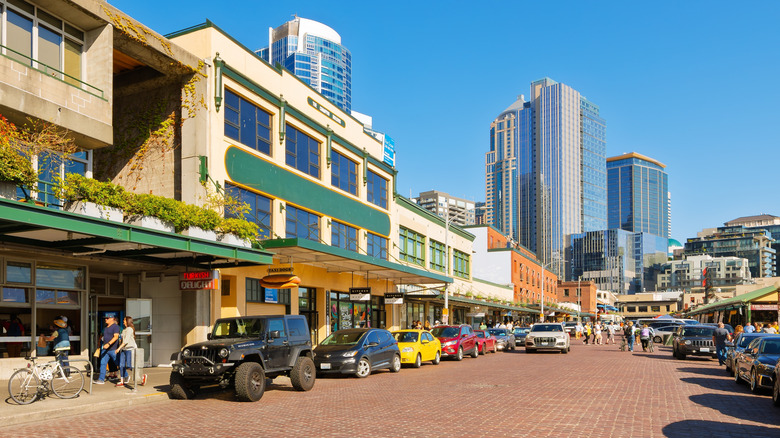
When you visit Seattle, Washington, the entire city seems to usher you toward Pike Place Market, a century-old bazaar near the shores of Puget Sound. Seattle is hilly, and street after street slopes toward the water. The waterfront bike path leads here. The magnificent Lenora Street Pedestrian Bridge leads here. The Westlake light rail station is a quick walk away. Everything seems to point in this direction, which makes sense, as the city has origins as a Pacific seaport.
However, some have called Pike Place a tourist trap. There's no question that Pike Place is busy: About 10 million visitors pour into this market every year, which means a lot of people check out these 220 shops and restaurants. Some also see Pike Place as overpriced and catering to tourists. One Redditor wrote, "It's more expensive than grocery stores and it has a few niche touristy products." On Tripadvisor, one reviewer added, "It's a glorified yard sale with mostly junk [...] Crowded, stinky, I'll leave it at that." Indeed, the original Starbucks and Gum Wall are located here, and they have been named wildly popular Seattle destinations that are actually tourist traps.
Is it true that Pike Place is a tourist trap, though? Legions of locals would beg to differ, defending their historic marketplace as a cultural lynchpin. This is a place for flowers and oysters, sweet treats and locally grown produce. Supermarkets might be better suited for regular groceries, but for so many Seattleites, Pike Place is something special.
Why Pike Place Market is still a great place to visit
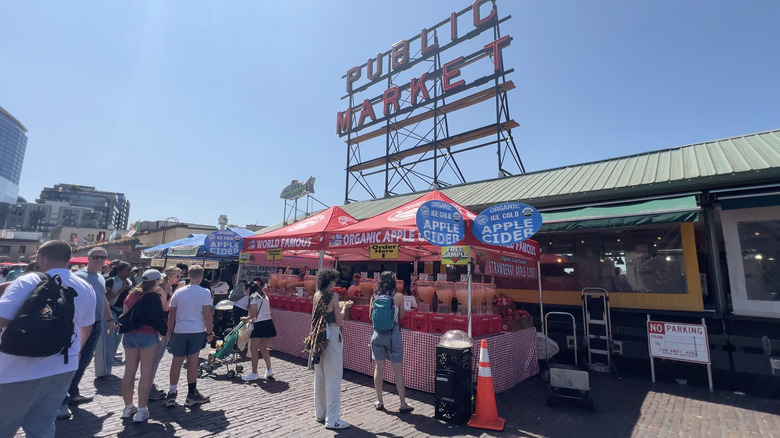
Like many popular destinations, there are very good reasons for Pike Place's fame. The market is an actual historic landmark, having operated continuously since its opening in 1907. You won't find many chain stores here; just about every vendor is a small business, and many owners are also cultivators, either raising their own crops or catching their own seafood. There are many unique attractions here, like the fishmongers who toss fresh salmon to each other, as well as the 550-lb. bronze piggy bank named Rachel. The place may get crowded, but this special, vibrant market is still considered "The Soul of Seattle."
Driving is optional; downtown Seattle is walkable, bikeable, and well connected by mass transit. You do have to contend with the smells and puddles of a busy pedestrian corridor in a rainy city, but many patrons will appreciate this time-honored alternative to sterile supermarkets. "Have started working in the area again," wrote one Redditor, who added, "There's so many great lunch spots, places to grab a gift, just go for a walk, or pick up a special ingredient. Love being back downtown."
There are many standouts here: Russian bakery Piroshky Piroshky serves savory hand pies, Beecher's Handmade Cheese preps a decadent mac and cheese, and Lowell's offers outstanding seafood lunches and one of the best views in town. Seattleites generally seem committed to their turn-of-the-century shopping center. Plus, many of its venues are legendary: Pike Place restaurant The Pink Door was named Washington's favorite restaurant in 2025.