
This Gorgeous German National Park Is A UNESCO Gem With Scenic Beaches, Coastal Cliffs, And Ancient Forests
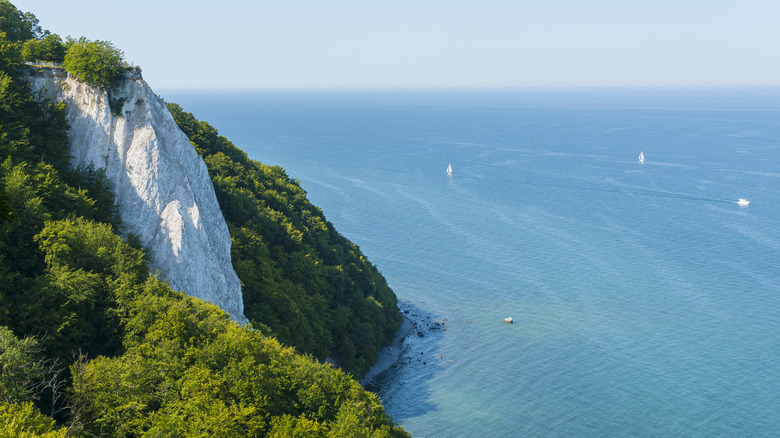
Germany is a land that famously inspires fantasy and fiction, from the dense woods of the Black Forest and the high peaks of the Bavarian Alps to historic castles and fairytale-esque lakes. Yet, even in this land known for picturesque natural spaces, some areas fly under the radar. One such example is the white chalk cliffs of Jasmund National Park, on Rugen Island. Overshadowed by its more famous cousin in Dover, the cliffs on Rugen Island provide scenic hikes, ancient forests, and spectacular panoramic views out into the Baltic Sea.
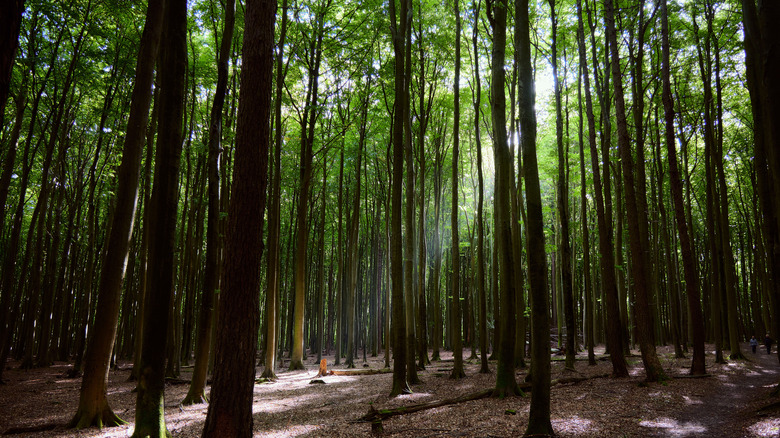
Jasmund National Park is the smallest of Germany's national parks, but it's far from the least impressive. Unlike the White Cliffs of Dover, which feature stark white cliffs with sparse patches of grass, the white cliffs of Jasmund National Park feature dense forest cover across every inch — a medley of white, green, and the brilliant blue of waves crashing into the cliffs. Aside from the cliffs, Jasmund National Park also features pebbled beaches and forests that have stood for hundreds of years. The beech forests of Jasmund National Park are reportedly around 800 years old, remnants of an ancient forest that once covered most of Europe but has since almost completely disappeared on the mainland. To preserve this part of European natural history, Jasmund National Park has been declared a UNESCO World Heritage Site.
At just 12 square miles, Jasmund National Park makes for a fun day trip, located at an approximate 3.5-hour drive from both Hamburg and Berlin. Visitors can head to the seaside town of Sassnitz, which serves as the gateway to the park. However, whether you arrive by train, bus, or car, remember that most of Jasmund National Park is only accessible on foot.
Exploring Jasmund National Park's forests, cliffs, and beaches
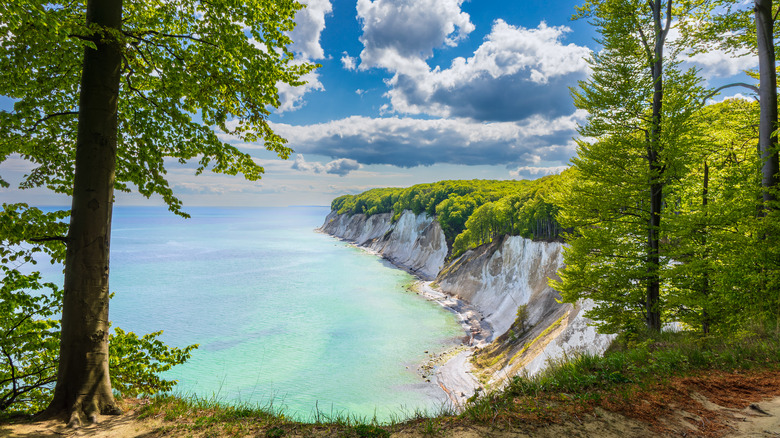
There are two entry points into Jasmund National Park — Sassnitz or the parking lot at Großparkplatz Hagen. Visitors can hike through the forest from either location or catch a shuttle bus to the Königsstuhl visitor center. The visitor center lies directly on the Königsstuhl, the tallest and most famous of Rugen's chalk cliffs, and features a skywalk with panoramas of the ocean. It's completely level and, unlike many other skywalks, features an opaque floor, making it accessible to both wheelchair users and people with a fear of heights. From here, visitors can admire the chalk cliffs below and the azure Baltic Sea from multiple viewpoints, without stepping on or damaging the cliffs.
Hikers can explore the park through the Hochuferweg Trail, which begins in Sassnitz and heads north to Lohme along the Baltic coast, winding through beech forests and across cliffs, with occasional optional descents down to the beach. Some parts lead into deep woodlands, where the sunlight and dense canopy of centuries-old trees create dappled patterns on the ground. Other parts lead out onto the ridgeline, where hikers can see stark white cliffs plunging below to meet blue, glistening waves. One of the park's most famous viewpoints lies on this trail — the Victoria-Sicht viewpoint, from which you get clear views of the Königsstuhl.
Those heading down to the beach experience a peaceful, secluded atmosphere, broken only by the sound of waves crashing against the rocks. The beaches in Jasmund National Park are pebbled and filled with boulders rather than the soft, white-sand beaches of Rugen Island, with almost milky-looking waves from suspended chalk particles close to shore. Rather than the more manicured look of famous European beaches, Jasmund National Park has a rough-around-the-edges texture.
Make the most of your trip to Jasmund National Park
Although Rugen Island is part of Germany's extensive rail network, most visitors to Jasmund National Park agree that it's much easier to drive to the parking lots at Sassnitz or Großparkplatz Hagen (via Thrillist). Großparkplatz Hagen is the better entry point for those short on time, as the shuttle buses to the visitor center allow visitors to make a quick trip to the Königsstuhl Skywalk and back. Most visitors rent a car from Berlin — voted the No. 1 destination for solo travelers — or from the "Venice of the North" city of Hamburg. If you must take the train, you'll have to catch one train to Stralsund on the mainland, then switch to a different one to Sassnitz.
If you have more time, hikes are the best way to truly experience the beauty of Jasmund National Park. While the Hochuferweg Trail is one of the most popular in the park, it's 7.4 miles long and takes approximately 3 to 4 hours to cover. It also features several ascents and descents through the forest and cliffs, making it a fairly difficult path. However, many hikers break the trail into smaller segments to specific viewpoints, so you can attempt part of the trail if you don't have time for the full route.
Jasmund National Park is also an excellent year-round destination, offering something different to visitors in every season. Fall brings lovely autumn hues to the ancient forest, while winter offers a foggy and wild vibe along the coast. Summer has comfortable temperatures and some of the clearest views from the cliffs. However, it might be best to visit during spring (April through May), as the ancient beech forests burst into color with seasonal wildflower blooms.