
Why Do Hotel Bedrooms Have So Many Pillows?
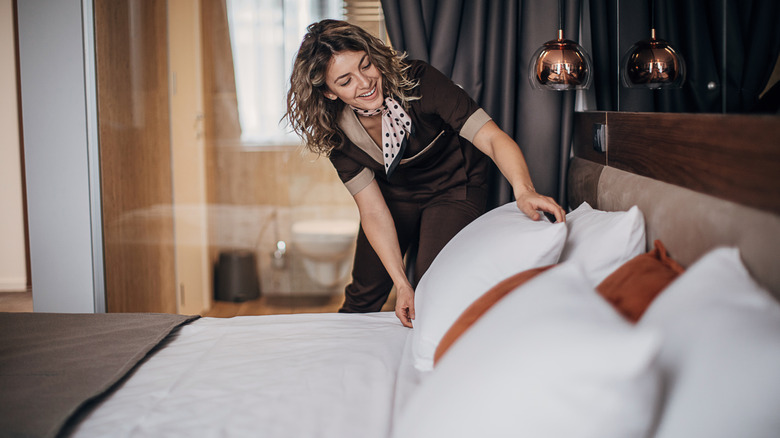
If you're a frequent traveler, you've probably encountered a hotel bedroom where the ratio of pillows to bed space is weighted heavily towards the former. Perhaps you start removing some of these pillows, wondering aloud why hotels insist on creating such a pillow surplus in the first place. European travel guru Rock Steves once posted a video to his YouTube channel, showing more than a dozen pillows crowding his freshly made hotel bed.
Even those who like to lay their head on a towering pillowy stack would surely deem 13 pillows superfluous. Sleep tech company Simba Sleep says one pillow is plenty for most sleepers, maybe with another between the knees or under the back, depending on your favored sleep position. Though, of course, there are outliers who require two or even three under their head in order to rest easy. In luxury hotels, excess pillows may be used as artifice, creating a sense of opulence, layering, or texture. According to Hotel Quality Pillows, presentation is one of the key reasons for an overabundance of pillows. But it isn't the only one.
Hotels may supply various types of pillows (soft, firm, varying levels of compression) to suit different sleep preferences. They might arrange the bed with multiple pillows to be used for other things, like propping yourself up to read a book or send emails on your laptop. Excess pillows also provide flexibility. Maybe you want a firm pillow between your knees and soft ones under your head, or vice versa. Perhaps you use the decorative pillows for lumbar support on the hotel room chair or as a barrier between you and your partner when sleeping. Pillow surpluses aren't for everyone, especially if you believe some of the horrifying details you hear about hotel rooms, like pillows never getting a proper wash. But there is method to the madness.
The reasons for all those hotel pillows

Gencer Textiles has a useful guide on how many pillows should be placed on a hotel bed. Its general rule is that pillows should have a practical purpose and be easily identifiable, and there should be two sleeping pillows per person (i.e., two on a single bed, four on a double, queen, or king). Gencer makes an important distinction, however, between sleeping and decorative pillows, arguing that the latter should be considered its own category and can be used to enhance the room's aesthetic profile.
It's fair to say some luxury hotels interpret this advice liberally, furnishing beds with pillows and cushions in multiple shapes, hues, fabrics, and textures. If you're feeling yet more indulgent, you can add a body pillow to the pile, one of the freebies available at many hotels. All of this extra cushioning might imbue your bed with a flourish, but it means you'll spend your evenings ferrying most of the pillows onto the floor or into another (hopefully cleaner) storage space. And whether it adds any additional comfort is really up to the individual.
That said, extra decorative cushions can come in handy when you're engaged in other activities, either on the bed or another piece of furniture in your hotel room. The different shapes and sizes mean you can alter your back support when reading a book, browsing electronic devices, watching TV, waiting for room service, or simply having a cup of coffee and gazing wistfully out the window. Having multiple sleeping pillow options is also useful. Variable pillow properties include firmness, moldability, contouring, compression, and shape recovery. So go ahead and put your pillows through the Goldilocks test and find one that's just right; it could lead to a better night's sleep.