
Between Portsmouth And Poole Is A Quaint Coastal Town With A Historic Market, Tasty Eats, And A Scenic Castle
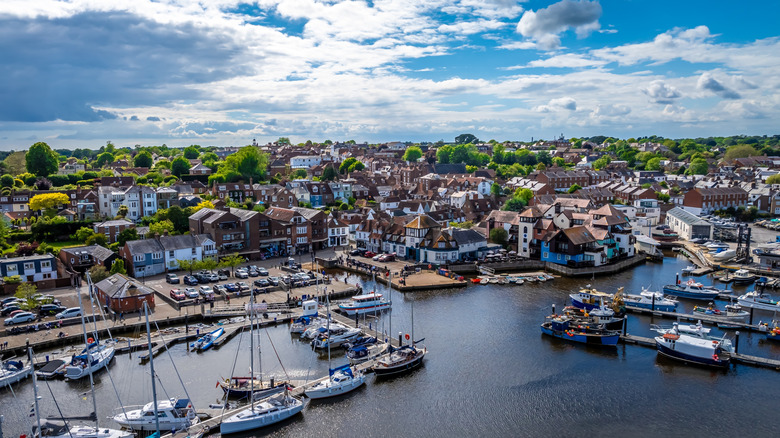
A trip along England's southern coast can mean stops at colorful seaside destinations, but the best small-town detours offer more than a pretty view of the water. They bring centuries-old markets to browse stalls before lunch, cobbled streets you can wander down to the harbor, and landmarks that give the place a distinct story. Lymington, a historic market town between Portsmouth and Poole, hosts a winning blend of coastal appeal, history, and diverse food. You could start at the market on High Street, then stop at one of the town's cafés or pubs as you make your way down to the waterfront Hurst Castle, a 16th-century fortress at the end of a long shingle spit.
Much of Lymington's core is made up of closely packed buildings along the wide Georgian High Street that branches off into narrow alleyways. The town grew from a medieval settlement around High Street and the quay, and traces of its medieval past are woven into its architecture and layout. The width of this road, for example, was intentionally designed to fit the town's market, which dates to the 13th century, according to the Lymington and Pennington Town Council. The tradition continues today with a Saturday market accommodating over 100 stalls along the street. Follow it downhill and the scenery shifts from shopfronts and Georgian facades to the cobbled quay, where yachts and fishing boats bob at the confluence of the Lymington River and the Solent.
Grab a bite or bargain in Lymington's streets
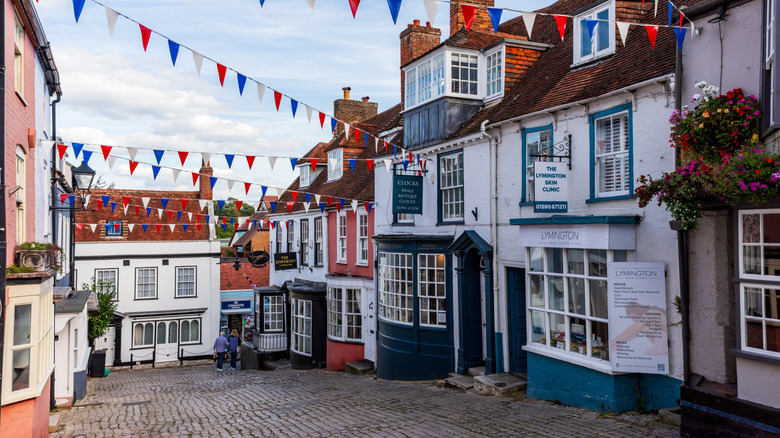
Lymington's Saturday Charter Market transforms the town into a bazaar of fresh fish, cheeses, breads, vintage finds, and crafts. The Lymington Market website counts more than 100 stalls on average (weather-dependent), lining both sides of High Street. "Can get a bit crowded so I recommend going sooner," wrote one visitor on Google. "The stuff sold isn't always typical [High Street] goods. You might find hidden treasures there." Stop at Coralbay Seafoods, for example, where fishmonger Dan demonstrates filleting to passersby and sells fresh seafood like Shetland salmon and shellfish. Then, shop for local cheeses, pies, and meats at Catley Chilled Foods, or pick up olives and antipasti from Olives Direct. For crafts and artisan goods, you might stop at Wooden Hand Crafts for a handmade fruit bowl or serving tray, or find a painting of the coast to take home from artists Thomas and Koo.
Around Lymington's High Street and branching roads, you'll find polished restaurants and old-fashioned quayside pubs alike. On High Street, The Highstreet Kitchen is a well-regarded upscale option, with 4.7 stars on Google. It uses local produce for rotating contemporary dishes that have included South Coast lemon sole with crayfish beurre blanc and braised fennel with Isle of Wight tomato. For something more casual, The Larder serves Thursday- and Friday-night tapas and was named one of the New Forest's best new restaurants by The Daily Telegraph. If you want to dine right on the waterfront, The Ship Inn is a popular (and well-rated) gastropub sitting on the quay, where you can settle in for seasonal pub food with the harbor just outside – visit when England has optimal weather so you can enjoy a deck table.
Visit the castle on Lymington's shore
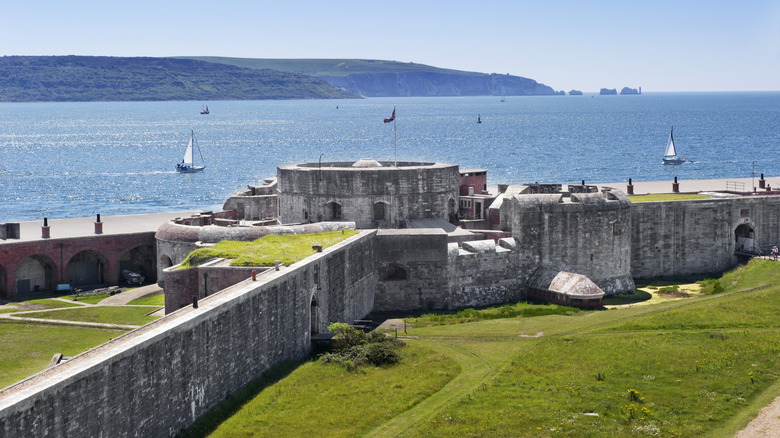
Unlike some of the tourist traps you might encounter in the United Kingdom, Hurst Castle is a bit more remote, sitting at the edge of the sea outside Lymington's center with no drive-up access. Henry VIII built the Tudor-style castle around the mid-16th century as part of a broader system of artillery forts. It was specifically positioned on its spit to guard an important passage into the Solent. The fortress gained a more dramatic claim to fame when Charles I was imprisoned here for 19 days before his execution.
To reach Hurst Castle, you have to drive or take a taxi roughly 5 miles from central Lymington to arrive at the Hurst Castle Ferry. The ferry makes the crossing in about 20 minutes, gliding through marshes and along a lagoon towards the stone fortress. You could also walk to the fortress from the parking lot, but it's a bit of a trek — about 2 miles along the spit. Once there, you can explore the Tudor keep and climb to the roof for views out to the Isle of Wight. Then, descend into the basement where food and gunpowder were once stored.
Though Hurst Castle is a bit tricky to get to, Lymington itself is just about an hour by car from both Portsmouth and Poole. You could tack it on as a historic side trip after visiting the soft sands of Poole's Sandbanks Beach. Lymington is also totally doable as a day trip from London – under two hours by train (with one transfer) from Waterloo.