
Be Cautious Road-Tripping Through The State Where Drivers Are Most Likely To Hit An Animal
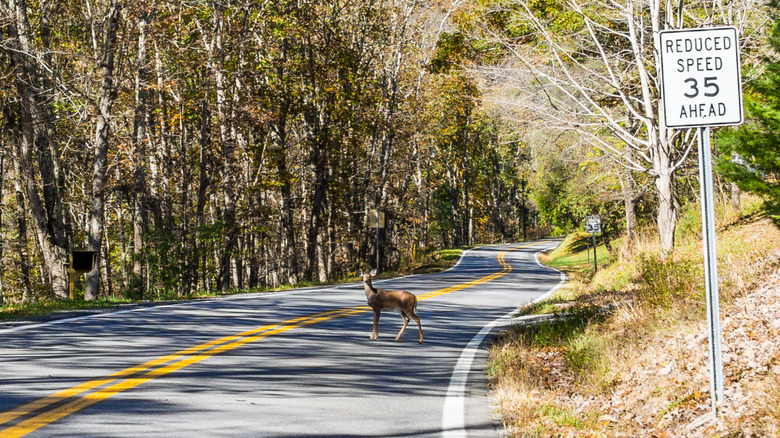
Road-trip planning will have you focused on the fun stuff — which scenic routes are worth extra miles, where to pull over for a lookout. But knowing where you'll need to be especially cautious behind the wheel is just as useful to avoid collisions, particularly when driving through countryside where an animal might dart in front of you. A 2026 State Farm analysis of animal collision data found that West Virginia has the highest likelihood of a driver hitting an animal in the country, with odds of 1 in 46. That hardly means travelers should avoid driving through West Virginia, with its mountain and forest scenery. Rather, you'll just need to drive more slowly and carefully, and take extra precautions.
State Farm reached its rankings by analyzing animal collision insurance claims from July 2025 through June 2026. Then, it calculated the state-by-state likelihood of an animal strike relative to the number of licensed motorists in each state. The national average chance of striking an animal is 1 in 145, which puts West Virginia's 1 in 46 odds at a pretty substantial disparity. Even among other high-risk states, the gap is notable — Montana, which ranked second, had odds of 1 in 54. The result isn't a one-year fluke, either; West Virginia has held the number one spot for over a decade.
Known for Appalachian views and for having the most mountains of any East Coast state, West Virginia's rural landscape is part of why its animal collision rate is high. Joe Pack, P.E. West Virginia Division of Highways Chief Engineer of Operations said in a press release, "The more rural the area, the more likely accidents are to happen." Driving through the state is a double-edged sword: You get bucolic scenery on one hand, but a higher risk of unexpected wildlife on the other.
Precautions to take to avoid injuring wildlife on West Virginia's roads
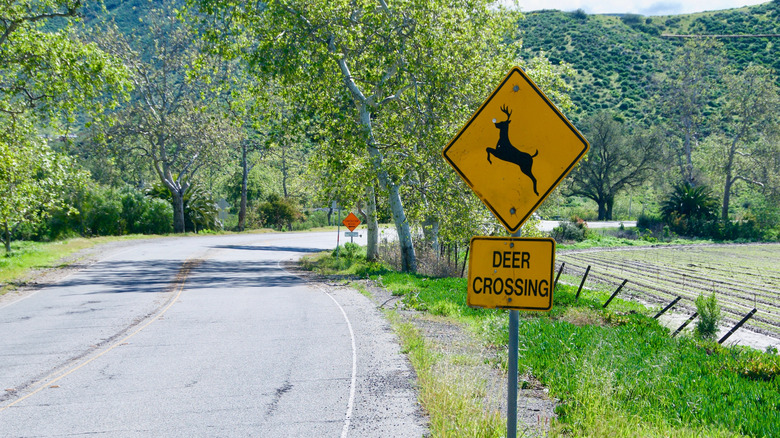
There are some common road trip mistakes you can steer clear of to help stay alert and avoid hitting an animal — something that we all want to avoid for our own sake, and of course, for the animal's sake too! First, look out for deer crossing signs. The signs aren't randomly placed, but rather mark where deer are known to move through — the West Virginia Offices of the Insurance Commissioner states that the signs are placed at common deer-crossing spots. Slow down at these signs, and if you see a deer, check if there are more before continuing — deer commonly move in groups.
Timing matters, too. Deer, in particular, are most active during dawn and dusk, and wildlife are also abundant in the fall breeding season. On West Virginia's rural roads, the posted speed limit is worth treating as a ceiling rather than a suggestion even when the road looks empty, and it's smart to go even slower in the evening, early morning, and at night. On dark, unlit roads, use your high beams to help spot wildlife further ahead of time. Whether day or night, keep an eye on the edges of roads and adjacent woods, too, where wildlife could be gathered as they graze and forage.
If an animal suddenly darts into the road, brake firmly and keep your car straight, rather than swerving, which could lead to a more serious crash. If an animal collision does occur, pull off the road if possible, turn on your hazard lights, and call 911 if someone is injured or the struck animal creates a danger to other drivers. Don't approach the animal. Report it to the West Virginia Division of Highways (on state roads, through the appropriate county garage). If anything, caution around crossing wildlife is just another reason to take West Virginia's roads slowly and savor spots like the Potomac Highlands, a paradise of mountains and scenic highways.