
Wales' Car-Free Coastal Hamlet 2 Hours Outside Liverpool Is A Remote Oasis With Lovely Beaches And An Iconic Pub
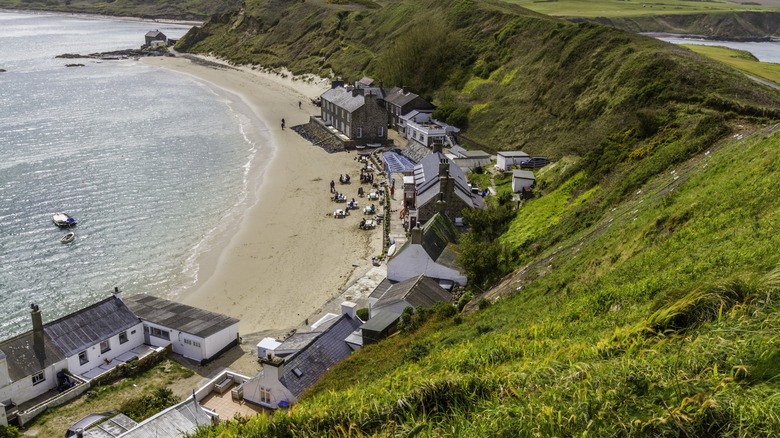
Porthdinllaen Beach is the sort of place you'd put on a postcard. Resting under a green finger of land on the northern side of Wales' Llŷn Peninsula, it consists of just a handful of stoop, salt-caked cottages with a background of lush coastal hills rising behind. In front, the foreground is dominated by patches of seagrass, rocky reefs, and the big blue of the Irish Sea, while pale, white-tinged beaches roll south towards the neighboring town of Morfa Nefyn.
With some buildings, and much of the surrounding area, now owned and managed by the biggest conservation charity in all of Europe, the National Trust, little Porthdinllaen really has managed to resist the arrow of time. The tiny harbor hamlet still hearkens back to the days of the 19th century, when unrequited plans were made to turn it into a major port. But, and here's the kicker, there's not a car to be seen. Only residents are allowed to drive up the narrow lane that wiggles across the headland to the village itself. Visitors must either walk the nigh-on 15 minutes along the beachfront, or, if the tide is high, scale the clifftop route alongside the local golf course.
On top of all that, Porthdinllaen Beach is right out there on the edge of Wales. The vibrant city of Liverpool is only a touch more than two hours' drive to the east, making it a good base. However, if you're flying in, you're looking at a hefty drive of close to 2.5 hours from the nearest international airport with transatlantic flight arrivals, which is located over in the underrated art and shopping city of Manchester, across the English border. It's even further from Wales' own international hub in Cardiff — that's closer to a five-hour drive to the south.
A tiara of stunning sands awaits at Porthdinllaen Beach
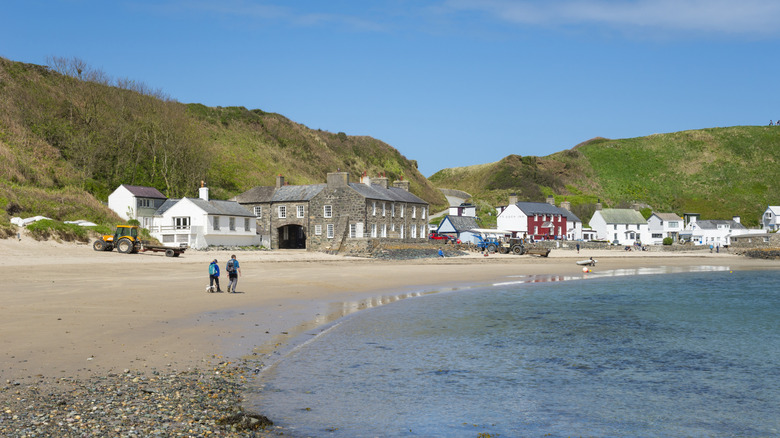
Porthdinllaen is but one end of a huge bay that can be split up into several different beaches, each with its own draws. The first bit you're likely to come to as you begin that walk along the shoreline towards Porthdinllaen is called Morfa Nefyn Beach. This is the part that sits right below the official National Trust car park, and it's a biggie — 2 miles from end to end, no less! That makes it a doozy for families who want something easy to access and with plenty of room for lazing, playing, and sandcastle building.
Head north to reach Porthdinllaen Beach itself, a small enclave that you'll find tucked between a dash of reef and a craggy peninsula in a sheltered corner of the bay. The location means the water here is often calmer and clearer than other spots in the region, making it great for watersports and wildlife spotting. The tiny village fringes the sand, while skiffs and boats pepper the shore out front. It's a serene scene to say the least.
You don't have to stop there, either. There's an official National Trust walking route around the headland, running further north from the small bay. The total length from the parking area is 2.5 miles, and it'll whisk you over to a lifeboat station and yet another beach via a section of path where seals often gather on the rocks below. Expect jaw-dropping views along the way, with visions of the highest summits on the surrounding peninsula, but also potential sightings of the great peaks of Eryri, Wales' largest national park, far in the distance.
Pop by the pub at Porthdinllaen Beach
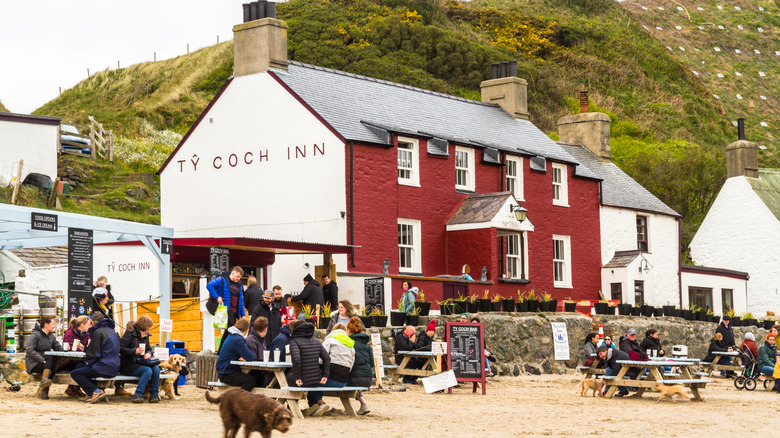
If there's one thing that really draws the crowds to Porthdinllaen Beach, it's the local pub. Enter the Tŷ Coch Inn, a spot that's been named one of the top three best beachside pubs in the whole world — yep, the whole dang world! It's easy to see why it gets the plaudits: Even the looks are something to remark on, for the pub is a soul-stirring sight, rising up literally steps from the edge of the bay like something out of an old pirate yarn.
It's steeped in history, dating back to the early 1800s. It sports a distinctive red hue, which is in line with the name — Tŷ Coch literally translates to "red house." And, crucially, it oozes character, what with old-school tankards, maritime paraphernalia, sailors' lamps, and musical instruments adorning every nook, wall, and rafter.
On sunny days, the tables outside will be at a premium. They face right out to gaze over the sand and the sloshing sea, so grab one right away if you can. There's a food menu that consists of local seafood treats, sandwiches, and classic pub grub, which is served throughout the week in the summer months, but only on Fridays, Saturdays, and Sundays in the winter.