
Hawaii's 5 Rules Tourists Break Within The First 10 Minutes
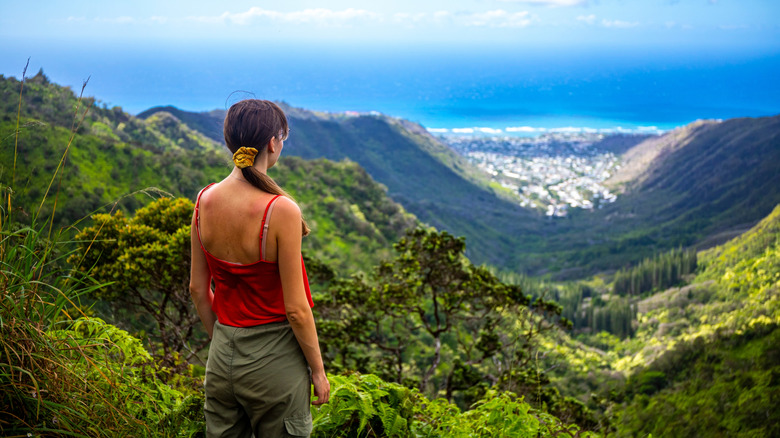
Growing up on Oahu, I always had the distinct impression that there were two groups on the island: the people who lived there and for whom Hawaii was just a normal place and this other group — the tourists. The tourists were usually easy to spot because in addition to their fair skin — or if they'd been in Hawaii a few days already, their sunburned skin — they had a wide-eyed quality to them as they marveled at the pristine beaches, sprawling resorts, and everything else that those who'd grown up in the Aloha State often took for granted.
But there are other ways to spot a tourist, too. Some mistakes can give you away almost immediately after landing — sometimes before you've even left the airport. Whether you're trying to avoid the dreaded stamp of "tourist" or simply want to be a respectful visitor, here are five written and unwritten rules tourists often break within their first 10 minutes on the islands.
Wearing the wrong sunscreen
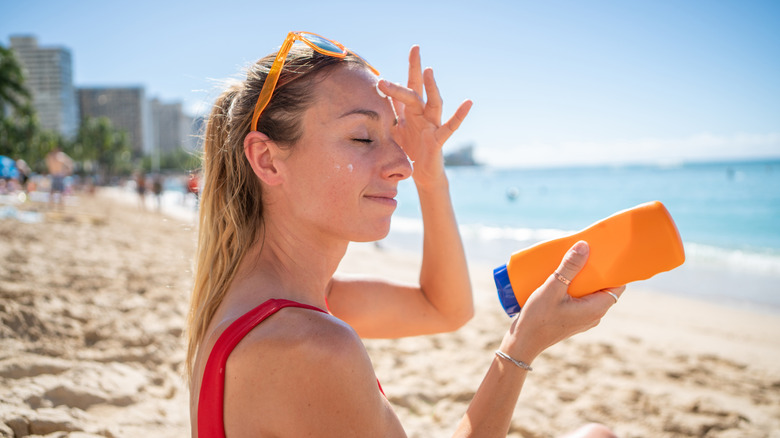
I'll always associate snorkeling along the reefs at popular tourist beaches in Hawaii with the slick residue of sunscreen on top of the water from the hundreds of oiled-up beachgoers. Though I was too young to know this at the time, the chemicals in those sunscreens were damaging the coral reefs and harming the sea creatures who make their homes there.
If you've arrived in Hawaii wearing non-mineral sunscreen or have it packed in your suitcase, you will have broken a rule before you've even had time to disembark your plane. In 2021, the state banned the sale of sunscreens containing oxybenzone and octinoxate because those chemicals can trigger coral bleaching, damage coral DNA, and disrupt coral production. Maui County went a step further, banning the sale, distribution, and use of non-mineral sunscreens without a prescription. Violating the ban can earn you a fine of up to $1,000.
As you pack for your trip, check the labels on your sunscreen carefully, as even brands that advertise their products as "reef-safe" may not actually be in compliance with the ordinance. You'll want to make sure your sunscreen is a mineral sunscreen that uses zinc oxide or titanium dioxide.
Getting too close to wildlife
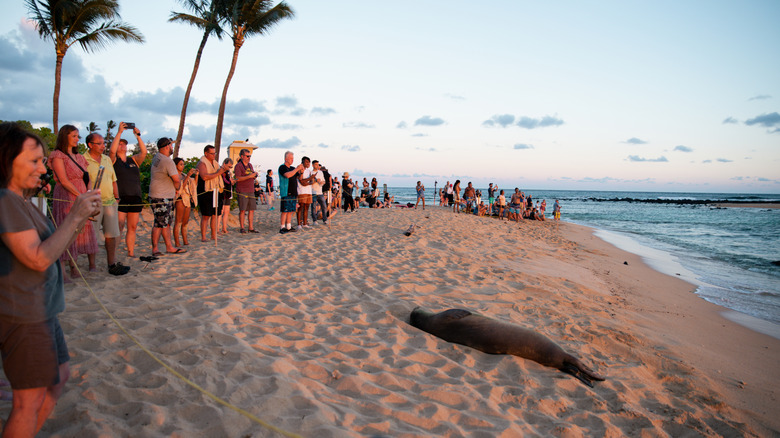
Whenever I fly home to Hawaii, one of the first things I notice upon exiting the airport doors is the sweet smell of plumeria flowers. Hawaii's lush vegetation is everywhere, and so is the wildlife. It's not uncommon to see a variety of birds and even geckos just outside baggage claim. But while creatures like sea turtles or the Hawaiian monk seals may seem friendly and approachable, and you may be tempted to get close enough to one to pet, feed, or snap a selfie with it, they are protected species. This means that you'll want to stay at least 50 feet from monk seals and 10 feet away from sea turtles. For baby monk seals, the recommended distance is even farther – 150 feet. You'll also want to keep your distance from dolphins and whales, as federal rules require people to remain 50 yards away from spinner dolphins and 100 yards away from humpbacks.
Protected or not, the wildlife in Hawaii is just that — wild. It can be dangerous to engage with any wild creature, no matter how cute it appears or even if it approaches you first.
Forgetting you're on island time
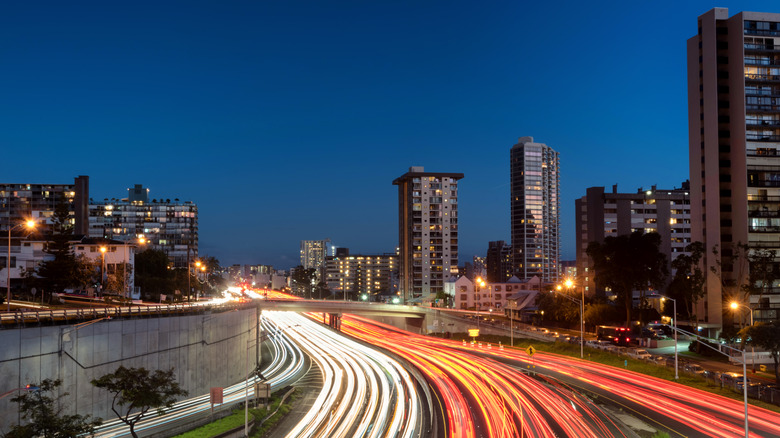
In Hawaii, you're on island time. Having lived on the mainland for decades now, I'm reminded of this each time I return to Hawaii and find myself growing impatient with the slow drivers or the way everyone from waiters and shopkeepers to postal workers seems perfectly content to idle away precious minutes "talking story" (chatting). Like a lot of tropical destinations, things move a little slower in Hawaii. People might hold up the line to catch up with a friend, or a waiter might take their time getting to your table to take your order. People are rarely in a rush in Paradise, and if you want to blend in with the locals, you might want to slow down, too.
If you're driving, refrain from honking your horn unless it's an emergency. The traffic in Hawaii is notoriously bad – Hawaii was even ranked as America's worst state to drive in for 2026 – but honking is considered rude. If someone is slow to react when a light turns green, you can give a quick courtesy beep, but leaning on the horn because someone is driving at a slow, unhurried pace is simply not done. So take it easy and enjoy the view.
Treating the islands like your own private resort
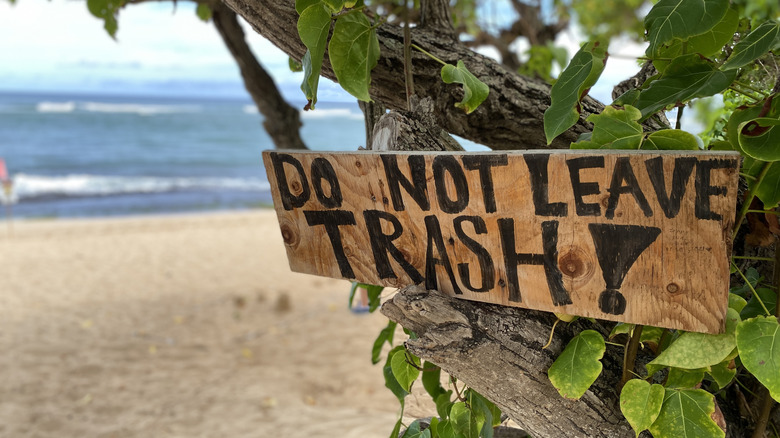
While people in Hawaii may embrace "the Aloha Spirit," that doesn't necessarily mean they take a casual "anything goes" approach to their home, especially when it comes to damaging natural or sacred places. Hawaii is not a resort or a theme park — it's a state with a population of over a million residents, many of whom do not work in the tourism sector and are just trying to go about their lives. While most locals are happy to offer directions, advice, or help you take a photo, you'll want to show the same amount of respect as you would anyone else. Unlike at a theme park or resort, most of the people you'll encounter even from the moment you exit the plane or set foot in the cruise terminal do not exist for tourists' entertainment.
I'm always appalled whenever I see the dangerous lengths some visitors will go to get that perfect video or photo, with tourists walking past No Trespassing signs to scale dangerous cliffs or tread over sacred burial sites, or, most commonly, stopping in the middle of a narrow road to get a photo of an overlook made famous on social media. I've also seen tourists pocket lava rocks and attempt to cart home bags of sand, which are two souvenirs that may be confiscated by the Animal and Plant Health Inspection Service when you go to leave Hawaii. Not only is removing rocks and other natural materials illegal, it can also be considered disrespectful.
Remaining ignorant about local culture
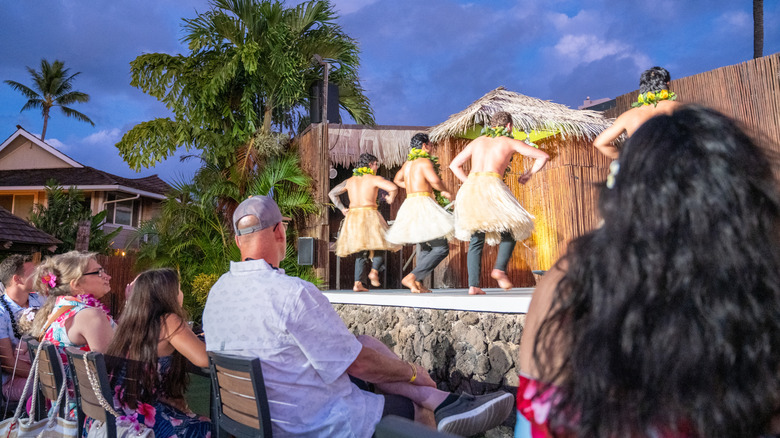
Hawaii has its own language and culture, and whether you're looking to pass as a local or just hoping for a more seamless vacation experience, learning a little bit about the state's history and cultural traditions prior to arrival can prove immensely helpful. This can involve researching what you can expect your meals to look like in Hawaii so you don't hold up the line at the roadside food truck as you struggle to understand local culinary basics like Spam musubi or poke. It can also mean learning a few Hawaiian words, like mahalo (thank you) and trading in the running shoes for a pair of flip-flops (or slippers, as the locals call them). One of the biggest signs someone is from Hawaii is their footwear — locals wear slippers year-round: to the grocery store, out to dinner, and even to casual events.
But most importantly, it's about showing respect for the culture and people who've helped make Hawaii the popular tourist destination it is today. Refrain from treating the culture or language as a novelty or punchline. Many of Hawaii's roads or place names may be unfamiliar, but deliberately mispronouncing them for laughs or mimicking the local accent can come across as disrespectful.