
5 Souvenirs That Will Be Confiscated Before You Leave Hawaii
Returning to the continental United States from Hawaii is a rigorous process. Along with the usual TSA headaches, you'll also have to ensure you're not accidentally sneaking out any contraband souvenirs — before you leave the islands, by air or cruise ship, all bags are inspected by the Animal and Plant Health Inspection Service (APHIS) as they search for restricted items.
Not all souvenirs are forbidden, of course, and this doesn't mean all you can bring home for your brother-in-law is a lousy T-shirt. While no one is going to confiscate your ukulele, hula girl bobblehead, or Hawaiian bucket hat, you might be surprised at how many agricultural products and natural resource souvenirs tourists see confiscated at the airport. Strict regulations govern which items you can bring home, and many items need specific labeling or packaging to make it onto the plane.
Whatever you do, don't try to be sneaky. You might not be in trouble if you make an honest mistake (knowing all the rules for every item would be difficult) and unwittingly attempt to take something home that's restricted. You'll probably be forgiven, as long as you declare it. What inspectors frown on is tourists failing to declare their items — doing so can delay your travel at best, and at worst land you with a $1,000 fine. With that in mind, here are five souvenirs that'll definitely be confiscated before you leave Hawaii (so don't plan on bringing them back to the mainland as a unique keepsake).
Sugarcane
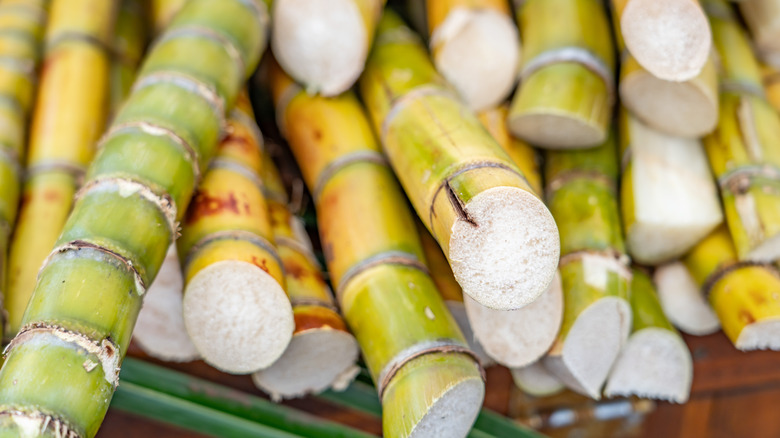
If you visited Hawaii as a child on a family vacation, chances are you have fond memories of gnawing on a stick of sugarcane, perhaps on a visit to Hawaii's Grove Farm Museum, an immersive sugarcane plantation experience in Lihue. As wonderful an experience as eating raw sugarcane is, think twice about bringing these sweet, woody stalks on the flight home as a treat for the kids in your life. The USDA strictly prohibits air passengers from bringing sugarcane to the mainland.
Unlike pineapple, which can be cleared after inspection, sugarcane is never allowed and will be routinely and automatically confiscated. Sugarcane can harbor pests like whiteflies and mites, or diseases like rust or smut. The risk of introducing these to mainland crops makes sugarcane a prohibited item, and it's a common item confiscated from travelers.
If you want to find fresh sugarcane on the mainland, some Redditors report finding it at Asian supermarkets like 99 Ranch Market, or various Latin markets. The latter tend to stock fresh sugarcane in the winter holiday season, as it's a prime ingredient in traditional Ponche Navideño, a cozy, warming fruit and cinnamon beverage. U.S. Customs and Border Protection will also seize sugarcane at the Mexico border, so this prohibition isn't unique to Hawaii.
Fresh tropical fruits
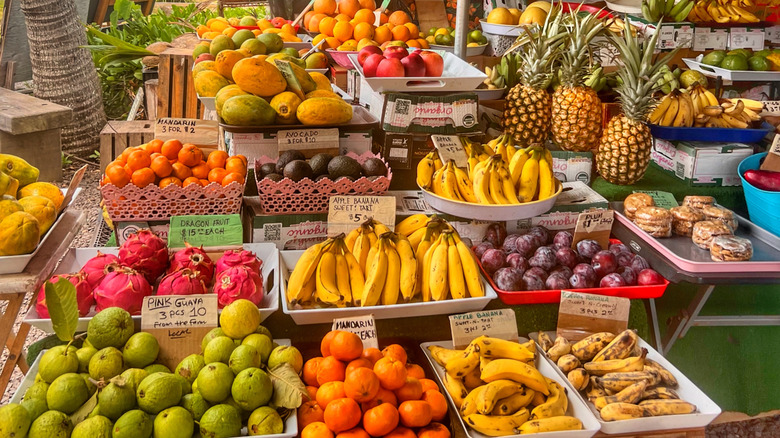
Hawaii is home to an incredible abundance of tropical fruits. There are the usual suspects (think pineapple, coconut, and other tropical cocktail garnishes), but you'll also find more exciting species you may never have heard of, like creamy, dark-skinned mangosteens, prickly jackfruit, and tart lilikoi. But you can't go from the farmer's market to the airport with these treasures in your bag.
The prohibition against transporting many fresh tropical fruits home to the mainland from Hawaii comes with an asterisk. That is, not all tropical fruits are prohibited from traveling with you, just those that have not been packaged, pre-inspected, and given the USDA stamp of approval. You may arrive at the airport only to find fruits you bought at one of Waimea's incredible farmers' markets are prohibited, so enjoy your ultra-fresh lychees, rambutans, and dragonfruit on-island.
Many vendors and farms that cater to tourists do sell pre-inspected, packaged, and stamped fresh fruits you can safely bring home. Fortunately, two of the most popular souvenir fruits, pineapple and coconut, don't need to be prepackaged, and frequently pass muster after a cursory visual inspection.
Sand
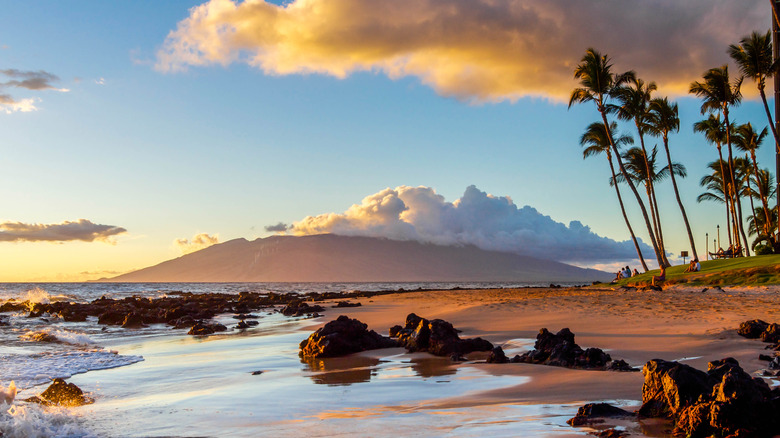
If you're jetting off to visit one of Hawaii's gorgeous beaches for a toes-in-the-sand honeymoon, you might be hoping to bottle a handful of that sand as a romantic souvenir. Unfortunately, it is illegal to remove sand from a beach in Hawaii, per the state's Department of Land and Natural Resources. The statute reads: "The mining or taking of sand, dead coral or coral rubble, rocks, soil, or other beach or marine deposits from the shoreline area is prohibited." So tucking a plastic baggie filled with beach sand, or a small branch of dead coral, into your luggage could get you in trouble at the airport. You may have the items confiscated, but technically you could also be on the hook for a fine.
One part-time Hawaii resident chimed in on Reddit to explain why taking beach materials home isn't just illegal, but extremely uncool. "Native Hawaiians take that kind of stuff very seriously and that's a huge sign of disrespect to them just to take rocks and sand from wherever you please. They also believe it's bad karma and that bad energy will follow you home if you steal from the islands."
Lava rocks
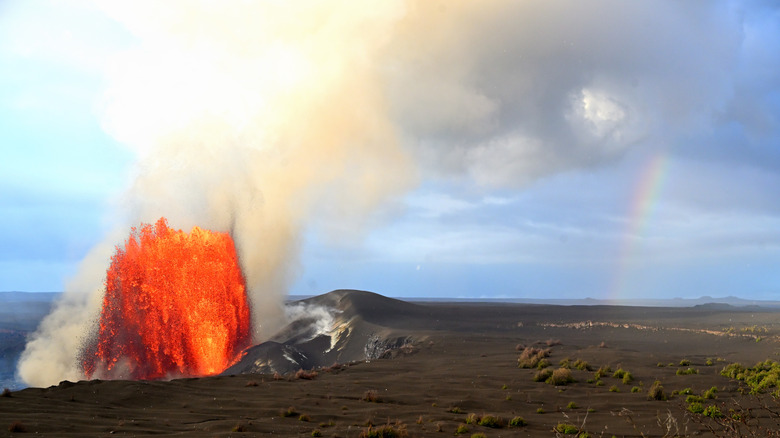
Just as you can't scoop up souvenir sand at the beach, you are also forbidden from collecting souvenir lava rocks at Hawaii's famed volcanoes. Some tourists successfully flout the law, concealing lava rocks in their luggage to bring home. Many, however, live to regret it. According to Outside Magazine, thousands of thieves mail their rocks back to Hawaii every year, not because they feel guilty, but because they fear they've invoked the wrath of Pele, Hawaii's goddess of fire, who reputedly considers these rocks to be like her children.
Pele's Curse is believed to bring woe to anyone who steals lava rocks from the islands, and many of the letters accompanying the returned rocks describe tales of relentless bad luck attributed to the curse. A 2025 article in Rock & Gem magazine debunks the myth, claiming it originated "as a hoax by a disgruntled 1946 park ranger tired of visitors taking rocks as souvenirs." There may be no curse, but it's still illegal to steal these rocks.
At Hawaii Volcanoes National Park, an International Biosphere Reserve and UNESCO World Heritage Site, not only are you forbidden to take home lava rocks, but you also shouldn't even move them. Park rangers create stacks of rocks called cairns to serve as trail markers, and moving these or creating new ones can seriously disorient hikers in a landscape that is already dangerous.
Soil
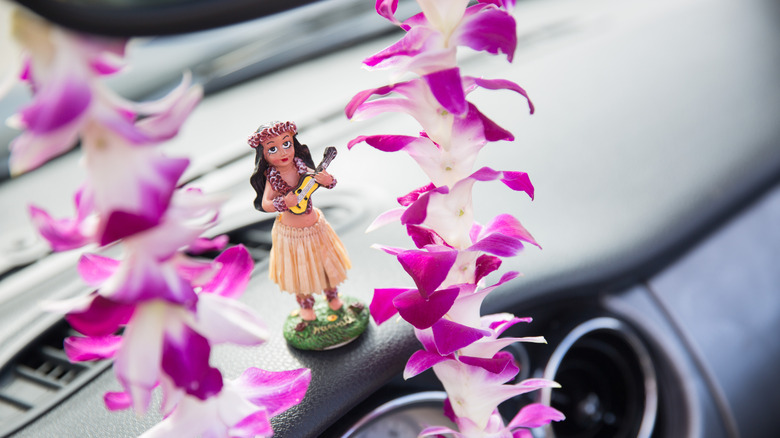
This may sound like a head-scratcher: Who, after all, would want to bring dirt home from a tropical vacation? In actuality, many tourists wish to bring home potted orchids as souvenirs, but just as with tropical fruits, souvenir orchids must be packaged and inspected properly.
If you found yourself enchanted by the exotic blooms on display at the wildly underrated Foster Botanical Garden in Honolulu, don't despair. There are plenty of venues where you can buy orchids potted in sterile medium rather than soil, packaged and labeled to pass inspection. Retailers like Kauai's award-winning Orchid Alley will lovingly pack plants for carry-on transport, or ship your purchase directly to the mainland if you prefer. Meanwhile, Tripadvisor lists Akatsuka Orchid Gardens, which also sells travel-ready plants, as the No. 1 attraction in the Big Island town of Volcano, near Hawaii Volcanoes National Park. "Beautiful plants, gorgeous blooms, warm staff. Filled with Aloha!" writes one Tripadvisor orchid collector visiting from Maine.
Traditional Hawaiian leis — those loops of tropical flowers strung together to form fragrant, colorful necklaces — are completely soil-free, so they're typically allowed as souvenirs. However, a handful of flower species used in lei-making are prohibited (like citrus blooms and Mauna Loa daylilies), so inspectors will still take a look. Just don't make the mistake of throwing your lei away instead of taking it home, as a dried Hawaiian lei makes an excellent keepsake.