
TSA Checkpoints Nationwide Are Looking A Little Different Thanks To A Controversial New Rule
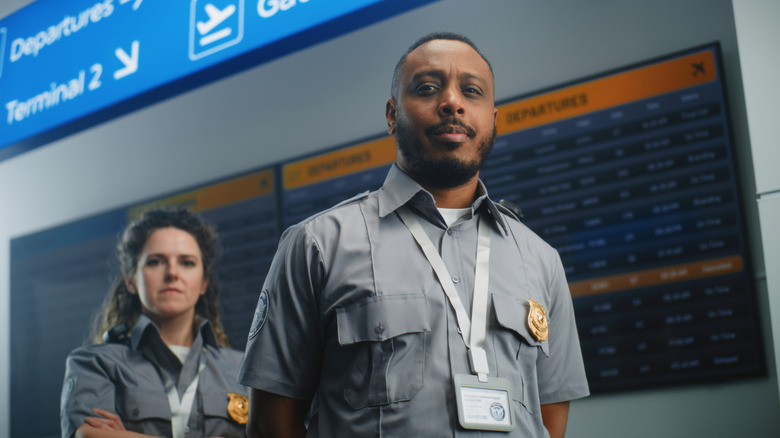
Are you having trouble keeping up with the changing Transportation Security Administration (TSA) rules? Hold on tight, because another one just landed and it might make your next trip to the airport a little more uncomfortable than it already is — at least for the TSA agents who check your documents at the airport. Airline passengers have to hand over their Real IDs or passports to a TSA agent for inspection before continuing through the security checkpoint. And until now, those agents are often seated. They spend long hours in one place and have an important job to do, so it makes sense that they're able to do it humanely and comfortably by sitting at their workstation. That's all changing, however, as those chairs are being removed.
"All officers must meet fitness for duty requirements to be capable of performing their vital national security function while simultaneously creating a welcoming and professional environment for travelers," said a TSA representative in a recent statement (as reported by Fortune) in an apparent attempt at justifying this controversial change in work conditions. While it is completely understandable that employees are expected to meet the physical requirements for a position, not everyone is reacting positively to this new rule. Many are questioning why physical fitness is a requirement for a primarily stationery job. As one Reddit user who goes by The1Ski posted, "Sorry but the TSA person checking IDs isn't security running down threats. Their task is to focus on the document in front of them."
TSA changes might make things worse instead of better
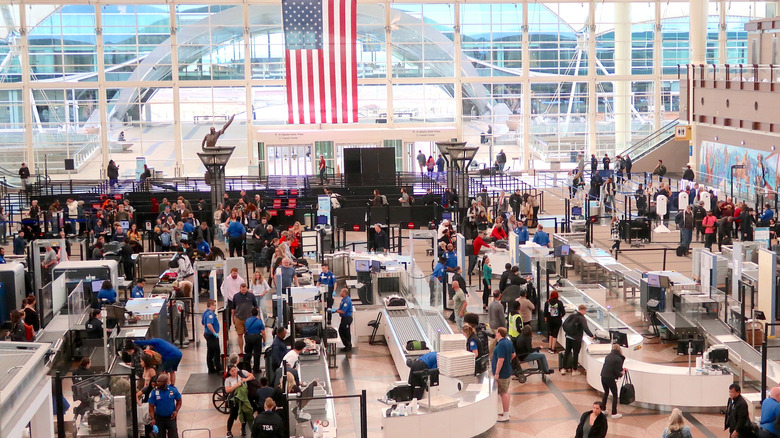
TSA agents have important jobs. They aren't just checking travel documents and bags, TSA is also on the lookout for questionable behaviors that could raise a red flag. And we want them to be able to do their job, not just so we get through security quickly, but so that we are all safe in the airport and in the air. Good ergonomics in the workplace — like using ergonomic chairs and not spending too many hours on your feet — are key to making sure that TSA agents can do their jobs well. They improve worker safety, increase quality and productivity, reduce health problems, and reduce worker fatigue and absenteeism. One could easily argue that forcing an agent to stand in one spot on a hard surface for hours on end could actually decrease airport security and safety, which isn't going to benefit travelers — let alone create "a welcoming and professional environment," per the TSA spokesperson.
Will this new rule prompt flyers to reroute their travel plans so they fly through airports that have switched to private security? Or will it prompt more airports to follow suit? Time will tell, but for now, we have to roll with the changes.
Those changes are part of the TSA's Horizon 25 plan, a series of changes that come with the organization's 25th anniversary. Some might be better than others, like a recent rule that allows certain non-passengers to go through airport security all the way to the gate, but the overall goal is to modernize the TSA. "TSA does not have to choose between a secure checkpoint, an efficient checkpoint, and an elevated passenger experience," said TSA Administrator David P. Cummins in a recent press release. "Through Horizon 25, TSA can, and will, deliver all three at once." Time will tell if this latest change will actually deliver on that promise.