
These 3 Major US Airports Are Ditching TSA For Private Security — Here's How It Will Affect Travelers
Three airports have become the first to sign on to the Transportation Security Administration's new Gold+ program, which will privatize many aspects of their airport security screening process. Tampa International Airport (TPA), which moves nearly 70,000 passengers a day, is the busiest of the three airports to make the switch. The other two are Charleston International Airport (CHS) and Des Moines International (DSM), both the largest airports in their respective states. The Gold+ program hands over the hiring of security staff and the procurement of screening technology to private contractors, while the TSA retains regulatory oversight.
If you're traveling through any of these three airports this year, don't expect any changes yet. The New York Times reports that the Des Moines airport is aiming to be the first to make the switch in January 2027, with Charleston following in February and Tampa in May. The move was first announced in May 2026, after a lengthy partial government shutdown caused TSA staffing shortages and led to several U.S. airports struggling big time. In April, Federal News Network reported that the TSA had "quietly been pitching airports and industry on a privatization program." Tampa International's CEO, Michael A. Stephens, even wrote an op-ed explaining that the shutdown influenced the airport to make the switch, saying "airports can't run on Washington's calendar."
However, privatizing airport security has been discussed since well before the most recent shutdowns. The Heritage Foundation's Project 2025 called for handing screening over to the private sector back in 2023, and the TSA screeners' union has been speaking out against the possibility since 2024. In March 2025, Utah Senator Mike Lee introduced the Abolish TSA Act, which would have privatized airport screening nationwide in three years; however, it never advanced.
What Gold+ means for travelers
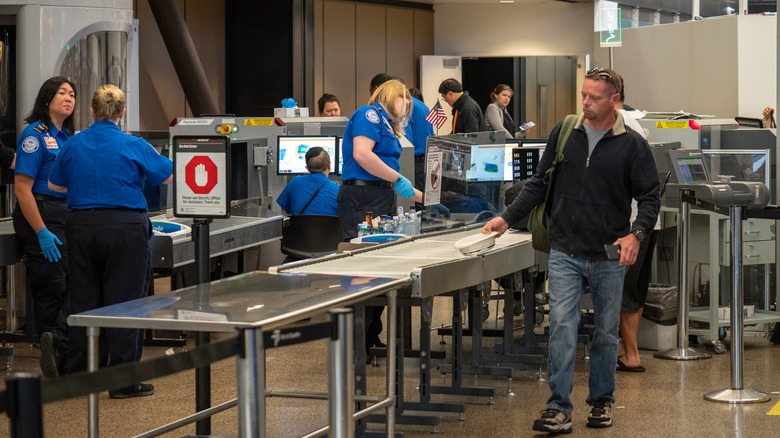
Ideally, the TSA Gold+ program should have no effect on your travel day. Gold+ is not a paid membership, separate security lane, or something that airline passengers will have to register for. All security screening rules, including Real ID and TSA PreCheck, will remain unchanged. Proponents even say things could move more smoothly. In announcing its decision to enroll in the program, Charleston International said, "Passengers can expect a faster, smarter, and more customer-friendly screening experience without compromising safety or security."
For now, this program is still a press release, and we'll have to wait and see what happens when private companies actually take over. Jeff Price, an aviation security expert and professor at the Metropolitan State University of Denver, told PBS News that "the jury's still out" on this program, saying, "we don't know what this Gold+ really is going to look like." That said, in a recent blog post, the aviation security expert theorized that, "For the average traveler, the introduction of TSA Gold+ may not feel much different." Price believes that the only things we might notice are different badges worn by security personnel and an "invisible difference" fueled by updated screening technology.
With only three airports enrolled as of this writing, travel days will stay the same for the large majority of travelers, but signs are pointing toward more airports eventually enlisting. Most notably, the Atlanta City Council recently voted to study the use of privatized security at Hartsfield-Jackson Airport, the world's busiest airport.
The difference between TSA Gold+ and existing private screening
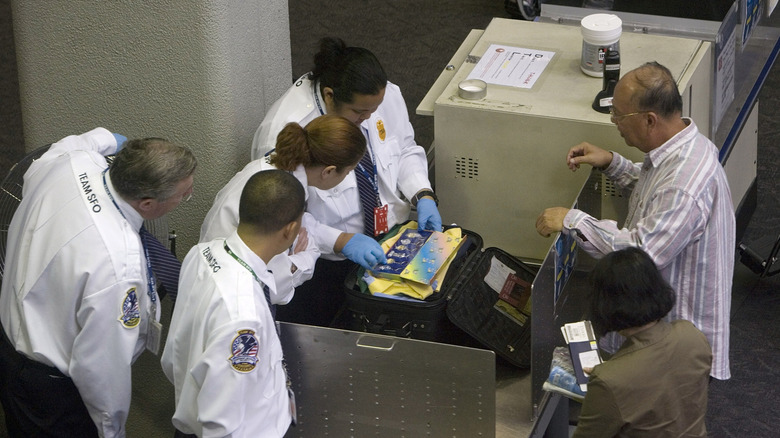
The Gold+ program is not the TSA's first attempt at privatizing airport screening. If you have traveled through San Francisco International Airport in the last 20 years, you've already been screened by a private contractor. San Francisco is one of 20 airports currently enrolled in the TSA's Screening Partnership Program (SPP), which has contracted screening to private companies under federal oversight since 2005. The processes at these airports are much like those at any other airport in the country, except during government shutdowns, when SPP employees keep getting paid.
Gold+ is being billed as an update to the existing program. Sheldon Jacobson, an aviation security expert and professor at the University of Illinois Urbana-Champaign, told PBS News that the TSA Gold+ program is essentially the SPP "on steroids." Similarly, in a statement to The New York Post, a TSA spokesperson described Gold+ as "the next evolution" of the SPP.
The main difference lies in who owns the technology. In the current SPP, independent contractors hire the staff who man the security checkpoints, but the TSA still owns the screening technology they use — like those full-body scanners that show if you're carrying dangerous items. Under Gold+, private companies at each individual airport would choose and own the screening technology used at security checkpoints. The TSA won't own the equipment or hire the staffers, but it will retain oversight and, according to its website, "ensure all operations meet or exceed federal security standards."