
Between Tokyo And Mt. Fuji Is A Serene Lake With Cozy Villages, Camping, And Mountain Views
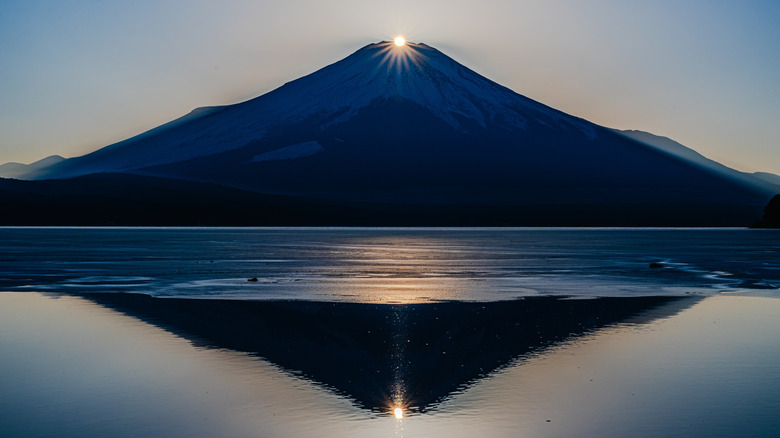
Between Japan's bustling capital city and its tallest, most famous volcano, lies a peaceful lakeside escape. Just a 90-minute drive from Tokyo's luminous signs and busy streets is Lake Yamanaka (or Yamanakako in Japanese), where crystal-clear waters reflect the snow-topped Mt. Fuji looming southeast. As part of the Fuji Five Lakes region (Fujigoko), Lake Yamanaka draws travelers and campers who want to enjoy the serene surroundings without being too far removed from quaint villages and modern comforts.
Lake Yamanaka is the largest of the Fujigoko, with opportunities to boat, paddle, fish, water ski, and windsurf on its calm waters. While Lake Kawaguchiko is the more popular option for foreign tourists, with easy access and a plethora of activities to explore, Yamanakako invites travelers to connect with the stunning surrounding nature by walking or cycling around its edge. Lake Yamanaka is one of the best places to witness Mt. Fuji's reflection in calm waters — a phenomenon known as Upside-Down (or Sakasa) Fuji. Another event tourists and photographers flock to see is Diamond Fuji, when the sun rises or sets directly above the mountain, and Lake Yamanaka can even provide a glimpse of the elusive Double Diamond Fuji (when the reflection of the sun is also present — pictured here). The view can be enjoyed from anywhere along the shores, although Panorama Viewpoint and Nagaike Waterfront Park are the most popular spots. To catch this marvel, time your visit during the Diamond Fuji Weeks in February.
Lake Yamanaka's quaint, picturesque villages
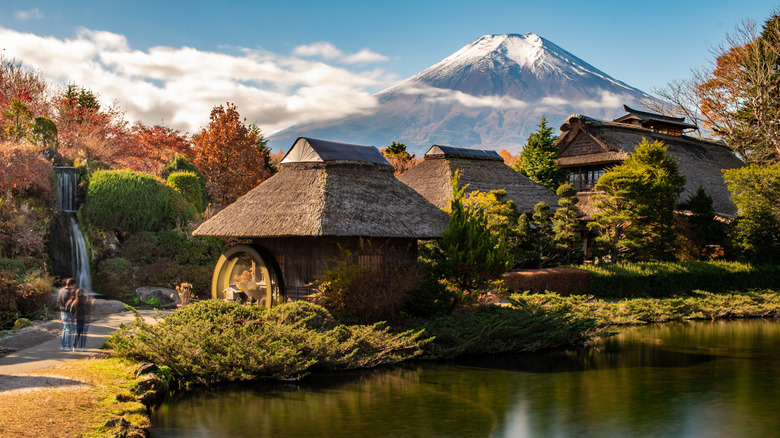
Surrounding Lake Yamanaka's shores is its eponymous village, Yamanakako. With less than 6,000 residents and a developed but not overrun tourism sector, the quaint destination can be used as a base for exploring Fuji and the surrounding area. While strolling along the Lake Yamanaka Loop Trail, a mostly paved 8-mile lakeside path, you can spot swans gliding across the water, or pop into a café to break up the hike. Quiet maple trees and shrubbery guide you along the route, blazing with red and orange hues from mid-October through mid-November.
Neighboring Yamanakako to the north is the sacred village of Oshino, home to under 10,000 people. Here, visitors can explore eight picturesque and symbolic ponds at Oshino Hakkai, which are highlighted in Fujisan's UNESCO World Heritage designation. The crystal-clear pools are fed by underground springs and Fuji's snowmelt, accompanied by legends about the volcanic waters' powers. Wander through the scenic area along wooden bridges and idyllic paths, admiring traditional Japanese thatched-roof buildings, curious koi fish, and lines of pink blossoming cherry trees.
Beyond the villages, Shinto shrines surround the northwest and northeast shores, such as Yamanaka Suwa, where visitors pray for blessings of fertility. Seasonal festivities are held throughout the year here, including the Houko-sai Fireworks Festival in August, night illuminations of fall leaves during some weeks in October and November, and the Ice Candles Festival during Diamond Fuji Week, where candles in frozen sculptures are set aflame in front of the volcano. During spring, visitors flock to Yamanakako's Hananomiyako Park to witness over 70 acres of colorful blooming flowers.
Camping and how to reach Yamanakako
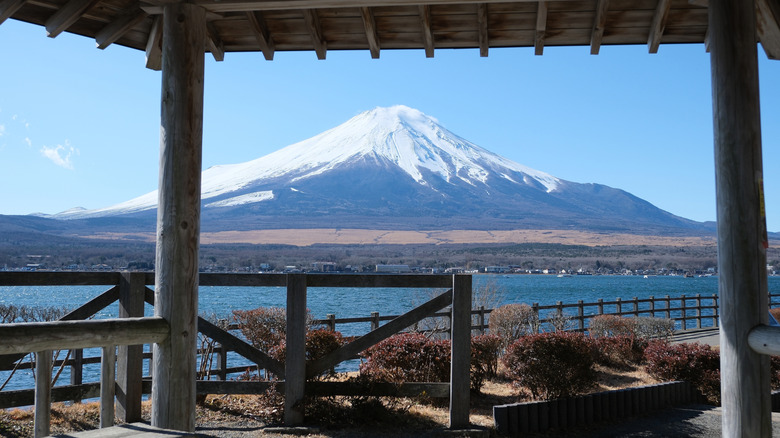
Accommodations in Yamanakako range from resort stays to rugged campsites. While travelers may want to bring their own TSA-friendly camping gear, those without equipment need not worry — cottages and glamping can be found here, too. Renting a car is recommended, as public transport to the sites is limited. For a truly peaceful retreat, Kozanso Campground's quiet tent sites sit on the water's southeastern shore, with communal toilets and hot showers. Next door is the more modern Odakyu Yamanakako Forest Cottage, rated four stars on Google by over 400 users. Along with the typical amenities, this site also has a private pier and auto camping. In addition to tent sites, both places also offer cottages and bungalows for those who want a little more privacy. Make a reservation in advance, as spots fill up quickly.
Arguably, Hotel Mt. Fuji boasts some of the best views, perched atop a hill overlooking Lake Yamanaka. The hotel's main highlight is its open-air hot spring spa, where you can soak in mineral-rich waters while gazing at the mighty Mt. Fuji draped in clouds. For those who want a non-traditional stay closer to nature, luxury glamping experiences are found throughout the area, such as Glamping Village Totonoi. Guests stay in large dome-shaped tents with expansive windows and air-conditioning, while enjoying a Japanese barbecue dinner using locally grown ingredients, and a relaxing sauna.
For those without a car, reaching Lake Yamanaka is possible via bus from Shinjuku or Tokyo stations in under three hours. Once you're in the region, the Kawaguchiko-Gotemba-Mishima bus line travels along the southern and western edges of the lake, running every 30 minutes or an hour. The same bus reaches Kawaguchiko, which has even more beautiful, mirrored images of Mt. Fuji in stunning lake waters, lined by cherry blossoms.