
Half An Hour From Downtown Charleston Is A Former Plantation That's Now A Sprawling Wetlands Oasis
At the time of the Civil War, South Carolina was known for its rice. Today, if you drive through the Palmetto State's Lowcountry, you'll see the remnants of former rice plantations all over. These lands are haunting echoes of the state's complicated past, when its profits were built on the backs of enslaved West African people who brought their knowledge of rice cultivation to the colony. Just 30 minutes from downtown Charleston, you'll find the Dungannon Plantation Heritage Preserve and Wildlife Management Area, a 19th-century rice plantation that's now a wetlands oasis.
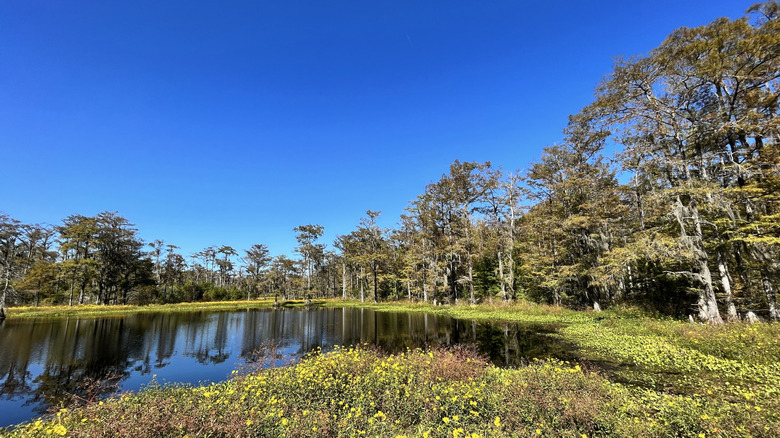
This plantation was owned by the Sandford family and was in operation in the 1800s. Canals transferred water from a freshwater reserve downstream to cultivate rice. Now, Dungannon is a sprawling, quiet nature preserve of over 600 acres whose wetlands are nesting grounds for endangered wood storks. Comprised of upland forests and swamps, this preserve is officially one of the Audubon Society's Important Bird Areas in South Carolina, ideal for bird-watchers looking for osprey, great egrets, and great blue herons.
It's not just birds either, as other wildlife can include alligators, deer, and snakes. An easy trail takes you through this preserve, where bald cypresses shelter the nests of wood storks. These birds once mostly populated Florida, but they have moved to South Carolina and Georgia as a result of Florida's diminishing wetlands. This mix of history and nature makes the Dungannon Plantation a great and convenient day trip for anyone looking to take a peaceful break from the unique Southern charm of Charleston.
What to expect with a visit to the Dungannon Plantation
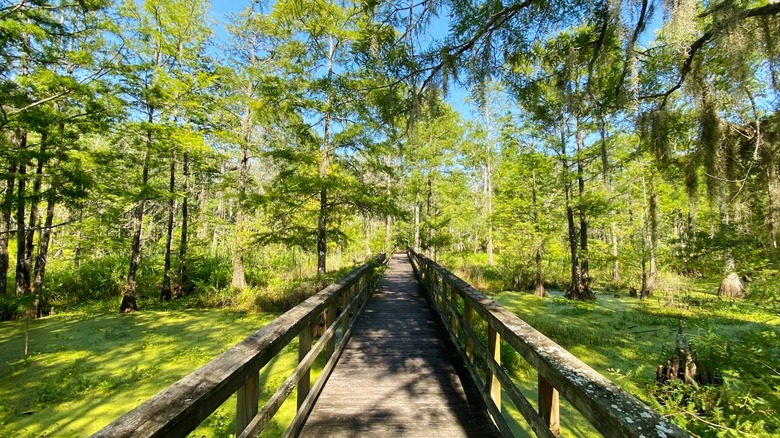
The Dungannon Plantation has an out-and-back 5-mile trail, which includes a boardwalk where you can observe the wood storks' nesting area. Depending on the water levels, they typically nest from April through June. Note that the boardwalk and nesting area may be closed off from February through September to not disturb them. If you're wondering what a wood stork looks like, just keep an eye out for the white 3-foot-tall stork with a wrinkly neck (they're not into anti-wrinkle serums, okay?) and black-lined wings that stretch out to about 5 feet.
Some benches line the trail, so you can enjoy a meditative moment in this lush preserve with mossy oaks, tall cypresses, and algae-covered waters. The trail takes you through wetlands and forests, where you'll find abandoned cars, remnants of old moonshine stills, and the 19th-century tombstone of Matthew Sandford. If you want to extend your hike, you can veer off onto a secondary trail or dirt road, although their conditions may vary. The Dungannon Plantation is free to visit and is open from dawn to dusk. There are no facilities, so be prepared to leave no trace.
South Carolina has some fantastic birding spots, and Dungannon Plantation can be counted among them. Binoculars or a good camera are recommended to catch sight of the preserve's many species of birds. Dogs are welcome on-leash, but note that there may be dogs from neighboring properties loose on the trail. Insect repellent is highly recommended as well, especially if you've got those sweet pheromones. During deer hunting season in the fall and winter, be sure to wear the bright colors that could save your life.