
Between Belfast And Dundalk Is A Seaside Resort Town With Mountain Trails, A Beach, And World-Class Golf
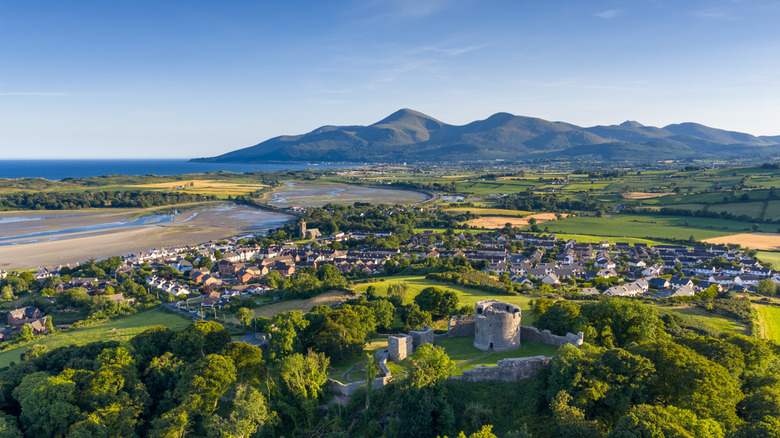
As a child growing up in Northern Ireland, it's de rigeur to be taken to the Mourne Mountains. I remember being shuffled onto a bus and carted across the eternally green, low-lying landscape, before disembarking to gaze up through the drizzle, where the Mournes awaited, climbing no higher than 2,789 feet at Slieve Donard, the tallest peak. Though I didn't appreciate it as a child, the Mournes are a lovely range, all granite crags and sweeping bowls of highland heather, battered by the fierce weather barreling in from the Irish Sea coast. And if you're keen on exploring the Mournes, there's no better base for your travels than Newcastle, County Down.
Many seaside resort towns across the British Isles succumbed to postwar decline, but Newcastle has received a facelift in recent years. It might not have been as wholesale as the makeover in Portrush, a coastal town with scenic cliffs and beaches that's blossomed into one of Northern Ireland's premier travel destinations, but Newcastle has many drawcards: some nice pubs along its main street, the luxurious Marine & Lawn Slieve Donard Hotel, Murlough Beach and its namesake nature reserve, and hikes through the Mournes en route to Northern Ireland's highest summit. You've also got world-class golf at Royal County Down Golf Club. It costs a pretty penny to sling it around 18 holes here, but golfers across the world would have the Championship Links on their Mount Rushmore of courses.
Lying roughly halfway between Belfast, Northern Ireland's capital, and the market town of Dundalk, just across the Irish border, Newcastle is about an hour's drive from either. Even Dublin, Tripadvisor's best European destination for solo travel in 2026, is only two hours away by car. But I wouldn't treat Newcastle as a day trip; the town merits at minimum an overnight stay.
Hiking the Mournes from Newcastle
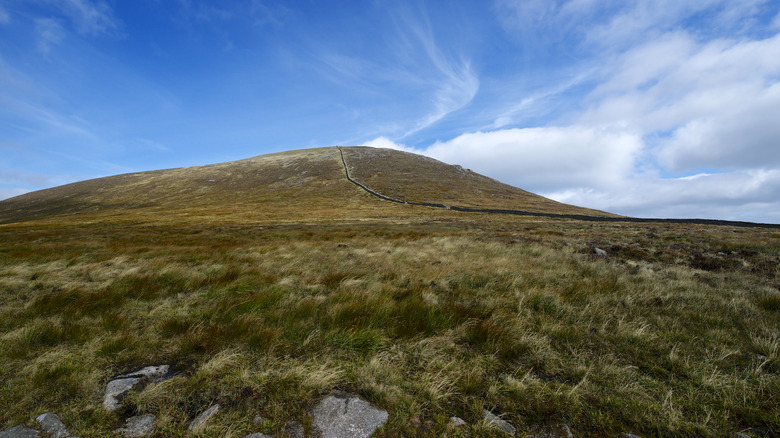
Climbing Slieve Donard is a rite of passage for visitors to Newcastle. The trail starts in a forest of moss, oak, birch, and pine, alive with rushing water and chorusing birdsong, reminding hikers that Ireland was covered in forests before we farmed huge swathes of it. Once you climb past the tree level, the trail flattens, lazing through a mile-long valley of wild grasses, grazing ponies, and a stream trickling over thickset boulders. This is merely a preamble to the final ascent, following the steep line of an old stone wall to the top of the mountain.
If you're lucky enough to get them, the views from the summit of Slieve Donard are spectacular; on a clear day, you can see all the way to Wales, Scotland, the Isle of Man, and Donegal. Mist often settles and swirls around the peaks of the Mournes, so even when conditions are fairly benign at lower elevations, they can be fierce closer to the top. The last time I summited, I could barely see my outstretched hand in front of my face, let alone the land on the horizon. Be sure to bring rainy-day gear no matter the season, and look forward to that pint of Guinness after the descent (and yes, it does taste better in Ireland).
Ambitious hikers can continue along a trail called the Mourne Seven Sevens, informally known as the "Seven Peaks." Starting and finishing in Newcastle, the 19-mile trail (covering more than 8,000 feet of elevation gain) challenges hikers to summit seven connected peaks, each of which (with the exception of Meelmore) is more than 2,300 feet high. Comprising Slieves Donard, Commedagh, Bearnagh, Meelmore, Meelbeg, Binnian, and Lamagan, the trail winds through some of the finest highland scenery in Ireland: boulder-strewn slopes, jagged rock walls, wind-blown valleys, and sea views across the green patchwork of rural Ireland.
Golfing and exploring along the coast

I'm a hack-and-slash golfer, prone to big banana slices and hearty yells of "fore!" The last things I need to contend with on a tee box are whipping winds, horizontal rain, and the promise of digging through horsehair-like rough looking for my ball. Yet still I love the dunes at Royal County Down because the Championship Links course is among the finest 18 holes in golf — anywhere on Earth. And that's not just patriotic bias. Golf Digest once named it the best course in the world, beating out such American icons as Augusta National, Pebble Beach, and Pine Valley. Top 100 Golf Courses currently places it at No. 3.
The course is undeniably beautiful, all rolling dunes, emerald-green fairways, and views of the Mournes climbing towards the clouds. But it's also got some serious chops. Penal hazards and blind shots abound, and it's prone to the kind of weather that turns golf from a hobby into a chore. Unlike in America, where many of the best courses are private, invite-only affairs, visitors can play Royal County Down's Championship Links and Annesley courses. Fill out the online enquiry form — and get your application in early, as tee times are limited.
Also explore Murlough Beach and Nature Reserve next to the course. A boardwalk winds through the dunelands, where you might see rabbits darting between the gorse bushes and some of the reserve's 600-plus moth and butterfly species. On the coastal side, look out for wading birds and seals in the bay. Running alongside the reserve is 5-mile Murlough Beach. A Blue Flag beach — here's what that really tells you — mixing various coastal habitats, Murlough is a fine place for a brisk morning stroll, or, if you've the constitution, a cold-water swim. Speaking from experience, no amount of caffeine in the world could match the energizing jolt of the Irish Sea.