
What Does A Purple Flag Mean On A Beach?

It's not uncommon to see flags flying at the beach. While some of these flags are simply decorative, others hold a deeper meaning. As a rule, flags displayed at beach entrances, near lifeguard stands, and at other prominent places on public beaches are meant to convey a message. So that all beachgoers can understand, the International Lifesaving Federation (ILS) and United States Lifesaving Association (USLA) have a set of colored flags, some featuring symbols or patterns, that they recommend being utilized as a warning and information system. Each color flag represents a different danger or condition. But what does a purple flag mean when you see it displayed on the beach? It's an indication that you may want to avoid getting in the water.
Although most can guess as to the meaning of some of these flags — such as solid red for high hazard and dangerous conditions — the meaning of others may not be immediately clear. Purple is one that typically takes a bit more explaining. For centuries, purple has been associated with royalty and wealth. However, on the beach, it has a much different meaning. Like a red flag, when seen flapping over a stretch of coast, a purple flag means there is danger. Rather than indicating unsafe swimming conditions, a purple flag means there is potentially dangerous marine life in the water.
Use caution when you see a purple flag flying at the beach
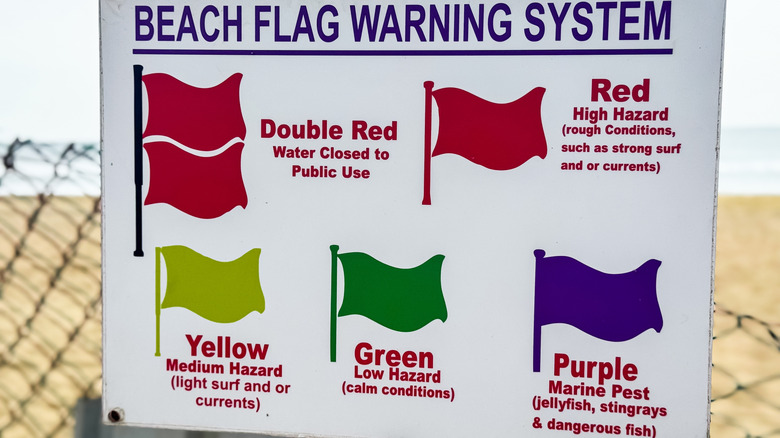
A purple flag is usually flown at the beach to indicate the presence of creatures such as jellyfish, Portuguese man o' war, or stingrays. Some localities raise a purple flag for shark sightings, although the USLA expressly states that purple flags are "not intended to indicate the presence of sharks." Recommendations for flag use by the ILS and USLA are not mandates, however, so each jurisdiction can modify the purposes of the flags as they so choose. With that in mind, if you have a question as to the type of marine life causing the presence of a purple flag, you should consult the information posted on warning boards or ask a local lifeguard.
It is also important to note that a purple flag does not indicate a beach is closed to swimming — a double red flag is typically used for that purpose. Rather, it means that the dangerous marine life is present in higher than usual concentrations, so swimmers should keep a close eye out for any dangerous creatures. Additionally, you should take precautions to protect yourself, as there are plenty of beaches across America with a high concentration of jellyfish, often causing the purple flag to be raised. Consider wearing a wetsuit or long-sleeve rash guard to protect your skin. It's also a good idea to carry vinegar, one of the best beach safety items, with you in case you are stung.
While Portuguese men o' war are common in places like Palm Beach, they can be found around the world, often causing a purple flag to be raised. Also called blue bottles, you can typically spot the bluish balloon-like body of a Portuguese man o' war floating on the surface of the water. Should you see one, be careful to avoid its long tentacles, which will be trailing below or down-current.