
New Jersey's Once-Thriving Military Stronghold Now Charms With Nearby Sandy Beaches And Historic Ruins
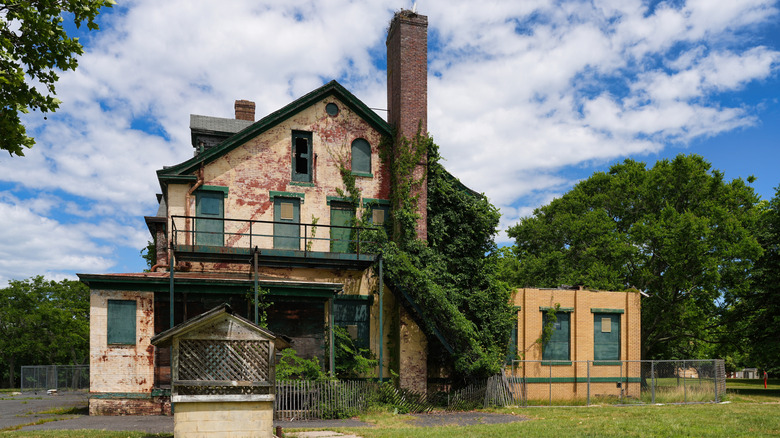
The Jersey Shore is a popular summertime escape, drawing millions of visitors to its beaches and boardwalks every year. For those whose interests run more toward nature and history than casinos and amusement parks, the barrier peninsula of Sandy Hook is a destination worth exploring. Extending north from the mainland into Sandy Hook Bay, this picturesque peninsula is home to two National Historic Landmarks: the 18th-century Sandy Hook Lighthouse and Fort Hancock, which officially opened in 1895 and protected New York Harbor for more than 75 years.
Fort Hancock has been open to the public since it was decommissioned in 1974. It's located in the northern slice of the Sandy Hook Peninsula, about 3 miles from the Spermaceti Cove Lifesaving Station. This puts it about a two-hour drive from Philadelphia and Atlantic City, or about 90 minutes south of New York City by land. In the summer, you can also take a ferry from Manhattan to the Sandy Hook Beach Terminal, which is just a quick walk from Fort Hancock.
Fort Hancock is part of the broader Gateway National Recreation Area, which also includes numerous natural spaces and beaches that you can enjoy while you're here. For history buffs, the many preserved buildings and ruins of military installations across the Sandy Hook peninsula are worth a trip on their own. The Sandy Hook Unit of Gateway is open daily year-round, so you don't need to wait for beach season to see them. That said, the Sandy Hook Lighthouse tends to only offer tours from April through October, so keep that in mind if you're seeking the full experience. The best days to visit are Friday through Monday, when the Visitor Center and its Lighthouse Museum are both open.
History and landmarks of Fort Hancock
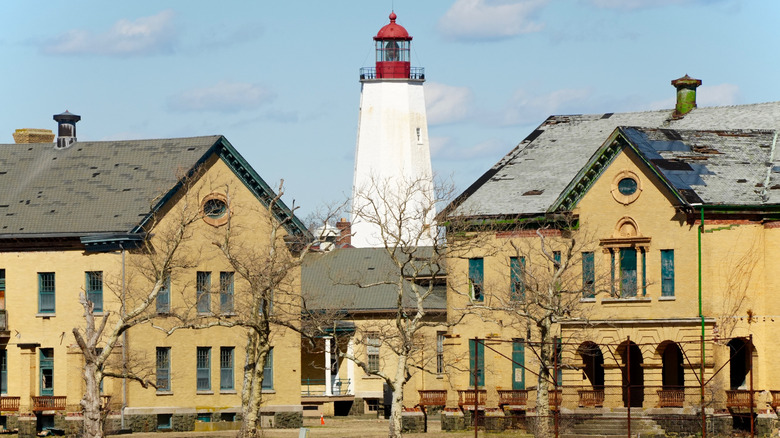
Fort Hancock grew around Sandy Hook Lighthouse, America's oldest lighthouse, which was built in 1764. The first military fortification here was the wooden Fort Gates built during the War of 1812. Construction of a more permanent fort started in 1859 but was only partially completed and abandoned after the Civil War. Starting in the 1870s, it became the Sandy Hook Proving Ground, where the U.S. Army tested new weapons. The Army added concrete gun batteries in the 1890s, and in 1895, Fort Hancock was officially founded. By World War II, its barracks housed over 7,000 soldiers. Its population waned after that (the rising use of airplanes shifted the army's defensive strategy), but it was still used to house surface-to-air Nike Missiles from the mid-1950s until it was decommissioned.
Visitors to Fort Hancock today can see historic landmarks from all of these eras. Many are along the self-guided walking tour developed by the National Park Service, which is available online or in paper form at the Sandy Hook Visitor Center inside the old Light Keeper's Quarters. Of the over 100 buildings at Fort Hancock, 39 are featured in the tour, including the yellow brick houses of Officers' Row and the Guardhouse and Jail — now home to the Fort Hancock Museum. Other highlights include several artillery batteries, concrete remnants from the proving ground, and two Nike Missiles.
For a top-down view of the whole fort and surrounding landscape, you can take a tour of the Sandy Hook Lighthouse. Notably, this includes a climb up into the lens house. Tour days and times vary, so be sure to check the online calendar to see when they're scheduled. You can also check the current opening hours for the Visitors Center and museum.
Enjoying the outdoors at Fort Hancock
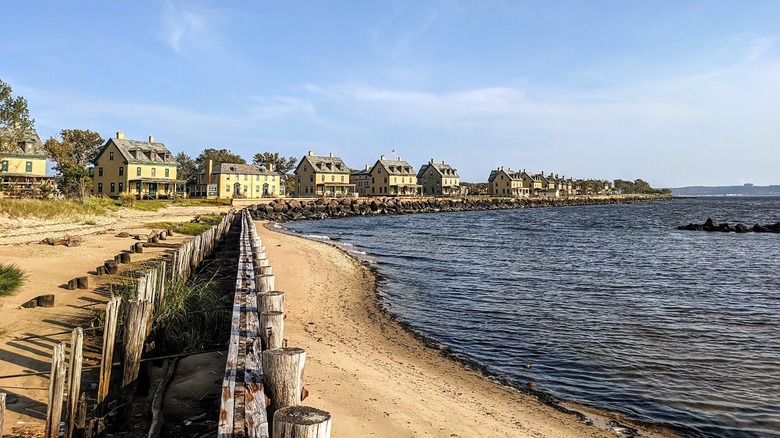
Many beaches on Sandy Hook are adjacent to the peninsula's historic sites and ruins. The former launch pad for the Nike Missile site, for instance, is about a 15-minute walk north from Beach E, which is close to the Spermaceti Cove Life-Saving Station. The Old Dune Trail runs from the missile launch area to Spermaceti Cove. This protected marsh is closed to visitors; however, you can watch its wildlife from the Spermaceti Cove Boardwalk's observation deck. Birdwatchers especially like to come here in the winter, when it's considered one of the best places in the area to spot gulls. "What a beautiful spot to spend the day," reads a 5-star review of Fort Hancock on Google. "It was fun seeing this old Army base [...] Will definitely bring a bike next time — great trails."
One word of warning: when the Sandy Hook Proving Ground was active, weapons were fired south toward the same stretch of coast where the public South Beach areas are today. Unexploded ordnance (UXOs) are occasionally still found here and may still be live. Because of this, it's smart to stay on designated trails and not venture into any closed-off areas (and if you do see old metal on the ground while you're exploring, don't touch it and call Dispatch to report it).
You'll find more beaches and trails right around Fort Hancock. About a mile east of Sandy Hook Lighthouse is Gunnison Beach, a hidden gem that's New Jersey's only legal clothing-optional beach. Farther north, near the old Proving Ground, is North Beach, which is typically the quietest of Sandy Hook's beaches and one of the Jersey Shore's best underrated beaches for fewer crowds. Hikers can head to parking lot M to pick up the North Pond Trail or Fishermen's Trail, which rolls by a few old gun batteries and ends at the bay on the peninsula's northern point.