
Which Hotel Awards And Certifications Actually Matter?

If you're planning a trip and have narrowed your search down to a handful of promising hotels, you'll naturally start to review each one with a fine-toothed comb to find the perfect fit. Comfortable sleeping quarters, cleanliness, amenities, and positive reviews are natural considerations, but what about hotel awards and certifications? Are these a shorthand solution for booking a hotel room that meets your standards, or are they marketing fluff with little correlation to the experience you can actually expect from the property?
These accolades can pop up in a variety of places. You may notice an "eco-certified" label on Google's hotel search, see an icon displayed on the hotel's official website, or search through a database that shows specific credentials. The key isn't to memorize each one you come across but to know how to recognize which ones actually matter. The hotel awards and certifications worth your time are those that have longevity or credibility, or that are focused on the guest experience.
For example, even though Michelin only began awarding Keys to hotels in 2024, the brand has reviewed and recommended notable properties since the 1920s. Michelin Keys are awarded through a highly selective process, with ratings based on anonymous, independent visits that help avoid special treatment. The overall guest experience matters too — Michelin considers the property's design, consistency, value, character, as well as its local contribution when awarding Keys, aligning with what hotel guests expect from a property.
Best hotel awards for assessing quality guest experiences

Similar to the Michelin Key program, the Forbes Travel Guide is a long-trusted rating system, which began in 1958 as the Mobil Travel Guide. Anonymous reviewers embark on non-sponsored stays and spend multiple nights at the property the same way a typical guest would. Forbes specifically states that no one can buy a rating, and the Star Rating system is objective, which provides visitors with an unbiased review. Forbes evaluates up to 900 unique criteria to select the most distinguished properties, so it's a relevant award if you want to stay at a hotel that minds the details.
The American Automobile Association (AAA) has inspected properties since 1937 and introduced the Diamond Rating System in 1976. All hotels with a Diamond Rating receive an annual anonymous surprise inspection, making sure a property's standards stay consistent over time. A typical assessment rates public spaces, sleeping quarters, bathrooms, and amenities. If cleanliness is your top consideration, this award matters. The program's "inspected clean" standards are thorough and include using test swabs on commonly touched surfaces to vet if the room has been properly cleaned.
Many travelers read hotel reviews to avoid fake ratings for firsthand guest experiences. Condé Nast Traveler's yearly Readers' Choice Awards can streamline this process. Awards are determined by a public online survey, and the properties with a minimum eligible rating make the list. While this award doesn't focus on detailed inspections, it provides a sense of what excites travelers in regard to rooms, activities, design, service, and dining.
Best hotel certifications for sustainable practices
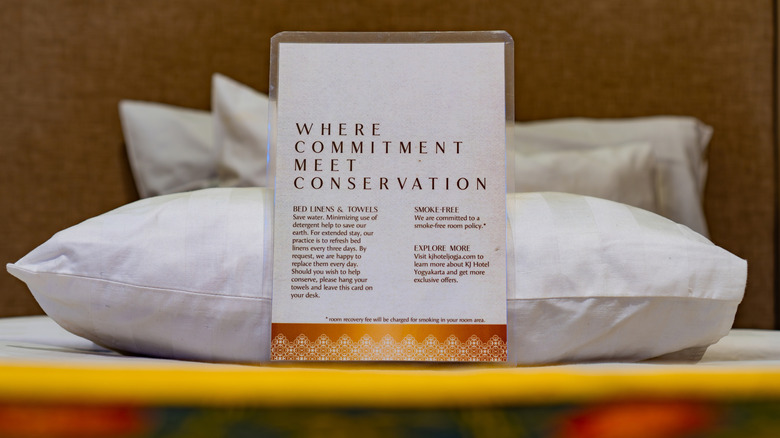
Some of the most notable hotel certifications focus on sustainability, addressing details you may not notice as a guest that affect an accommodation's overall environmental impact. Leadership in Energy and Environmental Design (LEED) rates hotels as Certified, Silver, Gold, or Platinum through Green Business Certification Inc. For example, the sustainability-minded 1 Hotel West Hollywood holds a Silver certification. It features reclaimed wood, recycled materials, and sustainable carpets throughout the property.
Green Key began in 1994 and also focuses on sustainability, having certified over 9,000 hotels and other establishments in more than 90 countries as of 2026. The program's criteria are maintained by the Foundation for Environmental Education, a well-established global initiative operating since 1981. Despite its history, Green Key evolves its standards and requirements and is currently updating its criteria to include stricter reviews of environmental claims. You can also refer to Green Key-certified establishments for other aspects of your trip, as the program also reviews hostels, campsites, conference centers, restaurants, and tourist attractions.
EarthCheck certification considers employee and community treatment in addition to environmental practices, making it a holistic program worth considering on your next vacation. Like LEED and Green Key, it's not just for finding eco-friendly hotels in North America and has a global footprint. EarthCheck encourages properties to hire locally, crucial for travelers who prioritize supporting the local community. The organization also prioritizes responsible land use and conservation, helping to keep that spotless beach or old-growth forest steps from your room as pristine as possible.