
Near Edinburgh Is An Ex-Mining Town With A Quiet Beach, Street Art, And Historic Charm
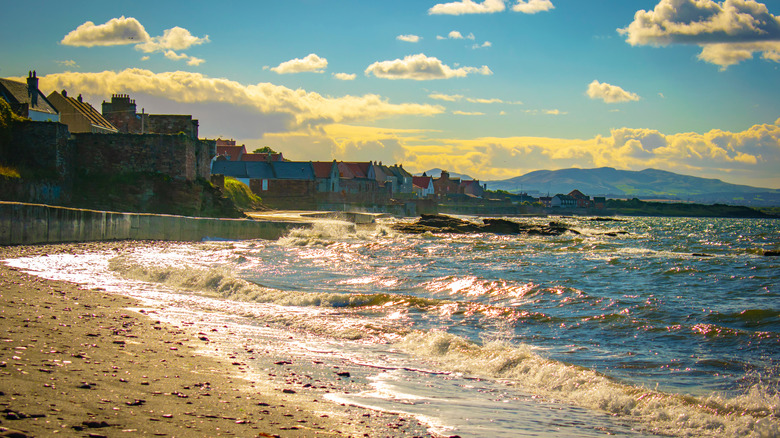
About 10 miles from Edinburgh is a coastal town where history, art, and nature intersect. Prestonpans has a less-than-savory reputation because of its industrial character, but perhaps it's not entirely a fair assessment. Located on the south coast of the Firth of Forth, Prestonpans is an ex-mining town whose architectural remnants speak to its long history. And it's all bordered by a lovely coastline, where you can stroll or search for sea glass on a quiet rocky beach.
History buffs may know Prestonpans as the site of the first major Jacobite victory against the Hanoverians in 1745. The Jacobite rebellion intended to reinstate the House of Stuart to the British throne, but they were suppressed not long after this win at Prestonpans. Visitors to Prestonpans can visit a monument, the battlefield, and the Battle of Prestonpans Museum in the Prestonpans 19th-century town hall. The town hosts a reenactment of the battle every three years and the next will take place in 2027.
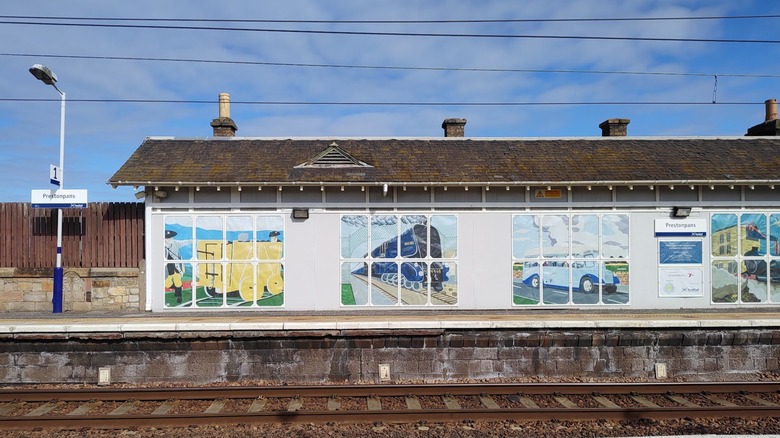
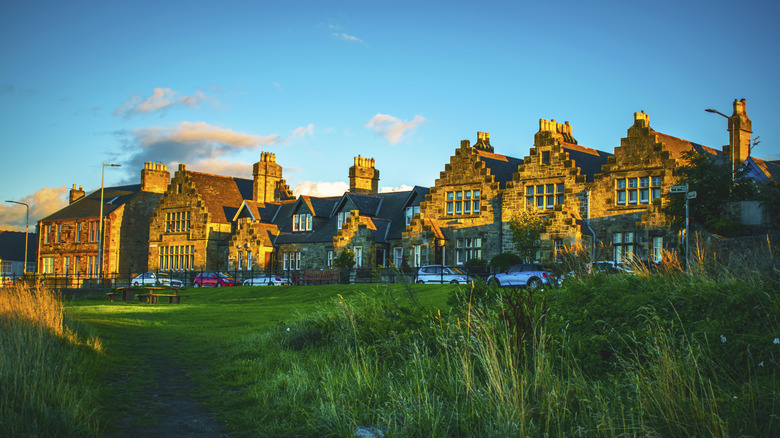
Prestonpans is defined by more than military history; it is the first recorded site of coal mining in Britain in the 13th century and one of Scotland's earliest industrial towns. The salt water of the River Forth allowed Prestonpans to produce salt en masse by the 15th century. Its coal resources were used locally until it expanded to a large-scale operation during the Industrial Revolution. Other products soon followed: soap, glass, pottery, bricks, and the world's first sulphuric acid factory in 1749. Remnants of these and other buildings — like a 16th-century church and 17th-century homes — bring charm to the town, which has creatively memorialized local history with murals. Thanks to a project begun in the early 2000s, Prestonpans now has over 55 murals celebrating its past and identity, leading it to be named "Scotland's mural town" (via The Scotsman).
History and art come to life in Prestonpans
One of the best activities to do in Scotland is to visit rural and off-the-beaten-path towns. Although it's not rural, Prestonpans is often skipped over despite offering intriguing ways of exploring its history. The Prestongrange Museum is a free open-air museum at the old colliery, or coal-mining operation. Open from April to September (Wednesdays to Sundays), this site includes an 1874 water pump that once drew 4.5 million liters of water daily to operate the coal mine. The Hoffman Kiln is an impressive 1937 structure with a towering chimney, which produced 5 million bricks per year until it closed in the 1970s.
A walk around town reveals even older history. The Prestongrange Church, with construction starting in 1596, was one of the first constructed after the 16th-century Reformation when centuries of Catholicism gave way to Presbyterian Protestantism. The Reformation systematically destroyed much of the previous architecture and art, so this church is an example of what was to come. The Preston Cross, built around 1617, is one of Scotland's best-preserved market crosses. And don't miss the 15th-century Preston Tower, left partially ruined from a 1663 fire, which now offers a juxtaposing backdrop to a garden and dovecote.
The only thing you'll find more of than historic buildings are murals, found all over Prestonpans. One of the best ways to explore the town is to walk the Prestonpans Murals Trail, run by the Battle of Prestonpans (1745) Heritage Trust. Of course, the battle is a subject, as are naturalist John Muir, the town's coal-mining history, and the U.K.'s witch hunts of the 16th and 17th centuries, which led to the deaths of 81 men and women of Prestonpans (who were pardoned in 2004).
What to know about visiting Prestonpans
Nature buffs will enjoy Prestonpans Beach, an ideal location for hikers, folks with dogs, and those who want to enjoy a sweeping view of the Firth of Forth. There aren't amenities on this beach, so it's less a spot to sunbathe and more a quiet area to contemplate or explore. Its gravel shore feels rugged, and it's peppered with rock pools, perfect for kids who want to see what creatures are hiding inside. It's also a great place to look for sea glass, which may be a direct result of the town's 17th-century glass-producing industry or, at the very least, an homage to it.
Prestonpans is located on the 134-mile John Muir Way, a hiking and biking coast-to-coast trek from Helensburgh to Dunbar. Avid hikers or those who want to explore Scotland's coast in a slower way can take this path to neighboring Musselburgh, one of Scotland's oldest towns filled with historic charm. It's a little over an hour to Musselburgh, and you can travel all the way to Edinburgh to complete one of the main portions of this trek. It's almost 10 miles to Scotland's capital and takes 4-4.5 hours one way.
For those who'd rather make use of modern technological advances and not walk to or from Edinburgh, have no fear: It's just a 30-minute drive or 15-minute train ride away. There are trains basically every hour from Edinburgh's Waverley Station to Prestonpans, and tickets cost about $7.50 each way. Edinburgh may have one of Europe's best sightseeing walks, but if you're looking for another option, Prestonpans is a convenient destination where your walk can combine history, art, and nature all in one.