
England's Former Mining Area Is Now A Pretty Coastal Town In Cumbria With Art, Sea Views, And Historic Ruins
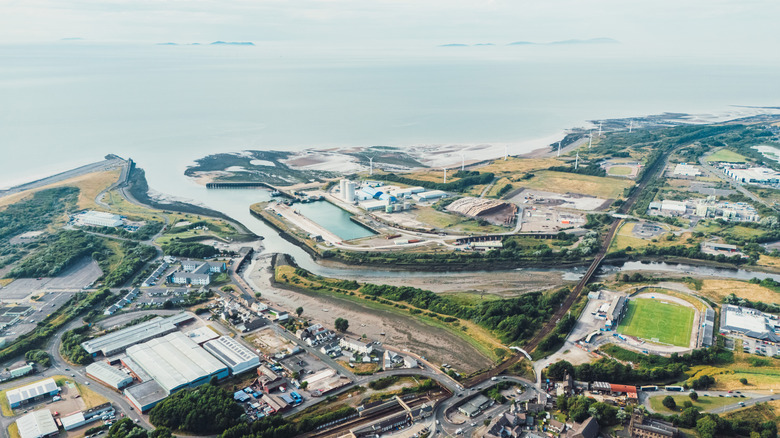
Northwest England has a long history of mining and industry. In the coastal town of Workington in the county of Cumbria, iron ore and coal were mined when Queen Elizabeth I was in power, and the work continued for hundreds of years through the Industrial Revolution. Workington was known for making steel rails for the train track; however, the last rail was made in 2006. It's still a major port town, but there was a pivot after that with town revitalization projects, including a new shopping center and major investment in both beautification and making the streets more bike- and pedestrian-friendly. The town also has permanent public art installations. Combine that with the views out over the Irish Sea and the historic ruins from both medieval and industrial times, and you'll see what makes Workington special.
Workington is situated at the mouth of the River Derwent as it empties into the Solway Firth — an inlet of the Irish Sea that marks the border between Scotland and England along this section of the U.K. For scenic views out over the water, head down to the Workington Beach. It's a predominantly shingle beach (made up of stones and pebbles), and if it's clear, you can see out over Solway Firth and its wind turbines to the hills of Scotland. Along with sweeping sea views, you can still witness some of the relics of the industry that helped define the area for a time. Jane Pit was a coal mine in the 1800s, and you can see the remaining steam engine house that was built for the mine.
Birdwatching, historic ruins, and a holiday light show in Workington, England
Not far from Workington Beach is Siddick Ponds Nature Reserve. This wetland area is fantastic for birdwatching with both a fresh water and a brackish water pond that attract dozens of bird species. Then to the east of the nature reserve is the Burrow Walls Roman Fort, a military installation built and used by the Romans in the 1st and 2nd centuries. There's not much left above ground of the fort; however, you can still see some of the walls from a medieval hall that was built on the site.
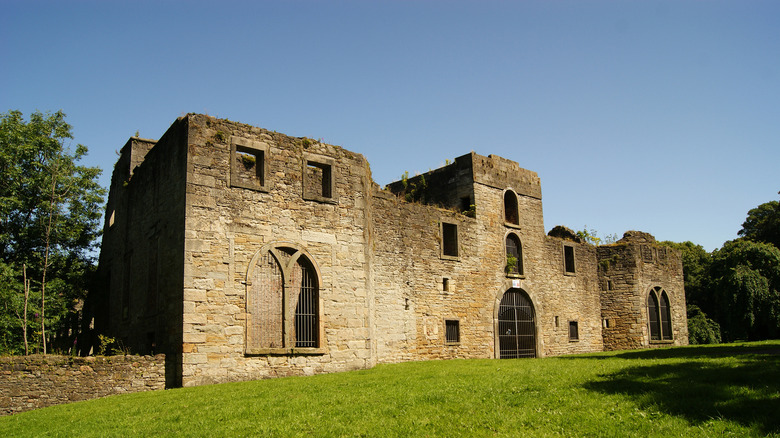
For more intact ruins, Workington Hall was originally built in 1404. It's perhaps most famously known as being one of the last places where Mary Queen of Scots stayed in May 1568 before she was taken captive at Carlisle Castle. While she was at Workington Hall, she gave a communion cup made of agate to the Curwen family, who owned the property. The cup, called the "Luck of Workington," resides at the Helena Thompson Museum in Workington.
While Workington Hall was once a grand building, it's now in ruins. Still, it's rated as a Grade 1 building, which means that it's of significant historic interest and won't be torn down. While you typically can't go inside the hall, there are occasional guided tours. Check the Helena Thompson Facebook page for details. The museum itself is set amidst the pretty Hall Park, and you can marvel at the hall's facade as well as spend time in nature. The park also has a rideable miniature railway, which the West Cumbria Guild of Model Engineers runs for passengers on Sunday afternoons. Each holiday season, Workington Hall is lit up with the Workington Lightworks event "featuring illuminated artwork, projection, dance, and music across the historic grounds of Workington Hall Park," according to Visit Lake District.
History, art, and getting to Workington, England
For more Workington art and history, visit The Helena Thompson Museum. Born in 1855, Thompson was a local philanthropist and worked for a time as a magistrate — the first woman in Workington to do so. The museum exhibits include antique dresses that Thompson collected throughout her life, the Luck of Workington, and an ornate cabinet reportedly made with pieces from the bed that Mary Queen of Scots slept in at Workington Hall.
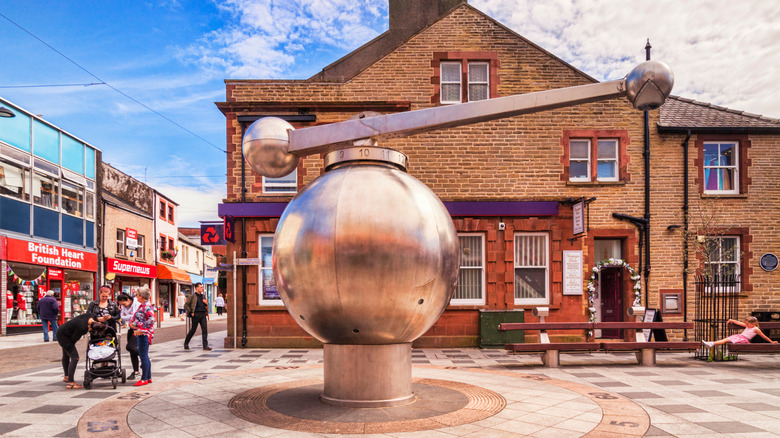
You'll find more contemporary art installations in the heart of town. "Lookout" is a giant sphere with a rotating bar on top. It's actually a working clock designed by artist Andy Plant and "based on a 'camera obscura,' and it tells the time with its rotating minute hand suspended above head height parallel to the ground," according to the artist's website. The minute hand points at the time on the ground. Each hour and half hour, you can hear specially composed music and sounds. Downtown is where you'll also find the "Coastline" sculpture. At 13 feet tall, it's a mix of resin and granite representing water and land. The seats around the sculpture are made in a similar design and are lit up at night.
Workington is over a six-hour drive from London, while taking the train adds about another hour. From Glasgow, it's about a 2.5-hour drive or a little over a two-hour train ride. While you're in this part of England, to the east of Workington is the Lake District with scenic destinations like Windermere, with its tasty restaurants and outdoor fun. It's typically faster to get around this region by car, but there are also convenient public buses, like you'll find in many parts of Europe, that can get you around the Cumbrian Coast and Lake District. For more coastal views, you can hike a part of the King Charles III England Coast Path National Trail, which runs all the way around England, as it heads north and south from Workington.