
One Of Italy's Largest Artificial Lakes Is An Alpine Gem Full Of Recreation Just 2 Hours From Rome

Where Italian cities come with world-famous sites and the crowds to match, Italy's lakes offer travelers cycling paths by the water, small historic villages, or wildlife gathering along the shores. At Lake Campotosto, the Italian lakeside retreat takes the form of a V-shaped mountain reservoir set against the peaks of the Abruzzo Apennines. It's one of the country's largest artificial lakes, the reservoir was formed in the mid-20th century to support hydroelectric power generation, per Italia.it, Italy's official tourism website. It covers around 3,500 acres and sits within Gran Sasso and Monti della Laga National Park, where surrounding meadows and woods give way to views of the peaks. Around two hours by car from Rome, Campotosto makes for a potential day trip or overnight escape for travelers based in the capital.
Three dams were built beginning in 1939 around a high-altitude basin in Abruzzo, flooding pasture, farmland, and peat bogs to create Lake Campotosto. According to Italia.it, the reservoir remains the largest in the Abruzzo region, one of Italy's top regions for comfortable living. All around the lake, lands are still used for grazing, while trails climb through beech forests into the surrounding slopes. The reservoir and its shores are protected within the Campotosto Lake Nature Reserve, which supports wildlife and recreation alike. Its marshy edges attract waterbirds, such as like herons, wigeons, and pochards, and a road circles the lake, making it popular with cyclists to take in the Apennine views, while visitors can also fish, canoe, or windsurf.
What to do at Lake Campotosto
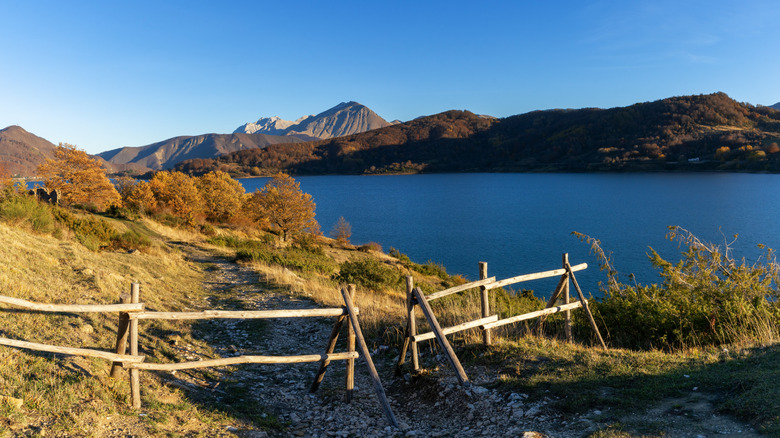
The shoreline of Lake Campotosto is largely natural rather than developed into a traditional beach resort, so it's better suited for travelers looking for quieter outdoor adventures. Swimming isn't allowed, even though the Abruzzo tourism site highlights the lake's clear water. Instead, activities center on enjoying the lake from its surface or shoreline. Visitors with their own equipment can take a kayak out to paddle with views of the Gran Sasso and Monti della Laga ranges, while Pesca in Abruzzo lists whitefish, carp, and trout as potential catches for anglers. You'll likely have to bring your own equipment for fishing or paddling, or stop by outlets in L'Aquila about 50 minutes away by car, since a search for watersports rental shops directly around the lake doesn't turn up anything. There are some lakeside camper-van stopping points along the road, mainly along the eastern side.
Visitors can explore the surrounding Apennine scenery by bike or on foot. There are two lakeside mountain-bike routes. The northern loop is a paved, medium-difficulty circuit covering around 15 miles, while the eastern shore has a slightly shorter, easier loop, mapped by the Gran Sasso and Monti della Laga National Park Authority. Hikers can also follow trails into the mountains. One route runs nearly 7 miles from the reservoir to Cesavastina, crossing an Apennine ridge and reaching a height of around 6,500 feet at its highest point. If you're sticking around the Gran Sasso and Monti della Laga National Park area, consider adding some extra time to explore the lunar landscapes of Campo Imperatore, Italy's Little Tibet. You could head back to Rome after, or extend your Abruzzo trip by staying in a destination like Civitella Alfedena, a picturesque village nestled in the mountains.