
10 Regions In Italy To Live Comfortably And Stretch Your Social Security
Italy has long been a land of contrasts. Exclusive islands offering a lap-of-luxury experience brush shoulders with tips for extremely tight budget excursions. The country is divided into 20 regions, each with its own unique characteristics. Still, some generalizations can be made. The north is mountainous and rugged, the south is sunbaked, and the center is temperate, picturesque, and welcoming. Opting to spend your twilight years in such places is a question of taste and finances.
Average household expenditures in the U.S. run close to $80,000 per annum, with even a single person needing around $3,000 per month. Contrast that with Italy, where the average drops down to less than $1,800. Meanwhile, in 2019, across eight of the nation's most southerly regions, including Sicily, Sardinia, and Puglia, a flat tax rate for retirees of just 7% on foreign income (such as a pension or Social Security) was introduced, provided the chosen town within those regions has fewer than 20,000 residents. Of course, not all areas offer the same level of savings. The south offers the best bargains, but the northern regions have the upper hand when it comes to infrastructure and accessibility. We opted to take things in a sequential order: Sicily, Sardinia, Puglia, and Basilicata are in the south; Abruzzo, Le Marche, Tuscany, and Umbria are in the center, while Liguria lies in the north.
In each section, we have provided an overview of the average cost of living based on a single person before throwing rent into the mix, which is, on average, about half of what you'd pay in the United States. Such data was extracted from several sources, most notably International Living's Global Retirement Index, and several feet-on-the-ground immigrant sites. But the personal touch has also been thrown in for good measure. We've traveled the length and breadth of the Italian peninsula and can verify the comfort of these regions.
Sicily
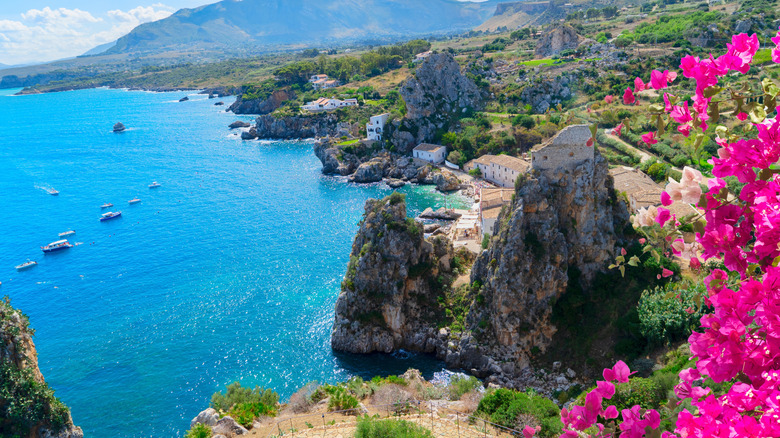
Sicily is a place of cinematic coastline, citrus groves, ancient ruins, and distantly rumbling volcanoes. The island generously offers visitors world-class cuisine while providing a cost of living to quality of life ratio that is difficult to beat. A single person can get by on around $1,200 per month. Added to that is the fact that rent is much cheaper on the island than in other parts of Italy, and certainly less than the average price of properties across the United States. But Sicily offers a lot more than cost-cutting advantages.
Cities like Palermo have one of the lowest costs of living, yes, but it is also something of a foodie paradise blessed with a picturesque coastline. Options abound: morning constitutionals past the 12th-century magnificence of its Cappella Palatina. A cappuccino within sight of the Chiesa di San Cataldo and its distinctive red dome. Life in Palermo is nakedly Sicilian: slow, deliberate, and filled with joie de vivre. Sampling the local fare at any one of its deliciously chaotic markets is a non-negotiable must-see, while spending time with some authentic Italian opera at the immediately recognizable Teatro Massimo is genuinely something to write home about. Meanwhile, a short bus ride can take you to the charming Art Nouveau stylings of Mondello Beach and its village.
As if that were not compelling enough, the surrounding rural areas, in addition to being cheaper, also represent the true soul of the island. Yes, there are citrus groves aplenty — not all clichés are false ֪– but there are also valleys devoted to the production of olive oil, mountainous regions filled with hidden lakes, scenic views without limits, and wandering, cute-as-a-button roe deer.
Sardinia
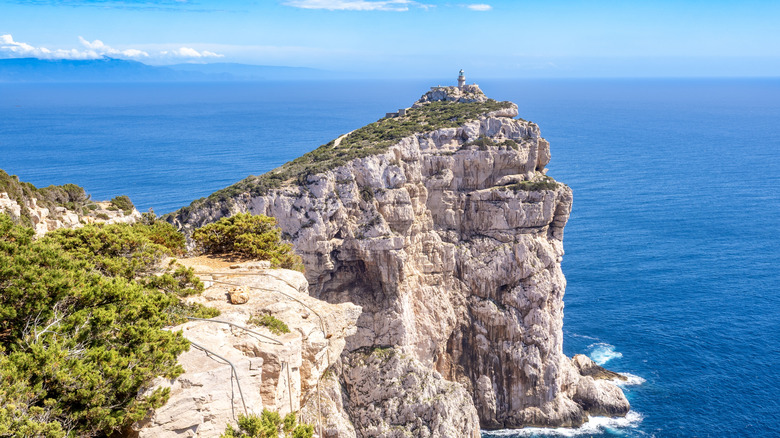
Sicily may be the largest island in the Mediterranean, but it's not alone when it comes to affordable places to help stretch out those retirement funds. A single person living in Sardinia can get by on just $1,500, close to the national average, sure. But those opting for a more rural experience can find even better prices on offer.
Cagliari offers a near-perfect balance between affordability and quality-of-life-boosting features. The Sardinian capital gives off lively market-town vibes, yes, but it is a place filled with hidden complexities. Fronted by a world-class beach, the city is just a stone's throw from the ever-relaxing Molentargius-Saline National Park, representing just one of several nearby day-trippable locations. The UNESCO Su Nuraxi di Barumini fortress is only an hour away, while watching the sun go down at the nearby Bastione di Saint Remy, or a quick swim at the scenic Sella del Diavolo, represents the kind of honest, good-for-the-soul activities that great retirements are made of.
Elsewhere, things are no less inviting. The interior tends to be cooler thanks to its higher elevation, while also offering a more equidistant approach to the island's Mediterranean and Tyrrhenian coasts. Towns like Nuoro are at once hubs of history, culture, and fine dining, and at the same time decidedly affordable. They also act as fantastic gateways to the warm waters and cool breezes of the island's north. Indeed, a scenic drive towards the northern shores is an experience by itself, but once there, you'll be able to check out the resort town of Palau or bask in the picturesque charm of Santa Teresa Gallura and its clear-day views of Corsica's southern coast.
Basilicata
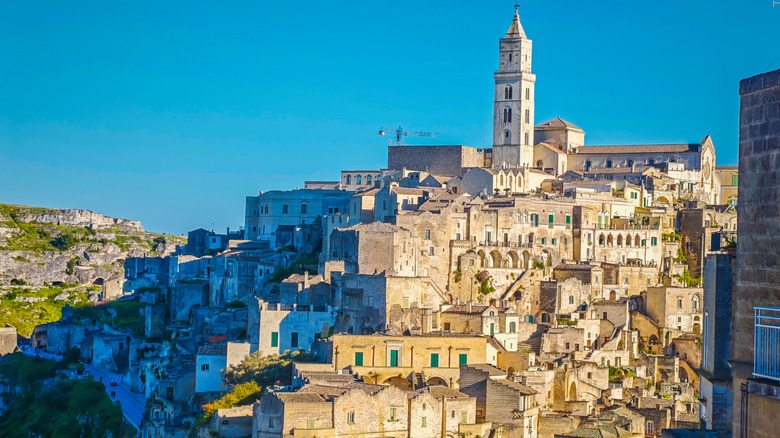
Basilicata occupies the forested and mountainous parts of Italy's southern half, and thanks to the dramatic terrain, it's a sparsely populated and relatively tourist-free. True, the compelling city of Matera with its UNESCO World Heritage Paleolithic caves bucks that trend somewhat — it's certainly well-trodden — but that still leaves thousands of square miles of gorgeous real estate for potential retirees to explore. Across the region, living is both easy and cheap, and a couple opting to settle down in Basilicata can get by on the modest sum of $1,300 per month, rent included.
The question of where best to settle is of paramount importance. Matera, with its striking architecture, labyrinthine caves, and stunning national park littered with ravine-carved churches, is an obvious go-to but is less budget-friendly than elsewhere in the province. The central city of Potenza makes more sense, as rents here are super low.
Potenza's relative isolation in the south is not perhaps as pronounced as it first seems. The ritzy downtown shops and eateries of Naples are less than a two-hour drive away, and Bari, the gorgeous capital of Puglia, is about the same distance, albeit in the opposite direction. Regardless, those wishing to stay closer to home will be well-served by Potenza and its surrounding area. The Old Town is littered with stunning squares and points of interest. The Church of San Francesco is an elegant 13th-century masterpiece — a morning coffee in its shadow comes highly recommended. Still, fair warning, this is a steep place to navigate, and although an extensive system of escalators takes some of the legwork out, those unaccustomed to high-gradient walking might want to opt for an outlying town instead.
Puglia
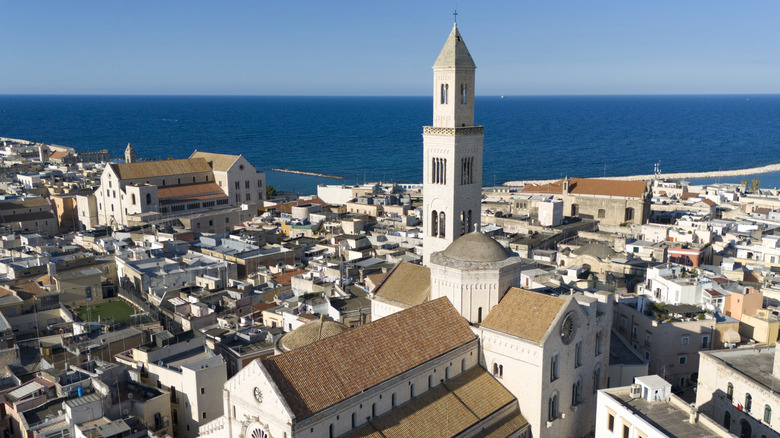
Puglia sits just to the east of Basilicata, which means it is still in the south in what most people think of as the heel of the Italian boot. It's a land of ancient farmland, fairytale architecture, and unspoiled beaches, and, again, like much of Italy's south, living is both easy and cheap: Basic costs here tally to slightly over $1,400.
The city of Bari is an obvious jumping-off point for those thinking of moving to southern Italy. The streets are a labyrinth of sandstone dwellings where locals sit outside hand-rolling pasta, in the most charmingly traditional way imaginable. There are Romanesque churches to explore, an imposing 13th-century fortress to sidle by, and dozens of nearby beaches to choose from. Oh, and the street food here is next level: Focaccia Barese can hold its own against the best Neapolitan pizza out there, the panzerotti in Bari are to die for, and plates full of orecchiette are as common as running water. It all forms part of what the locals refer to as cucina povera, or peasant cooking: the method's focus on the use of simple, fresh ingredients elevates the regional specialties to genuine works of art.
The surrounding regions are no less compelling. There are, of course, many more beaches to explore, but the interior is filled with surprises of its own. The UNESCO World Heritage=town of Alberobello, with its whitewashed houses and conical roofs, is an absolute delight, as indeed are many of the other towns and cities that dot the landscape. Lecce, with its Baroque palaces and churches, is known locally as the Florence of the South, while the medieval hilltop town of Ostuni is as decidedly Tolkien-esque as it is splendid.
Abruzzo
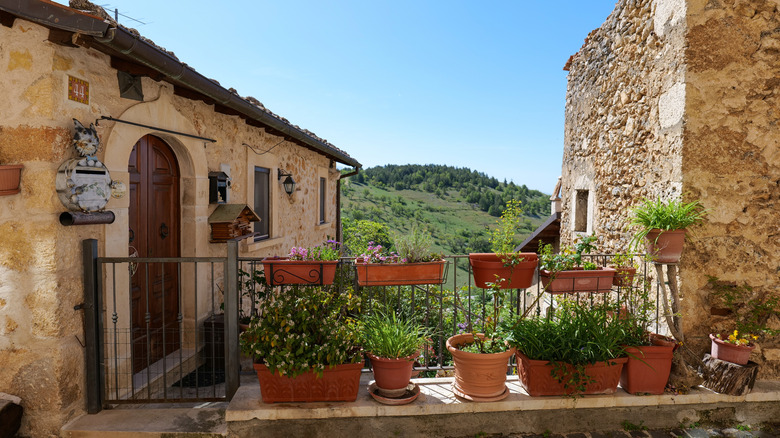
As you move up from the Italian south towards its center, prices tend to climb upwards. Not in any kind of deal-breaking way, but it's worth bearing in mind, nonetheless. Because central Italy has a charm all of its own, and you can still find some incredible bargains as you creep up along the spine of the peninsula. Take Abruzzo, for example. With an average spend of $1,315 a month, it's actually cheaper than Puglia.
To the east of Rome, the region is home to dramatic mountain landscapes dotted with medieval villages that give way to over 80 miles of unspoiled Adriatic coastline, while the western half of the province is almost entirely given up to national parks, protected spaces, and sites of special importance. It is not without reason that Abruzzo is known as the greenest place in Europe. Retirement possibilities abound.
You could opt for a picturesque village nestled in the mountainous climes and contemplate views of the Rocca Calascio, a 10th-century watchtower worthy of exploration. There are also several medieval hilltop towns worth a second look or two, such as the remarkably well-preserved Santo Stefano di Sessanio, and its connections to a Medici past, or perhaps while away some time in Civitella del Tronto with its enormous fortress and to-die-for cuisine. Or you could stick to city living in towns such as Sulmona or L'Aquila. The former was once home to no less esteemed a person than the poet Ovid and is the current-day capital of Italy's confectionery industry. L'Aquila, however, is the actual regional capital and is a place of Renaissance art, medieval charm, and fascinating history. The town's Fontana delle 99 Cannelle is a delight to stroll past, and there are the usual markets, plazas, and buildings of ecclesiastic origin to admire as you make your way through the city.
Le Marche
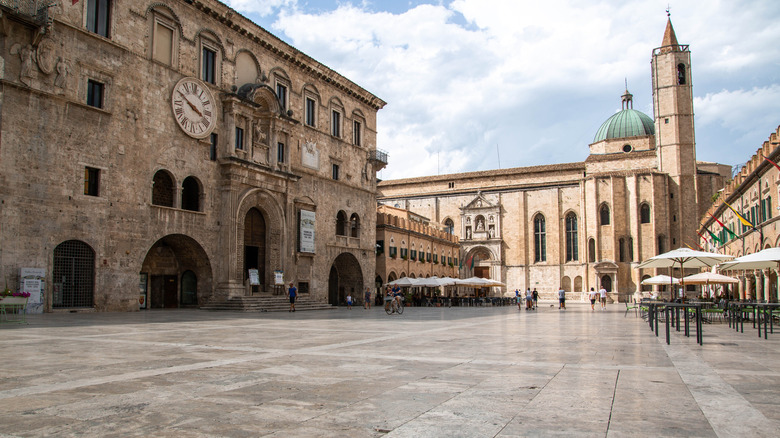
Tuscany so often steals all the headlines, yet Le Marche is no less quintessentially Italian and can be experienced at a fraction of the cost. Indeed, in many regards, Le Marche acts as a microcosm of the peninsula as a whole. Medieval hilltop towns? Check. Rolling hills featuring neat rows of legacy vineyards? Check. World-class cuisine? Oh, check that off the list for sure. It reeks of retirement potential, and coastwise, somehow manages to stay under the $1,500 dollar a month mark.
You could do worse than choose the town of Ascoli Piceno as the nexus of your retirement adventure. Its inland location is no real barrier to beach lovers — it's a straight 20-mile drive to the coast down a well-serviced road. Meanwhile, the stone mountain town itself literally glows at night and gives off ancient Rome vibes that are so authentic that it really does feel like you've stepped back in time. Its central piazza is a masterpiece of Renaissance design, and is home to what may be the most beautiful café in all of Italy, Caffè Meletti: built in 1905, the eatery proudly retains its Art Nouveau credentials and is the perfect place for an early morning coffee and pastry or late afternoon snack.
Of course, the countryside beckons also. The limestone cliffs of the Conero Riviera are up there with some of the best coastal walks in the world. They act as a pedestrian highway of sorts, and can take you to some fantastic and crowd-free coves such as the Beach of the Two Sisters. Meanwhile, those heading inland can while away their days in the Sibillini Mountains and perhaps explore some of the incredible cave systems to their north.
Tuscany
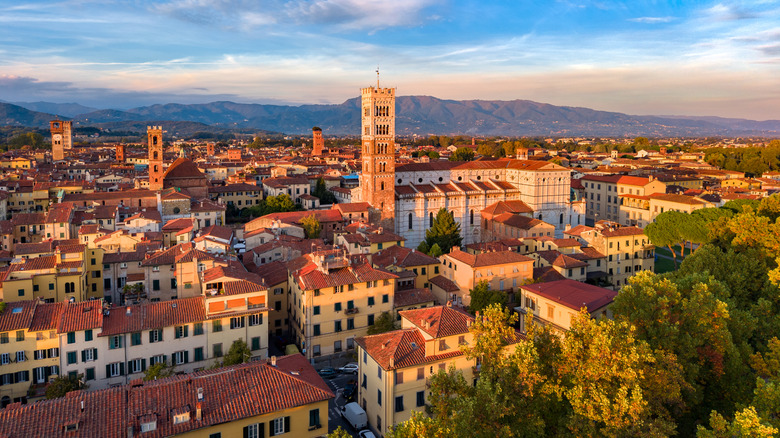
The cost-saving nature of Tuscany's neighboring regions cannot detract from the perfection of the Tuscan topography. Yes, Tuscany is more expensive than Le Marche, with the former commanding a $250-a-month premium over the latter. Still, it remains a viable retirement setting with bragging rights attached. Let's be real: it's hard not to sound cool when inviting someone to come stay at your Tuscan villa.
Still, price spikes across the region do force one to become selective. It's nice to be close to Florence, of course, but inner-city living in the literal cradle of the Renaissance comes with an attached premium. Two other cities, however, spring to mind. Lucca, with its stunningly well-preserved city walls, ancient towers, and lively festival scene, is not much pricier than the Le Marche average. The repurposed amphitheater, nearby thermal baths, and Romanesque cathedral add cultural texture while the local cuisine leans heavily on the carbs in the best possible way.
Meanwhile, Arezzo, some 100 miles to the south (although both cities are basically equidistant from Florence), offers a quieter pace of life. The fact that the Basilica of San Francesco is home to the masterpiece, the Legend of the True Cross, marks the city as a place of art and culture without need for further comment. Giorgio Vasari, that other exemplary Renaissance genius, was born here, and his love of tinkering seems to have left an indelible stain on the population writ large: The antiques fair arrives every month, but down the city's back streets, the process of restoration and preservation never really stops.
Umbria
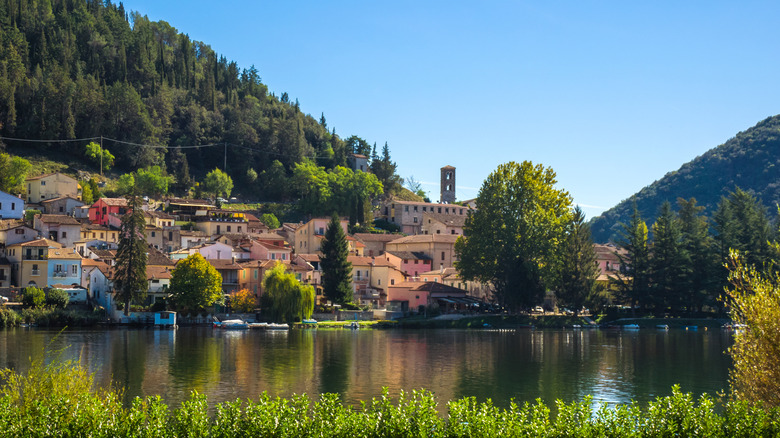
Umbria shares a border with both Tuscany and Le Marche and is often described as the peninsula's green heart thanks to its lush foliage. It has the culinary chops to live up to that name; Umbria is wine country, and there's such a familiarity to the landscape that in places it's difficult to know where Umbria begins and Tuscany ends. Still, living in Umbria is less expensive than Tuscany's asking price of $1,647 per month. You can get by on a shade over $1,200 here.
The first thing to note is that Umbria is Italy's only landlocked region. The second thing to note is that this really shouldn't put you off. The region's south-central Lake Piediluco is not quite the equal of Lake Como, but it's a closer run than you'd think. It's also cheaper, less crowded, and home to the bucket-list-worthy Marmore Waterfalls. Regardless, the coast is never that far away for those seeking sun and sand; Italy's good like that.
The capital city of Perugia is a tempting first choice for retirement in Umbria. It's a city of festivals — of the chocolate and jazz variety, the former in November and the latter in July. It's also in possession of a stunning piazza, a medieval and still-walkable aqueduct, and a near-2,000-year-old gateway. Meanwhile, the town of Orvieto lies around 50 miles to the south, putting it within day-trip distance of Rome. Perched upon a volcanic cliff, the city is an arresting sight and is also home to one of Italy's finest cathedrals, the jaw-dropping Duomo of Orvieto. Seriously, it's a contender for the most beautiful place of worship in the world. Set up against this background, you'll find some truly excellent eating: thick, hand-rolled pastas, wild boar stews, and freshly shaved truffles dominate the local palate here, but Orvieto is also well-known for its wine.
Liguria
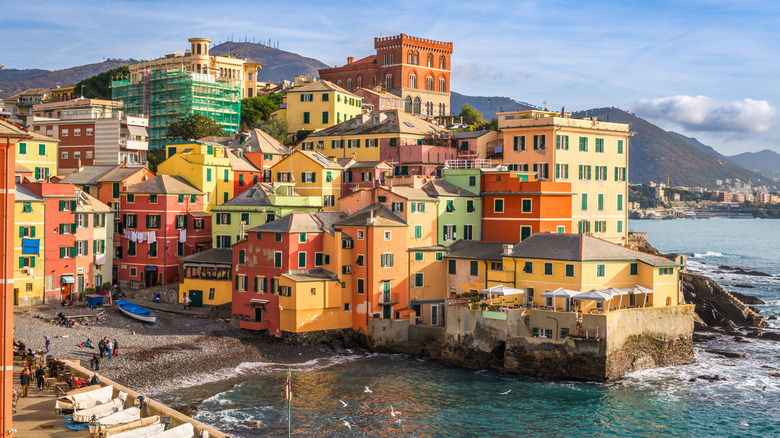
Moving on from central Italy brings a whole new dimension to retirement proceedings. Up north, climates are milder, and that is a definite draw for some people, but places like Milan are too expensive, and Venice is way too crowded. Liguria is different. Its capital city, Genoa, boasts a genuine Mediterranean vibe and climate that many people prefer almost as a reflex. Indeed, the crescent-shaped region is almost entirely made up of some of the most coveted Mediterranean real estate in the world, although you can expect to pay around $1,600 a month for the privilege of calling the place home.
Still, full of trails, charm, and rolling hills, Genoa very well may be; it still gets hectic come summer. For those who prefer a quieter pace of life, the city of Imperia acts as a backup plan. It's closer to the Monaco side of things, so day trips to the tiny principality or perhaps even across it to Nice, France, are more than doable. Still, those who choose to keep things local are in for a treat regardless. Imperia is a city of two halves: Porto Maurizio, which clings to the hillside and offers pastel housing, sea views, and a world-class harbor, and Oneglia, the city's culinary hub. This former waterfront village merged with the wider city decades ago, and today it is a place of brightly-colored buildings, seafood eateries, and historic arches. This is very much olive oil country, and they have a museum to prove it. Other attractions include the deliciously repeatable Lover's Walk, a villa/clown museum, and scenic drives along the coast itself. The city's best feature, however, simply must be its access to the kind of crowd-free beaches that are a virtual chimera elsewhere on the Mediterranean. Pro tip: The nearby San Lorenzo al Mare village is a little-known hidden gem.