
What Could Cause A Learjet To Nosedive 27,000 Feet In One Minute?
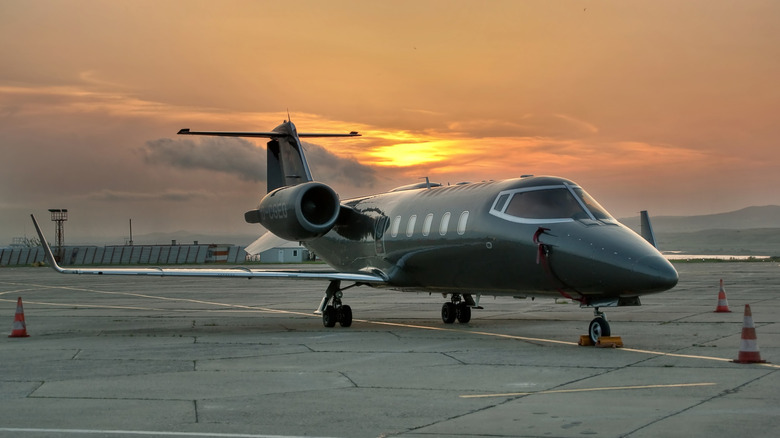
It could take months before investigators determine what caused a private plane to plunge at nearly 30,000 feet per minute into a South Florida community on November 1, 2026, killing the two flight crew and seven passengers on board, per ABC10. The Bahamas-bound Learjet 60 took off from Austin-Bergstrom International Airport in Texas, crashing into a roadway in a West Palm Beach neighborhood and exploding into flames. The probe will likely be complicated by the absence of large airplane parts at the site that may have disintegrated on impact, says aviation journalist and podcaster Jeff Wise. "[The] impact can be so violent that it just shreds all of the evidence," he said on a YouTube video, discussing a 2025 Philadelphia crash of a Learjet 55. Findings from that accident are still being finalized a year later.
National Transportation Safety Board (NTSB) officials began arriving the night of the Florida crash to assess the scene, per the board's news conference. Investigators found evidence that parts of the aircraft started breaking off before it slammed into the ground, says Board Member Tom Chapman, and the agency is still searching for all aircraft components. Weather will also factor into the investigation since heavy rainfall and thunderstorms were in effect at the time, forecaster AccuWeather said in a statement.
Manufactured by Montreal, Canada-based Bombardier Aerospace, also home to North America's top airline, the Learjet 60 entered service in 1993 and is among the world's fastest private jets with a cruise speed of Mach 0.81. Learjets are known for their plush cabins, passenger comforts, such as work tables and power outlets, and ability to deliver fast regional travel. You can charter one from $4,260 an hour or buy a pre-owned one for about $4 million.
Possibles causes of the Learjet 60 crash in West Palm Beach, Florida
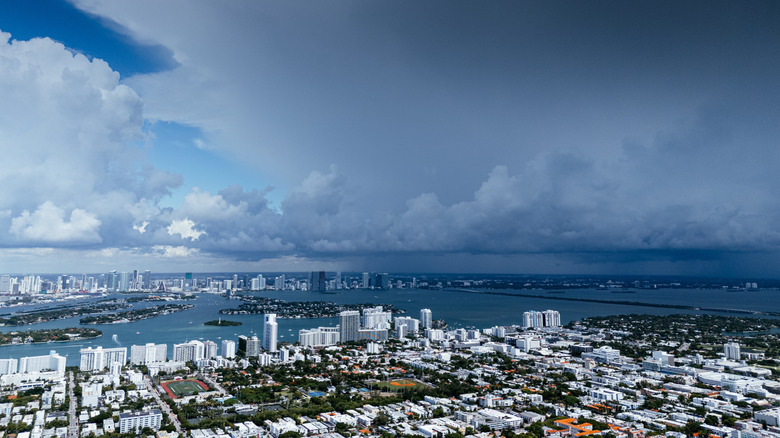
Central to the investigation is what led the flight crew to lose control of the aircraft, including a focus on the changing weather patterns common to Florida. Before the crash, storm systems were brewing, and the crew reported icing and moderate turbulence, per USA Today. They requested a smoother altitude at 37,000 feet, according to air traffic control audio captured by LiveATC.net. Icing, or when water droplets freeze on a plane's surface like the wings or engine, is a major aviation hazard, leading to reduced lift or added weight. Extreme turbulence found inside thunderstorms can also stress the aircraft's structure and cause damage. Ex-NTSB and FAA investigator Jeff Guzzetti told the Associated Press that, if parts of the plane's tail were lost during turbulence, the aircraft would be uncontrollable. "That very well could explain the missile-like profile just before it hit the ground," Guzzetti said.
Shortly after receiving climb instructions, the pilots made a mayday call and reported a rapid descent, leading to an overspeed condition, according to flight tracking website Flightradar24. Overspeed means the plane was traveling faster than its maximum operating speed, a dangerous situation that can lead to a wide array of system failures and damage. Data from the site showed the vertical descent rate at one point exceeded 32,000 feet per minute, or more than 6 miles per minute. Experts tell USA Today that the plane could have hit the ground at 500 miles per hour.