
5 Disadvantages Of Having Travel Insurance
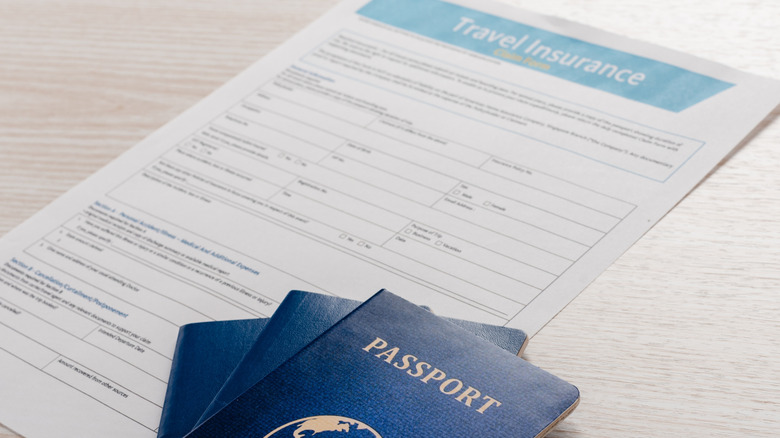
It's safe to assume that anyone who books a vacation hopes the trip goes off without a hitch. Unfortunately, there is no way to ensure that with 100% certainty. No matter how meticulous you are with preparation, trips can still be derailed by things beyond your control. For some travelers, buying travel insurance is one way to protect themselves against unexpected expenses. But before purchasing a policy, it's important to know that travel insurance may not be the security blanket it's believed to be. As with any purchase, there are both advantages and disadvantages.
First off, not everyone is familiar with travel insurance. In a nutshell, it's a policy that may reimburse travelers for certain expenses, such as prepaid flights, accommodations, medical bills, and personal items, should a trip be disrupted, delayed, or canceled for a covered reason. Travel insurance is not new. It has existed in some form since the mid-1800s. However, over time, it has become increasingly popular, with more travelers turning to travel insurance companies for coverage.
Despite its increased use, there is no hard-and-fast rule that travel insurance is necessary — or even worth it — for every trip. US News & World Report notes that there are several situations where travel insurance may be worth purchasing. That said, travel insurance still has several disadvantages. Given the myriad policies available, travelers should know the cons before deciding to buy one.
You may never need to use your travel insurance

Most travelers spend a good amount of time researching and planning their trips. But no matter how carefully you plan, you can't know whether you'll actually need travel insurance. If your vacation goes smoothly, you could return home without ever filing a claim. In that scenario, the good news is that your trip worked out well and you returned home satisfied with your vacation. The bad news is that you have nothing to show for the outlay of cash on travel insurance, apart from the peace of mind it provided.
So, just how likely are you to utilize your travel insurance? That can vary depending on the type of trip, time of year, and other factors. For example, if you are planning a trip to a tropical beach destination during the height of hurricane season, you may face a greater risk of weather-related disruptions. However, even these aren't automatically covered. If a storm has already been named before you purchase your policy, for instance, losses related to it are unlikely to qualify for coverage.
Travel insurance can be a budget buster

Another downside to purchasing travel insurance is that it can take a significant chunk out of your travel budget. This can be especially painful for those trying to travel on a budget and make their vacation dollars stretch. So, how much of your budget will travel insurance take up if you decide to buy it? Costs vary based on several factors, including your age, destination, trip length, and coverage needs. Comprehensive policies can cost up to 10% of your prepaid, nonrefundable trip expenses. According to Squaremouth, the average insurance policy cost $314 in 2026, or roughly $21 per day for a 15-day trip. Overseas travelers visiting the U.S., in particular, can face eye-watering travel insurance costs because of the country's expensive medical care.
In addition to using a portion of your travel budget that could otherwise be spent in a more fun-filled manner, purchasing travel insurance can mean paying out of pocket well before your departure date. That's because certain benefits, such as pre-existing medical condition waivers and cancel-for-any-reason coverage, often require you to purchase a policy within 10 to 21 days of your first trip payment. Although you can purchase insurance close to your departure, trip cancellation coverage applies only to eligible events that occur after your policy takes effect. So, if a weather event, personal emergency, or another covered circumstance forces you to cancel before you've purchased insurance, you won't be reimbursed for that loss.
Travel insurance may not cover some conditions and activities

Another disadvantage of buying travel insurance is that, depending on how you spend your vacation and your health before your trip, your policy may not provide the protection you expect. In fact, you may be surprised to learn what things travel insurance doesn't cover. Regarding your health, many policies exclude pre-existing medical conditions, although some offer waivers that remove these exclusions if you meet certain requirements. Therefore, it's very important to verify that any health concerns you may have are covered, particularly if you've recently undergone treatment or changed medications.
Vacation activities may or may not be covered, depending on the circumstances, type of activity, and specific insurance policy. Many travel insurance policies exclude certain high-risk activities such as bungee jumping and backcountry skiing. So, if you plan to participate in adventure sports or visit areas considered high-risk, check whether you're covered. You may need to purchase an additional, activity-specific policy to ensure you are actually protected.
Filing travel insurance claims can be troublesome

Even if your travel insurance policy is supposed to cover all your planned activities and destinations, you won't automatically be reimbursed if you file a claim. In a 2023 Business Insider survey, only about half of respondents who had filed a travel insurance claim were satisfied with the outcome. While that doesn't necessarily mean their claims were denied, it does suggest that their experience doesn't always meet travelers' expectations.
There are several reasons filing a claim may not result in payment, starting with the fact that the process is often complicated and involves considerable paperwork. Even if you've submitted a claim, it may still be rejected. That's because travel insurance policies often contain exclusions that limit what qualifies for reimbursement. This is yet another reason to make sure all your planned destinations, activities, modes of travel, and relevant pre-existing conditions are specifically covered before buying a policy. Even then, some unforeseen events may fall outside your policy's coverage, even if they're beyond your control.
With that in mind, if you do purchase travel insurance, keep your documents with you. It is also a good idea to save all receipts and take photos of valuable personal items, equipment, and gear you are packing in your bags. While this won't necessarily ensure your claim is accepted, it can help streamline the process.
You may already have coverage

Another disadvantage of buying a travel insurance policy is that you may already have some coverage through existing insurance or credit card benefits. In that case, purchasing a separate policy could mean paying for protection you don't necessarily need. You may rightfully wonder how you could already have travel insurance if you haven't actually purchased a policy. Turns out that certain portions of your vacation may be covered by insurance you already carry. So, by looking at the protections offered by your existing policies, as well as any benefits extended during the booking process, you may find you don't need to buy as much additional coverage as you initially thought.
To see whether your trip is already covered, start by reviewing your existing policies. Many homeowners and renters insurance policies cover belongings even when you are traveling. For example, if your camera or laptop is stolen from your hotel room, you may be able to file a claim with your homeowners or renters insurance instead. The same goes for auto and health insurance coverage, although you'll need to verify whether those benefits extend to your destination. Other potential sources of coverage include credit cards, airlines, and booking services, many of which include some protection as perks.