
A Half Hour From Newcastle Upon Tyne Is An Ex-Mining Village With Coastal Vibes, A Garden, And Nature Reserve
As the birthplace of the Industrial Revolution, the United Kingdom is packed with ex-mining villages. Coal was a driving force of the country's industrial advancement, and while many places have slipped through the cracks of history, some still stand out; like Easington Colliery, a name which has become synonymous with British coal mining. It's a literal connection, since a colliery refers to all the buildings of a coal mining operation.
Located on the coast of the North Sea half an hour south of Newcastle Upon Tyne, the coastal village of Easington Colliery was birthed in the early 1900s around the mine that gave it its name and raison d'être for its first 100 years. Several thousand people worked for the highly successful mine which at its peak produced over 1 million tons of coal annually. This success turned the village into a thriving community, though that community was transformed in 1951 when an explosion in the mine killed 83 people in one of the United Kingdom's worst mining accidents (via University of Wolverhampton). The village made headlines again later as one of the frontlines of the miners' strike of 1984-1985, during which time the police were seen clashing with the miners.
Since the mine's closure in 1993, Easington Colliery has found new ways of expressing its identity. The colliery is now a peaceful nature reserve where you can enjoy sweeping sea views and hike down to England's longest coastal path along a quiet beach. A memorial garden honors the village's coal workers and those who died in the accident. It's no wonder that "Billy Elliot" was filmed in Easington Colliery, as perhaps few places are as representative of Britain's mining industry as this.
Easington Colliery's nature reserve and garden
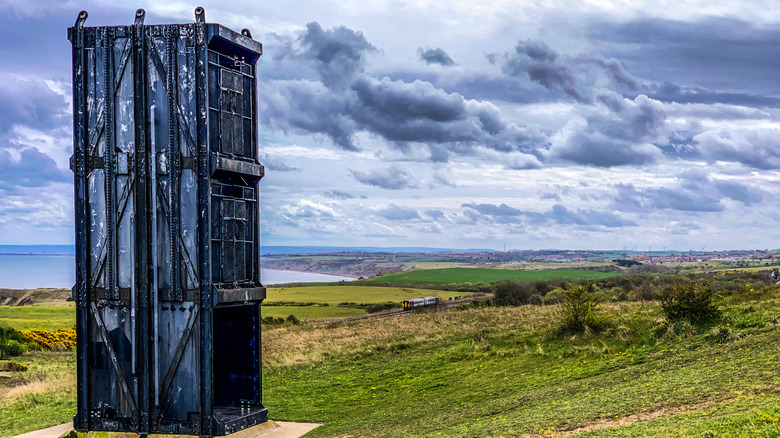
You can find former mining sites turned into green spaces all around England, and so it is with Easington Colliery, which was designated a nature reserve in 2014. As the most prominent site in town, the Easington Colliery Nature Reserve has the best view around with its perch above the North Sea. You can easily spot it thanks to the mine shaft replica that calls like a beacon to the past. Plaques throughout the reserve offer historical context for the coal mine and its role in the area.
The colliery's spoil heaps (essentially mounds of mining waste) have been planted over with grass, trees, and wildflowers. A handful of paths lead around the reserve, including an easy 1-mile family-friendly loop and a 2.3-mile light green trail that reaches the coast. Soak in the views of the sea, ponds, and blooming wildflowers filled with skylarks in the spring and butterflies in the summer. Sometimes there are activities, like nature walks, wildflower surveys, and trash cleanup, which you can find on the nature reserve's website.
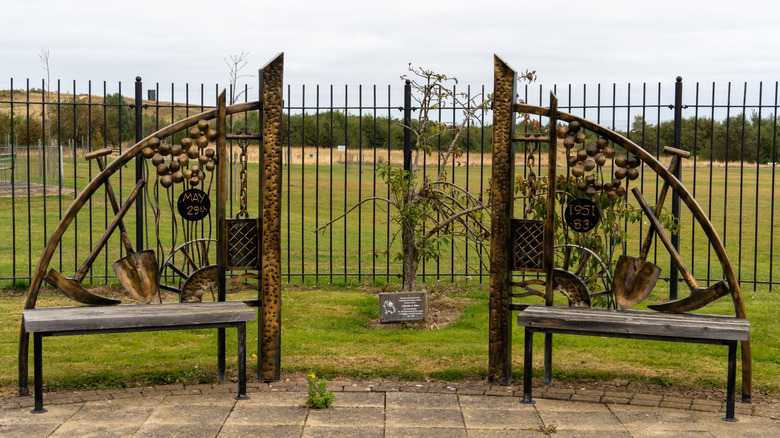
Just before entering the nature reserve, you'll find the Easington Colliery Memorial Garden. The garden was initially built in the wake of the mining accident but honors all of the people who worked at the coal mine over its lifespan. The garden was inaugurated in 1954 on the third anniversary of the accident and centers around a pit head wheel filled with coal. It's a small, enclosed space with a view of the pit cage in the nature reserve.
Exploring the coast of Easington Colliery
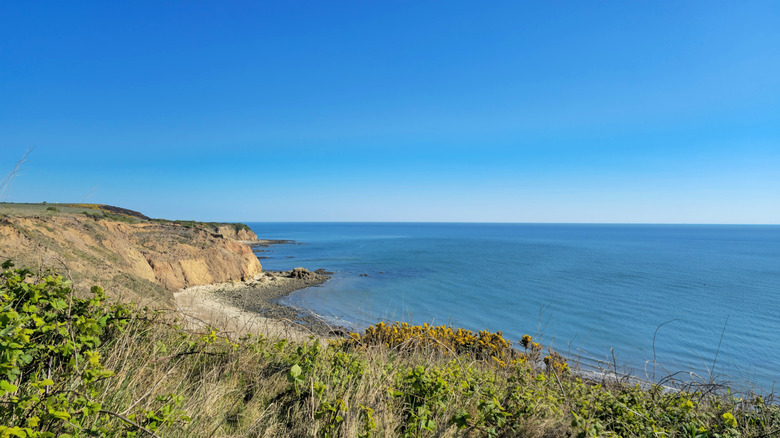
For anyone wanting to explore the coast around Easington Colliery, you can take one of the paths from the Easington Colliery Nature Reserve to the Durham Heritage Coastal Path, which leads from Ryhope to Crimdon. This 17-mile stretch is a portion of the King Charles III England Coast Path, an as-yet-unfinished walking trail circling the entire coast of England that will be nearly 2,700 miles long when it's completed. The King Charles III England Coast Path will be the world's longest managed coastal route when the project is finished.
You can also head down to Easington Beach, a pebbly shoreline that requires walking down some steps to reach it, so good shoes are recommended. Keep an eye out for the sea glass, iron deposits, and bricks that harken back to the area's industrial past. While the United Kingdom's Jurassic Coast is a go-to destination for fossil hunters, those with a prehistoric passion can also find treasures here at the tranquil Easington Beach against a backdrop of cliffs and dunes.
The region around Newcastle Upon Tyne is filled with lovely, coastal ex-mining villages like Newbiggin-by-the-Sea, and Easington Colliery is certainly on that list since it's just over 20 miles from Newcastle Upon Tyne (about a half hour drive). You can also get there with public transportation via the Go NorthEast bus, which offers service between Newcastle Upon Tyne and Easington Colliery (the trip takes 1 hour and 45 minutes).