
Near Bridlington Is A Charming Coastal Village With A Beach, Scenic Camping, And Medieval Castle Grounds
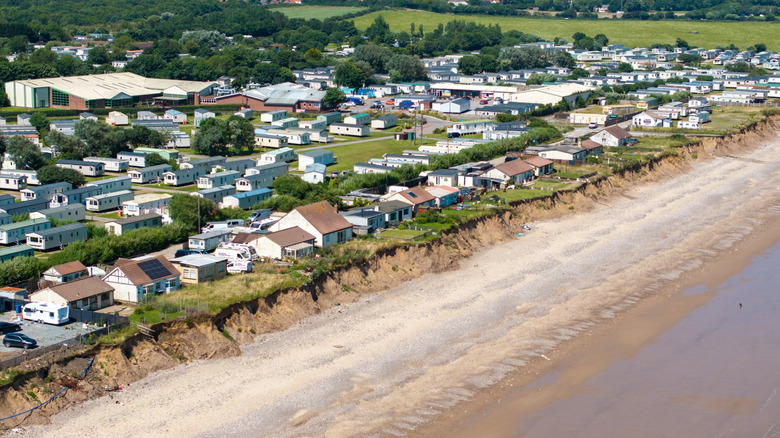
The sands of time have shifted a great deal on the coast of the Holderness Peninsula in Eastern Yorkshire, with the North Sea claiming several villages since Roman times due to erosion. As you're driving south from Bridlington, known for its spa and nicknamed the "Lobster Capital of Europe," you'll notice the landscape unfolding before you, quintessentially rural and steeped in farming tradition. Merely 15 minutes by car from Bridlington you will find the village of Skipsea, where the North Sea is rapidly encroaching onto its quiet shores.
The tiny village of roughly 700 residents has weathered many storms during its 1,000-year history, and evidence suggests that the area has been inhabited since the Stone Age. It witnessed the Norman Conquest and successfully fought back against becoming a nuclear testing site in the 1950s, yet the element of erosion appears to be a formidable enemy. Although the area experiences the highest rate of erosion in Europe, ceding about 7 feet of land every year to the sea, Skipsea's beach attracts those in search of untarnished, isolated coastlines and an endless horizon of the North Sea. It can be difficult to reach, given the level of erosion occurring.
The village offers a perfect setting for those seeking to enjoy coastal tranquility, a break from society, and optional contact with other people without losing access to simple comforts. With several camping sites readily available, both for tents or motorhomes, you can choose your site within walking distance of the long stretch of Moos Beach. And if your inner history buff awakens, the historical landmarks of the Skipsea Castle grounds are worth the visit.
Camping in Skipsea, England
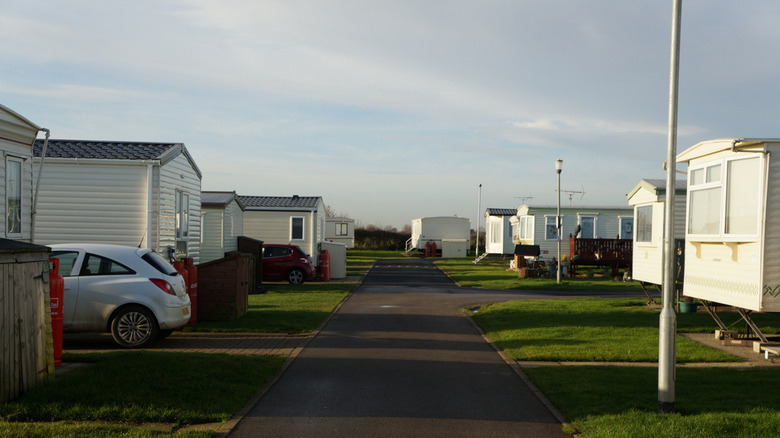
If you're looking for an authentically rural camping experience in Skipsea, Mill Farm Country Park is your best option. Surrounded by tall hedges in a spacious field, the site is highly recommended per reviewers on Campsites. The campsite comes fully equipped with showers and electric hookups and is a 15-minute walk from the sea. As a bonus, it is also dog-friendly and can accommodate every type of pitch, from small tents to RVs.
Whether you prefer a child-free site or visiting with your family, Mr. Moo's Touring Park offers both options, with the areas of choice split by a belt of woodland. The site has a charming footpath leading to the beach within view of docile Saler cattle, and the adjoining ice-cream parlor is an easy stop for a light lunch or to spoil your sweet tooth. Their grass pitching season is open from May to October, with hardstanding camping extending from March until November. Reviewers have spoken highly of the site, calling it "immaculate" with "spotless facilities" on Campsite.
When it comes to proximity to the beach, the Strawberry Fields Holiday Park would be the closest, with the sands only 2,400 feet away. There certainly is no shortage of options for camping along Yorkshire's long dramatic coastline, as can be seen in neighboring Hunmanby, yet this charming campsite's location offers the tranquility and quiet that you've sought to find in Skipsea. The facilities also include picnic tables, showers, and renovated bathrooms for you to freshen up before heading inland to explore the castle grounds after a morning on the beach.
Uncovering history in Skipsea, England
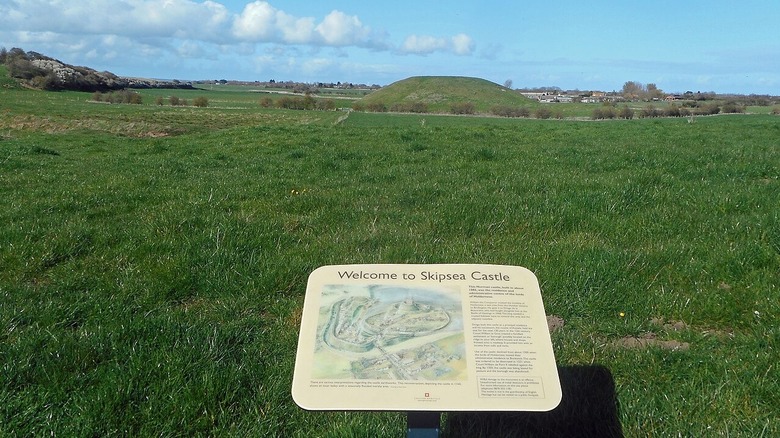
Yorkshire has witnessed its fair share of warfare, and thus has no shortage of impressive castles that can be visited on the coast, like the one found in the beautiful seaside town of Scarborough. Even before the Norman Conquest, Skipsea Castle's grounds were of great Anglo-Saxon importance in the area, predating the famous year of 1066. Located on Beeford Road, it's an easy 20-minute stroll over to the site of the motte-and-bailey earthwork castle.
It's free to visit the castle grounds however once you reach the entrance, be mindful that the castle sits in an open rough field, with farm livestock roaming around to add to the scenery. There is an educational plaque on site, which outlines the fascinating history of the Norman lords of Holderness, who ruled the region since William the Conqueror. The fortification was ordered to be destroyed by King Henry III in 1221 and turned into a livestock pasture by the 14th century.
The shallow artificial lake that once served as a defensive measure around the site has long since dried up, but the site's impressive conical mound remains, along with the defensive banks and low ramparts. Recent archaeological studies have also uncovered that the mound dates back to the Iron Age, proving that Skipsea's longstanding history doesn't erode as quickly as its seashore. Thankfully the coastal city of Hull, named by National Geographic as one of the best cities to visit in 2026 and only a 30-minute drive away, isn't going anywhere either.