
The Largest Lake In Alberta Is A Freshwater Oasis With World-Class Fishing, Unique Wildlife, And Scenic Camping
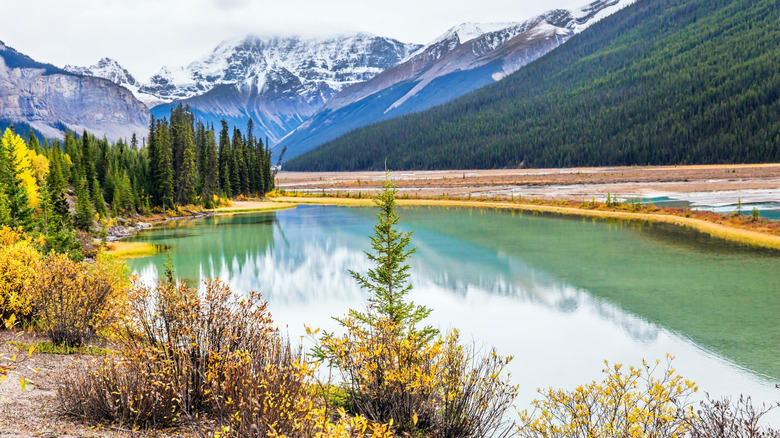
At over 3,030 square miles, Lake Athabasca is the largest lake in Alberta, as well as the neighboring province of Saskatchewan, where over 70% of the lake is located. This glacial lake is 175 miles long and over 400 feet deep at its deepest, and the 10th largest lake in all of North America. Clearly this is not an unserious lake. And although it's famous for the sand dunes on its southern shore — they form the largest active sand surface in Canada — Lake Athabasca has so much more going for it.
This remote body of water sits within the boreal forest, with access to lakeside Fort Chipewyan by plane or boat in summer and by winter road in colder months. That isolation ensures that it remains untamed compared to the more populated stretches of Alberta. That makes it an excellent place to see wildlife you probably won't see elsewhere, as well as a top-notch fishing spot. It also makes it a great test of your camping skills if you choose the backcountry, although accommodations are available in lakeside communities such as Fort Chipewyan. You can go random backcountry camping or book a stay at one of the handful of fishing lodges that operate in the area.
This is how undeveloped this part of Canada is: despite the lake's surface area totaling over 1.9 million acres, there are very few towns on the lake itself, including roughly 640 residents in Fort Chipewyan (Alberta's oldest European settlement), close to 1,000 in Fond du Lac, and only 70 in the former mining town of Uranium City. If you really want to get away from the world, come to Lake Athabasca.
Catch trophies at one of Canada's best fishing spots
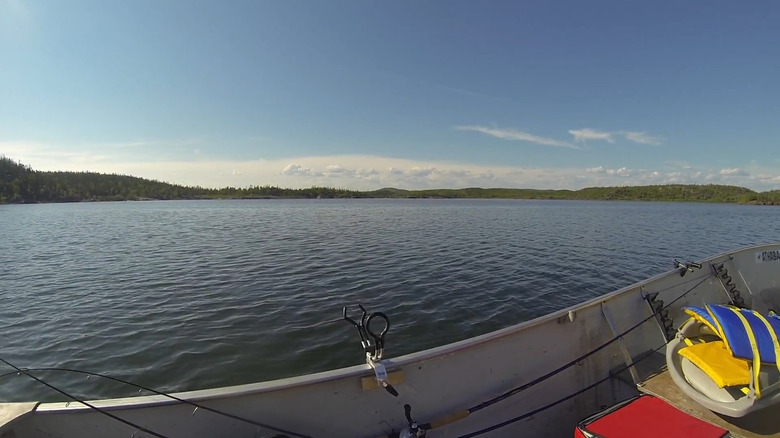
If you've heard of Lake Athabasca before and aren't from the Prairie provinces, it's most likely because of its fishing. That's the big draw here, whether fly-fishing from the shores of the lake and its islands or casting lines from boats on the water's surface, in search of the 23 species of fish that live within.
There's been commercial fishing here since 1926, and in the century since, Athabasca anglers have set a number of Canadian and even world records. The largest lake trout ever was caught here in a commercial gill net in 1961, weighing in at a mighty 102 pounds. You probably won't catch such a monster — the trout around here can reach a comparatively trim 60 pounds — but you can expect to reel in some big boys. The northern pike, for example, can break 50 inches; anything over 40 inches is considered rare. If you're hoping to catch some personal trophies, fly on up to Athabasca. Just make sure you don't use live fish as bait, which is prohibited in both Alberta and Saskatchewan; if you also fish in a national park, be aware of Canada's national park bait restrictions.
Fish you might catch include lake trout and walleye, Arctic grayling and burbot. Do you prefer longnose sucker or white sucker? Well, it doesn't matter, because Lake Athabasca has both. Check the fishing license requirements for the province where you'll fish, as exemptions depend on age and residency. If you want to schedule a fishing trip, there are local lodges that can help with arrangements, not just giving you a place to stay, but offering prop flights to the lake and taking you out on the water.
See all kinds of wildlife while backcountry camping
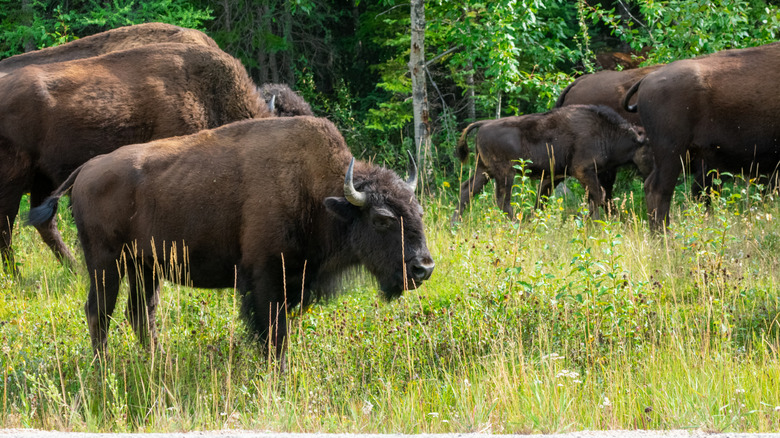
Maybe you aren't a fisher yourself but are accompanying one on their Lake Athabasca trophy quest. Don't worry: there's abundant wildlife around the lake, too, and not just inside it. If you're an animal lover who loves to see them in their natural habitats, the area around Lake Athabasca is a bounty of wildlife sightings — especially if you're into backcountry camping.
If you stay on the western edge of Lake Athabasca, near Fort Chipewyan, you're right outside Wood Buffalo National Park — Canada's largest national park. This wonderland is home to a spectacular diversity of wildlife, with over 200 species of birds and dozens of mammal species. You'll be near breeding and migration habitat for tundra swans, various ducks and shorebirds, and multiple types of geese. If you're more into mammals, critters big and small live close to the lake and its adjoining rivers, including beavers, hares, and muskrats, and even big boys like moose and wood bison. Deeper in the forest you can spot lynx, martens, otters, weasels, foxes, and even bears and wolves. Stay smart and stay safe, of course, but between this and the plentiful fish in the lake, this region beats any zoo.
If you're set on camping during your Lake Athabasca retreat, note that it's the very definition of roughing it. Random backcountry camping is allowed on the northern shore of the lake, at Fidler-Greywillow Wildland Provincial Park. There are no facilities of any kind, just you, a tent, and nature. It's not even close to Fort Chipewyan, which is 28 miles away. Fidler-Greywillow isn't the only breathtaking lake park with uncrowded camping you'll find in Alberta, but it might be the most remote and untamed.