
Between Exmouth And Chard Is A Fishing Village With Fresh Seafood, Dramatic Cliffs, And Former Quarry Caves
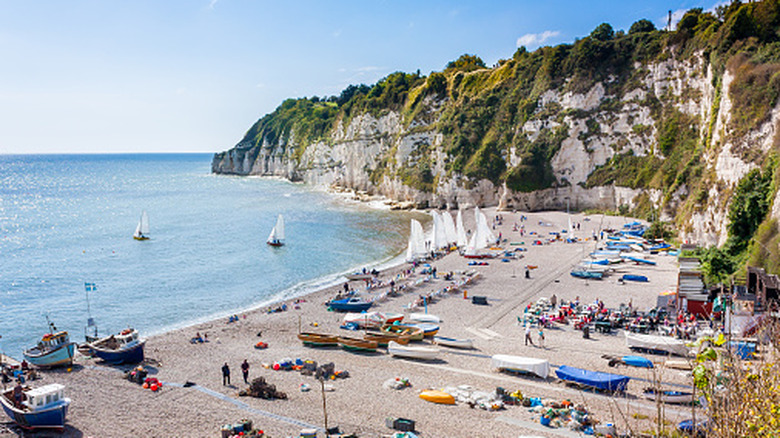
Beer, a little fishing village on the coast of the United Kingdom, is found in the East Devon Natural Landscape area. Here, dramatic cliffs, cathedral-esque caves, and fresh seafood meet for a destination that offers interesting natural features, history, and a strong food scene.
There are plenty of ways to get here. You can take a three-hour train from London to Axminster, and then drive the last 20 or so minutes to Beer. If you don't have access to a car for this part of the journey, you can catch a bus from Axminster. You can also drive to Beer in under an hour from Exeter or Chard.
However you travel, make sure to visit Beer Beach when you arrive, where you'll see the ivory-hued limestone cliffs. It's a shingle beach with warm, calm waters that are ideal for swimming or kayaking. Here, fishing boats take off into the water to gather seafood like mackerel and crab. Join a mackerel fishing trip yourself, or watch them from the comfort of Ducky's, a little cafe right on the beach. From April through October, you can snag goodies from Ducky's like ice cream, big slices of cake, tea, and sandwiches absolutely stuffed with Devon crab. For a bite to eat during the colder months, duck into the Dolphin Hotel's restaurant for hot fish and chips or a traditional Sunday roast meal.
Beer is on the scenic UNESCO World Heritage Jurassic Coast
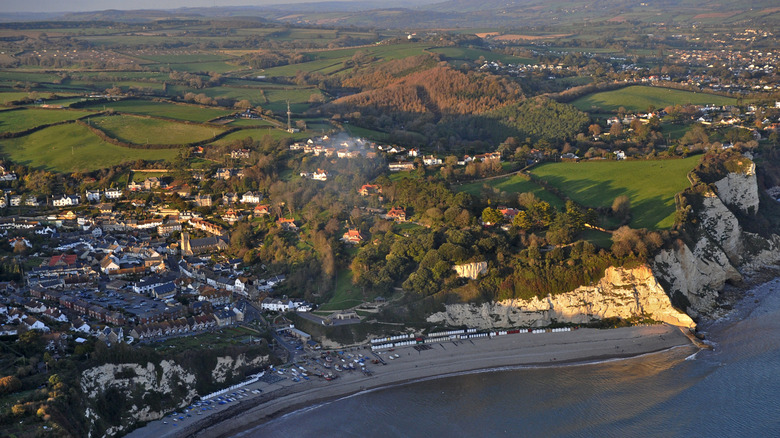
Beer is part of the very first natural UNESCO World Heritage site in England: the Jurassic Coast. Given this honor in 2001, it's still the only one of these recognized destinations in the region. Today, it represents a significant portion of the King Charles III England Coast Path. When the path is complete, it will wrap around the entire island, making it the world's longest managed seaside path.
The Jurassic Coast winds its way along 95 miles of beautiful British coastline between Dorset's Studland Bay and Exmouth in Devon. On top of Beer, other villages worth visiting pepper these shores, including Lyme Regis, a Jurassic Coast resort town. But it's not just the little hubs that bring travelers to this UNESCO World Heritage spot — the rocks here date back nearly 185 million years. Plus, the chance to spot Morris's wainscot moth and early spider-orchid draws in those who love insects, flowers, and unique species of all kinds.
In Beer, there are a lot of features to be enjoyed along this portion of the Jurassic Coast, like Jubilee Gardens. Also called Jubilee Memorial Grounds, this space includes pathways overlooking the beach, gardens, and a portion of the South West Coast Path — a route which weaves along 630 miles of England's southwestern peninsula. Just make sure to wear comfortable walking shoes and layers in case it gets chilly and wet, as it often does on the coast of England.
The Devon village of Beer has a long and storied history
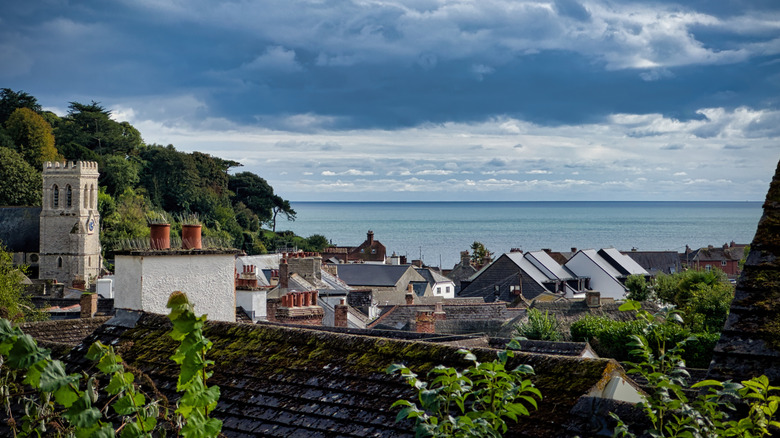
There's a ton of history here in this maritime town. For one thing, Beer isn't named for the alcoholic beverage. It might be named after the Anglo-Saxon word for "grove," which is "bearu," but no one is quite sure. The Saxons called the locale Beerham, and the Normans called it Bera, but it has also gone by Bere and Beare. Today, Beer doesn't have swaths of forests, but it does have other remnants of the past outside of its name.
Among the most famous of these remnants are the Beer Quarry Caves. This is where England sourced the stones that built some of the U.K.'s most renowned buildings, including Exeter Cathedral, Westminster Abbey, St Paul's Cathedral, Norwich Catholic Cathedral, and the Tower of London. In fact, you can find Beer Stone in 24 out of Great Britain's 44 cathedrals — this rock is perfectly suited for carving fine details, due to it being saturated with water. The stones in these caves quite literally built the culture of the region, so make sure to dress warmly when you come. That way, you can really take your time here without getting too cold.
Beer is also among the settlements mentioned in the Domesday Book. According to the recording, the town had 28 households in the year 1086, so it was larger than 60% of the other settlements included. A charming coastal town called Clevedon was also listed in the census, and like Beer, it makes for a lovely day trip.