
What Does A 'Frost Heave' Sign Mean When Driving In Colder Regions?
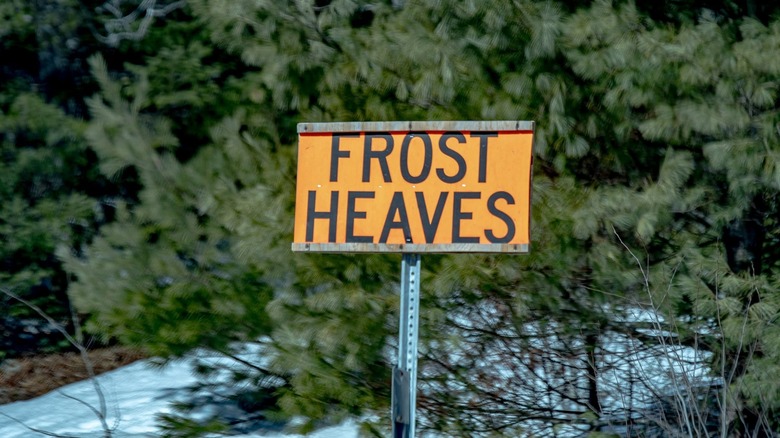
Winter weather can be a big source of stress for drivers. Weather-related hazards like black ice, reduced traction, and poor visibility through snow or fog cause an estimated 1.2 million crashes every year, according to the Department of Transportation. But these aren't the only ways that changing temperatures can impact a commute. Rain and melting snow also seep into the soil, and this underground water can lead to a phenomenon known as frost heave.
Frost heave is most likely to happen in areas with soil that is silty or rich in clay, allowing it to retain a lot of moisture. When the temperature drops, that moisture freezes and expands, lifting whatever is on top of it, whether that's a sidewalk, tree roots, or a home's foundation. When this happens under a road, it creates what Foster's Daily Democrat calls "nature's speed bumps." These raised areas of road can crack the pavement and are a potential driving hazard, causing damage to tires and suspension systems if you hit them too fast. When you see a sign warning of a frost heave, that means the road may have bumps or cracks — and you'll want to drive carefully over the ensuing stretch of pavement.
In a sense, frost heave damage is similar to potholes. Those are also caused by water in the soil, which weakens the ground beneath the road and creates a hole. The main difference is that frost heave affects a much larger area of the roadway, which makes it more complicated (and expensive) to fix. On the plus side, minor frost heaves tend to go away on their own once the temperature consistently stays above freezing, but that's little consolation if you bust a ball joint driving over one. And if the roadway suffers any serious cracks or damage from the heave, these will obviously remain a hazard until repairs can be made.
Where and when you'll encounter frost heave
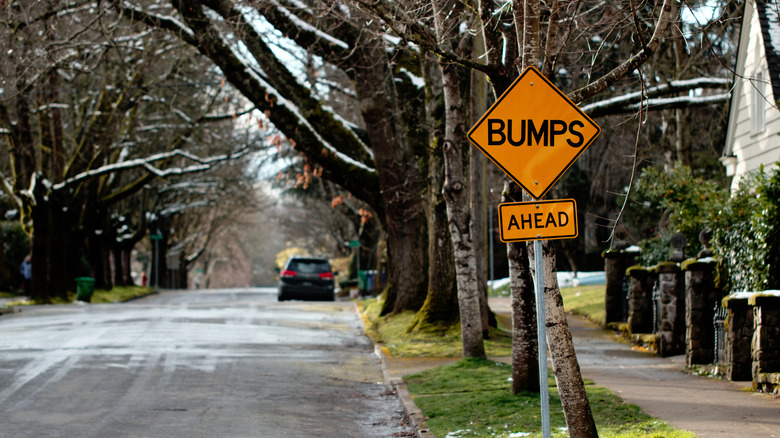
Cold temperatures alone don't create a frost heave. It's when the temperature fluctuates around the freezing mark that they're at the greatest risk of forming. They're most likely to happen in late winter and early spring, often appearing around February in New Hampshire, which, like many New England states, deals with the issue every year. This is partially due to the climate, but the state's mountainous topography and the age of many roadways also contribute to the issue. Because many roads in New Hampshire were built during the stagecoach era, they lack the drainage and foundation that prevents frost heave from impacting many modern highways in places with similar climates.
Frost heaves are also common in neighboring Vermont for the same reasons. But they're not a phenomenon that's exclusive to New England, either. They also happen in the Midwest and Pacific Northwest, along with other parts of the world with cold winters like Canada, Russia, Scandinavia, and Alaska. So if you're planning to take the Pacific Northwest's most epic road trip on the Alaska Highway, keep an eye out for any unexpected bumps or cracks, especially if you're traveling in the spring when temperatures can fluctuate.
While you can prepare for icy roads by taking steps like traveling with cat litter in your car, there is unfortunately no surefire way to prevent frost heave damage. Even the most reliable winter road trip cars can suffer damage to the transmission mount, oil pan, tires, or suspension if you hit a frost heave at high speeds. The best way to avoid that is to slow down and pay attention when you see warning signs, especially if the area you're traveling through is in the process of thawing out after winter.