
Greece's Largest Terrestrial National Park Is Renowned For Its Ethereal Mountain Trails And Unique Glacial Lakes
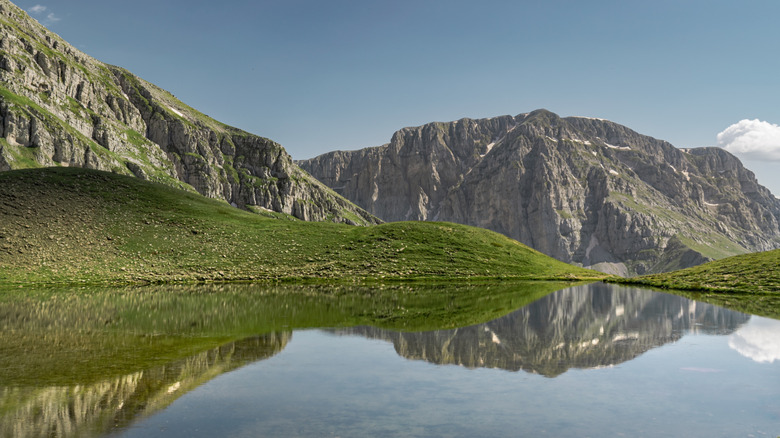
When planning a vacation to Greece, most travelers picture the turquoise coastlines and white-washed buildings of the islands. Northern Pindos National Park challenges this preconception with a central alpine terrain filled with ophiolithic and peridotite rock formations and glacial cold water lakes. Northern Pinods is more than natural formations, the largest terrestrial national park in Greece is also home to ancient ancestral villages that still have some ongoing shepherd flocks, as well as relics of stone bridges and monasteries.
Greece may be known for its sunny beaches, but Northern Pindos contradicts this with its "dragon lakes," which are glacial tarns formed by melt from the last ice age 10,000 years ago. The park is also home to 39 official mapped and maintained trails, many of which feature sprawling views of the crystalline alpine lakes that define the park. Hikes are often strenuous, and according to AllTrails – which lists 98 area trails – the park's most iconic routes are well marked and even include water filling stations, though some include treacherous mountain sections and rock scrambles. So be sure to choose a trail that fits your level of expertise, and come well-equipped.
Established in 2005, part of what makes Northern Pindos so unique is its diversity of flora and fauna. The national park is host to 1,800 native plant species, 60 species of mammals — including bears, wolves, and wildcats — 180 species of birds, 30 types of reptiles, and 14 types of amphibians. The area is an amalgamation of the National Forest of Pindos and Vikos-Aoos, taking up a massive 450,000 acres. The park is an important natural preserve for not only Greece, but the EU as a whole. Two of the 11 NATURA 2000 protected areas are confined within the park, as well as 11 wildlife refuges.
Hiking and sight seeing in Northern Pindos National Park
One of the best ways to experience Northern Pindos is to take a hike on one of its ethereal mountain trails. It features the Tymfi, Lygkos, Vasilitsa, and Mitsikeli mountain ranges, as well as the second-tallest mountain in Greece — the 8,651-foot Smolikas. Northern Pindos also features the unique glacial lakes of Gistova, Astraka, and Smolikas — known as the "dragon lakes." Not only are they shaped like dragons, but the rare Alpine Triton populates their waters, which is an amphibian that can both swim and walk, and looks a bit like a dragon itself.
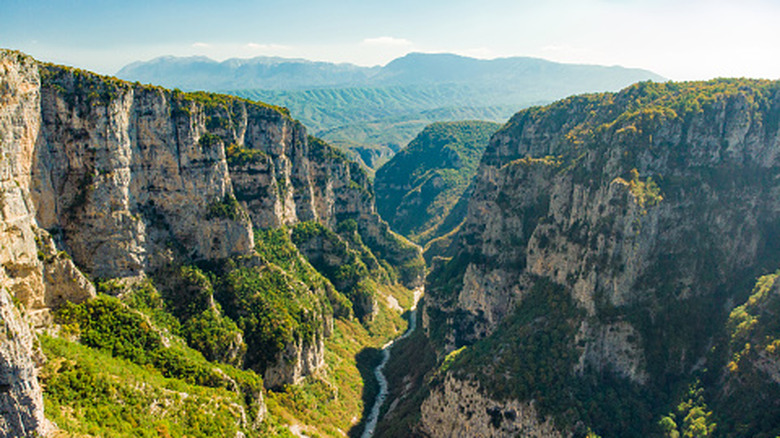
A popular hike here is in Vikos-Aoös, home to the famous Vikos Gorge (pictured). The Vikos Gorge Trail is a steep 8.5-mile hike that takes you past dramatic limestone formations and deep forests to one of the deepest gorges in the world. The Drakolimni of Tymfi is a strenuous mountain trail with a 4.9 star rating that climbs through a mountain pass and features two glacial lakes — Xeroloutsa Tsoumani and Drakolimni. This trail is best started in the morning, when daybreak mist blankets the mountain panoramas and paints the surrounding pine stands in a muted palate. Alternatively, hike the moderate Mavrovouni Refuge – Flega Summit – Flega Lakes Trail for sprawling views of turquoise mountain lakes nestled underneath Mount Flega. Although the lakes may look inviting, swimming in Northern Pindos' lakes is strictly prohibited.
Northern Pindos National Park is located in Northwestern Greece, and the closest airport is in Ioannina — a lakeside city cradled by mountains — about two hours from the park. International visitors can catch a quick 75-minute connecting flight from Athens. The best time of year to visit is between May and October, when the climate is ideal for hiking. It's important to note that the area receives more rain than anywhere else in Greece, so pack for the weather and be mindful that conditions can change in the high mountain passes. Visitors can also consider extending their trip on the mainland and staying in one of these breathtaking Greek villages with picturesque views and less crowds.