
America's Oldest Turnpike Is Undergoing A Change That Will Affect Millions Of Drivers In 2027
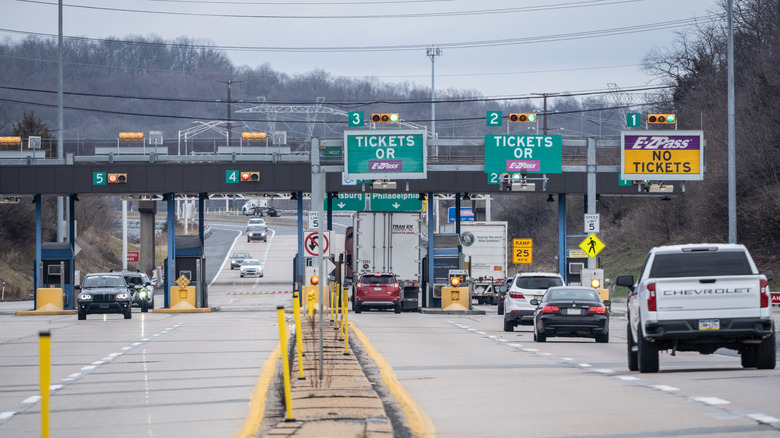
The Pennsylvania Turnpike is a popular roadway, used by an average of 550,000 vehicles on a daily basis, a number that can surge to over 700,000 daily drivers during peak travel times. Those millions of drivers will see some changes in 2027 as the Turnpike Commission shifts to an Open Road Tolling system. And, while the all-too-familiar orange construction barrels along Pennsylvania's roadways are usually a dreaded sign of upcoming delays, in this case the changes will actually make driving on the Turnpike faster, safer, and easier.
The Pennsylvania Turnpike set the standard for highway design in the U.S. when it opened in 1940 as the nation's first superhighway. This earliest version was a bit shorter than the 565-plus miles the Turnpike traverses today. When it opened, it ran just 160 miles between Irwin (about 30 miles south-east of Pittsburgh) and Carlisle (about 30 miles west of Harrisburg), turning a once-abandoned railroad route into America's "dream highway." Along with the expansions that started in 1950, the turnpike has seen other changes over the decades to improve safety and traffic flow, like the Sideling Hill By-pass opened in 1968 and the widening of the road and tunnels in the '70s and '80s.
The shift to Open Road Tolling is the turnpike's latest evolution, and it's been a long time coming. The plans were developed back in 2010, with the first pilot systems installed in Bucks County in 2016. Some portions of the road were already shifted over to the new system in January 2025, including the stretch east of Redding and the Northeast Extension that runs from Norristown to Clarks Summit. Construction on the remaining interchanges will start in January 2027 and is expected to be complete by 2028.
What Open Road Tolling means for Pennsylvania Turnpike drivers
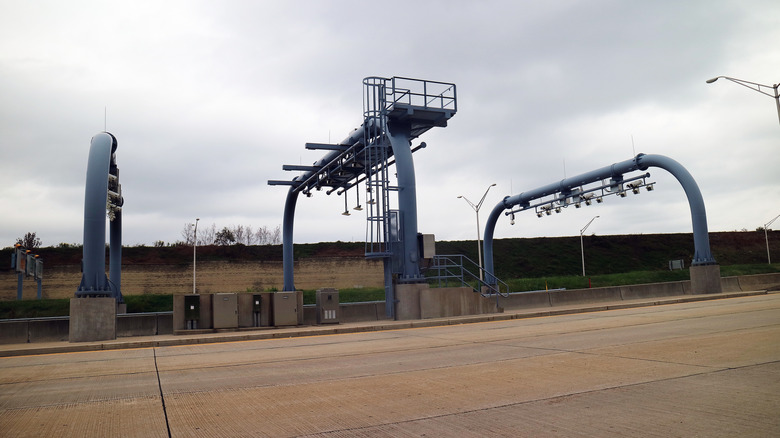
The Pennsylvania Turnpike has a reputation as one of the most expensive roads to drive in America, and that's not likely to change. The new toll schedule introduced in early 2025 created a standard per-mile base rate across the entire turnpike, which resulted in a lower toll for about half of car travelers compared to 2024 rates, but the only pricing change planned for 2027 is the standard yearly increase required by Act 44. Using E-ZPass remains the most affordable way to travel the Pennsylvania Turnpike, cutting rates in half compared to Toll By Plate drivers.
The most noticeable change for drivers will be how and when you pay tolls. Instead of collecting payments at toll booths when drivers exit, overhead gantries have been installed along the road. These gantries scan E-ZPass transponders and license plates of cars as they drive past. After the trip, drivers get an invoice in the mail showing which gantries the vehicle passed and the total amount due, which they can pay by check, money order, or credit card.
The goal is to improve the efficiency and safety of turnpike travel. Since Open Road Tolling launched east of Redding, Turnpike Commission CEO Mark Compton reports fewer rear-end and sideswipe crashes from drivers changing lanes at toll booths (via TribLive). Not needing to stop and pay should also mean less waiting when you're exiting at busy spots like Breezewood, Pennsylvania's unsung "Town of Motels" that serves as a crossroads between the turnpike and Interstate 70. So while drivers in 2027 may encounter construction as workers remove the old toll plazas, the extension of Open Road Tolling across the Pennsylvania Turnpike should make driving it more convenient once the work is finished.